Justice vs Abuse — Part 2: The Precedent & The Law
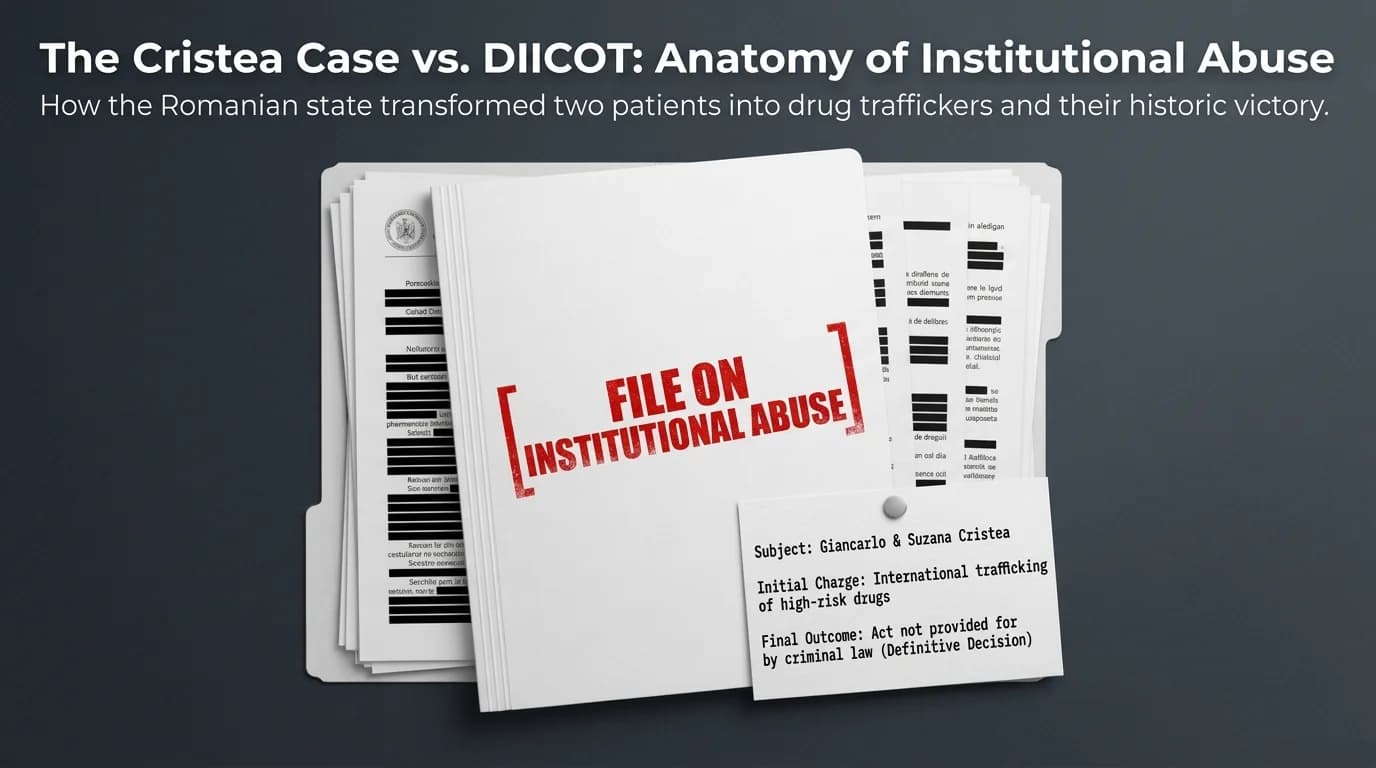
The legal battle: DIICOT vs. Cristea. The three victories, the historic precedent and international law protecting patients with controlled medication.
Part Two of this series documents what happened after the airport confiscation — and how the Romanian justice system ultimately sided with the patient. What follows is a detailed reconstruction of the legal battle: from the official documents obtained before travel, through the confiscation and criminal investigation, to the three consecutive court victories that established a legal precedent for medical cannabis patients in Romania.
Each section below is built on primary sources — court rulings, official correspondence, legal provisions, and personal testimony. The timeline, the evidence, and the legal arguments are presented as they unfolded, so that any patient, lawyer, or journalist can follow the case from beginning to end.
The Legal Prescription
Written confirmations from Romanian authorities — obtained before travel
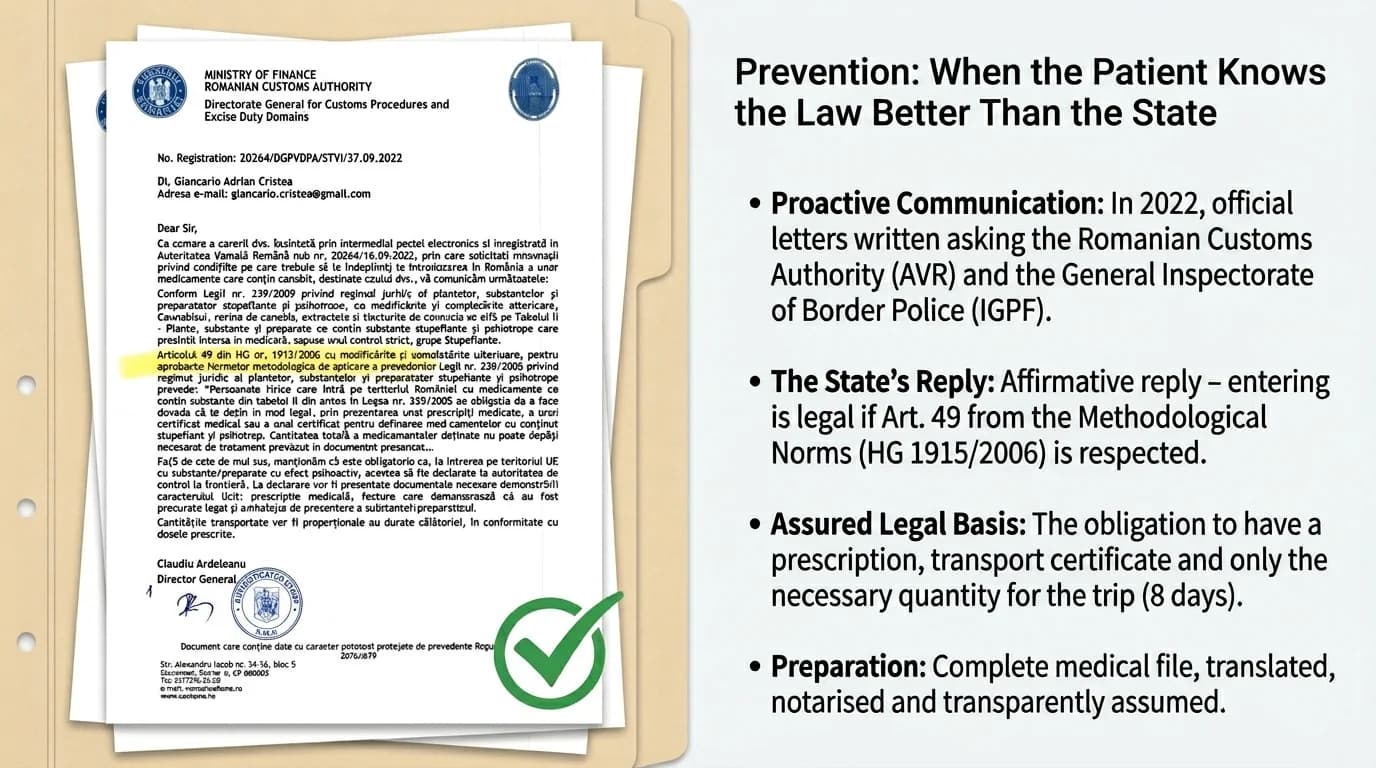
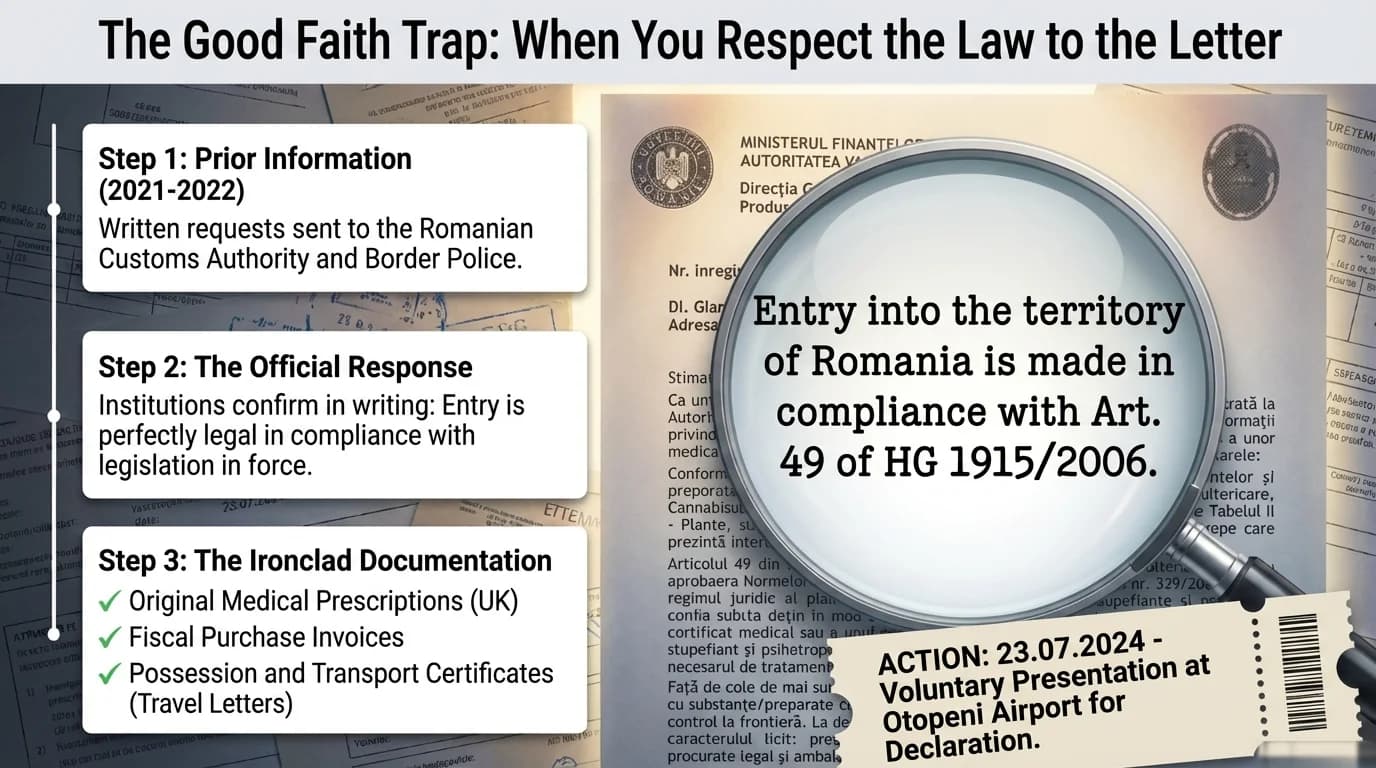
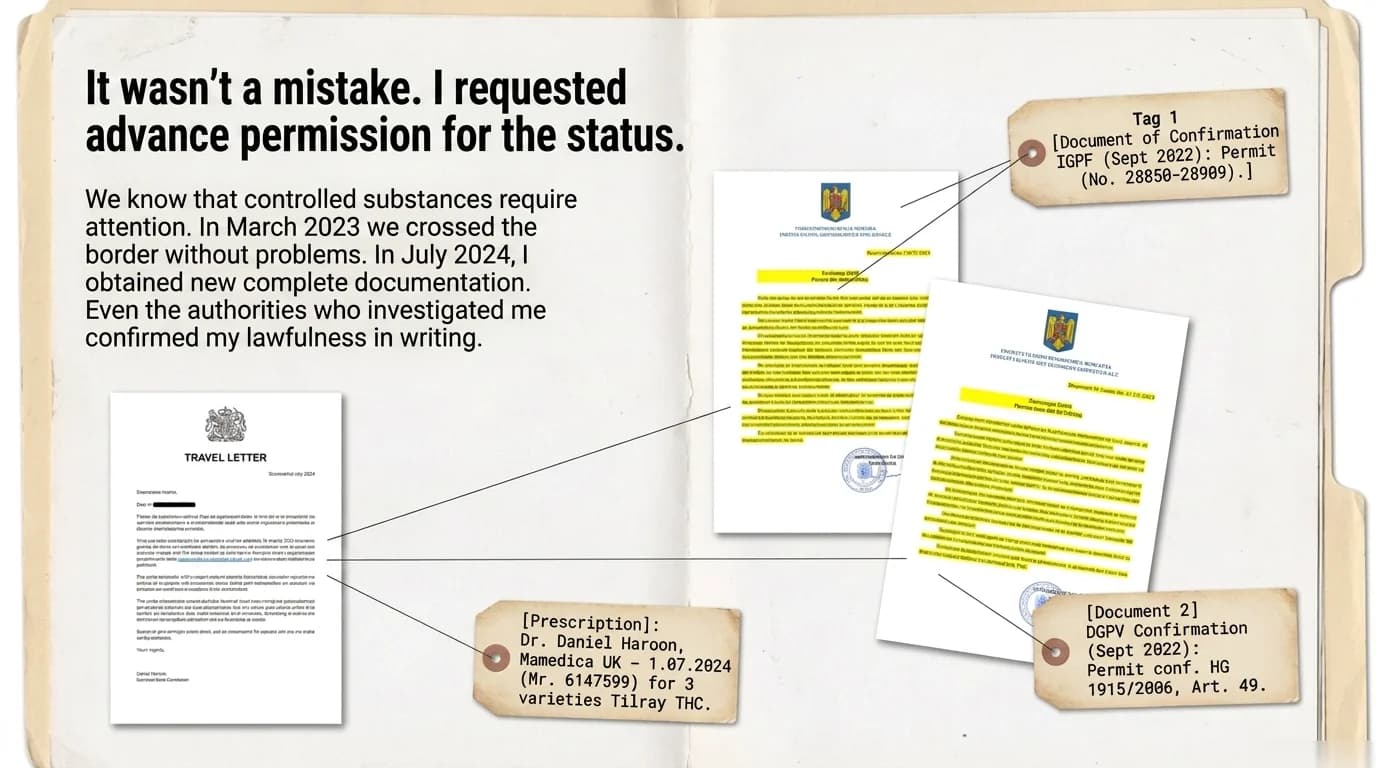
Knowing that controlled substances require special documentation for travel to Romania, I sought written confirmations from Romanian authorities before travelling — precisely to avoid any incident. I received two official documents: one from IGPF (Border Police) and one from DGPV (Customs) — both confirming that transporting controlled medicines, accompanied by a valid prescription, is permitted by law.
In other words: the very authorities who would later confiscate my medication and open a criminal case confirmed in writing, one day before my flight, that what I was doing was legal. This fundamental contradiction formed the basis of my defence in court — and convinced all three instances.
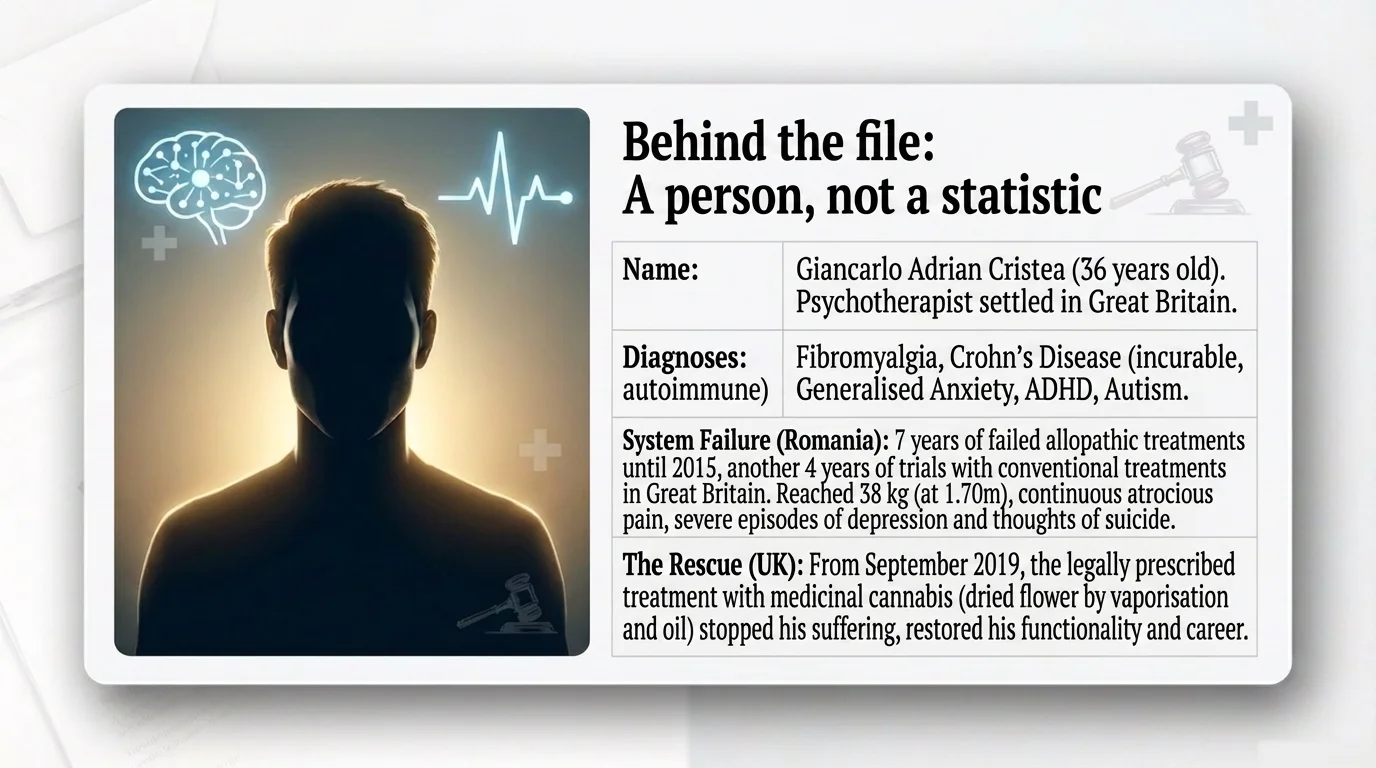
The July 2024 prescription was issued by Dr. Daniel Haroon at Mamedica Limited, London, under prescription number 6147599, dated 01.07.2024. The prescribed medications — three varieties of Tilray dried flower: Tilray 22 THC White Widow, Tilray 25 THC Island Sweet Skunk, and Tilray 22 THC Galaxy Walker OG, 15 grams of each. The accompanying Travel Letter covered the period 23–31 July 2024, with a maximum of 1g/day/variety — quantities calculated to the day for the duration of our stay.
IGPF nr. 28850-28909 / 23.09.2022
Romania's General Inspectorate of Border Police confirmed that the importation of controlled-substance medicines is permitted with complete legal documentation.
DGPV nr. 20264 / 22.09.2022
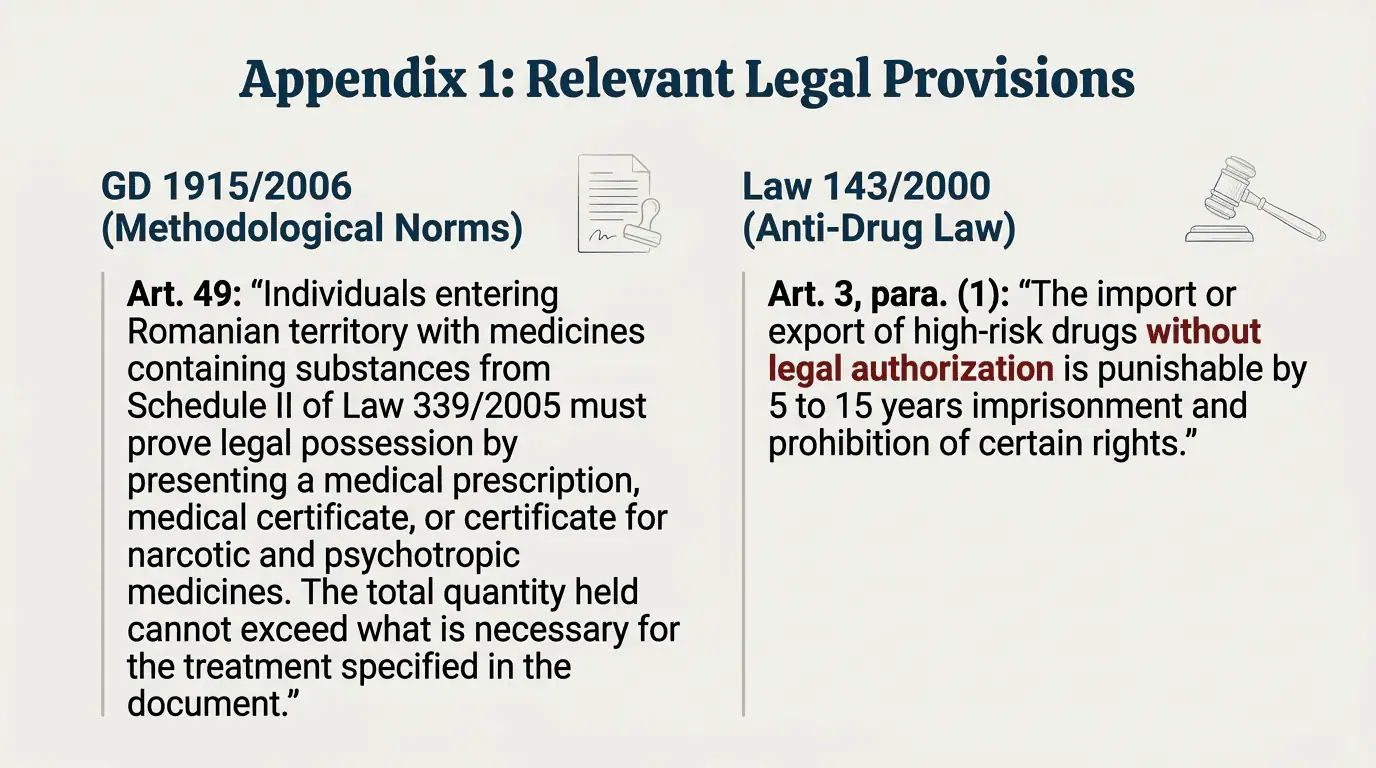
The General Directorate of Customs Procedures detailed the requirements of GD 1915/2006, Art. 49 — the very article DIICOT subsequently chose to ignore.
The Airport & Confiscation
23 July 2024 — the red channel, Henri Coandă International Airport — family holiday
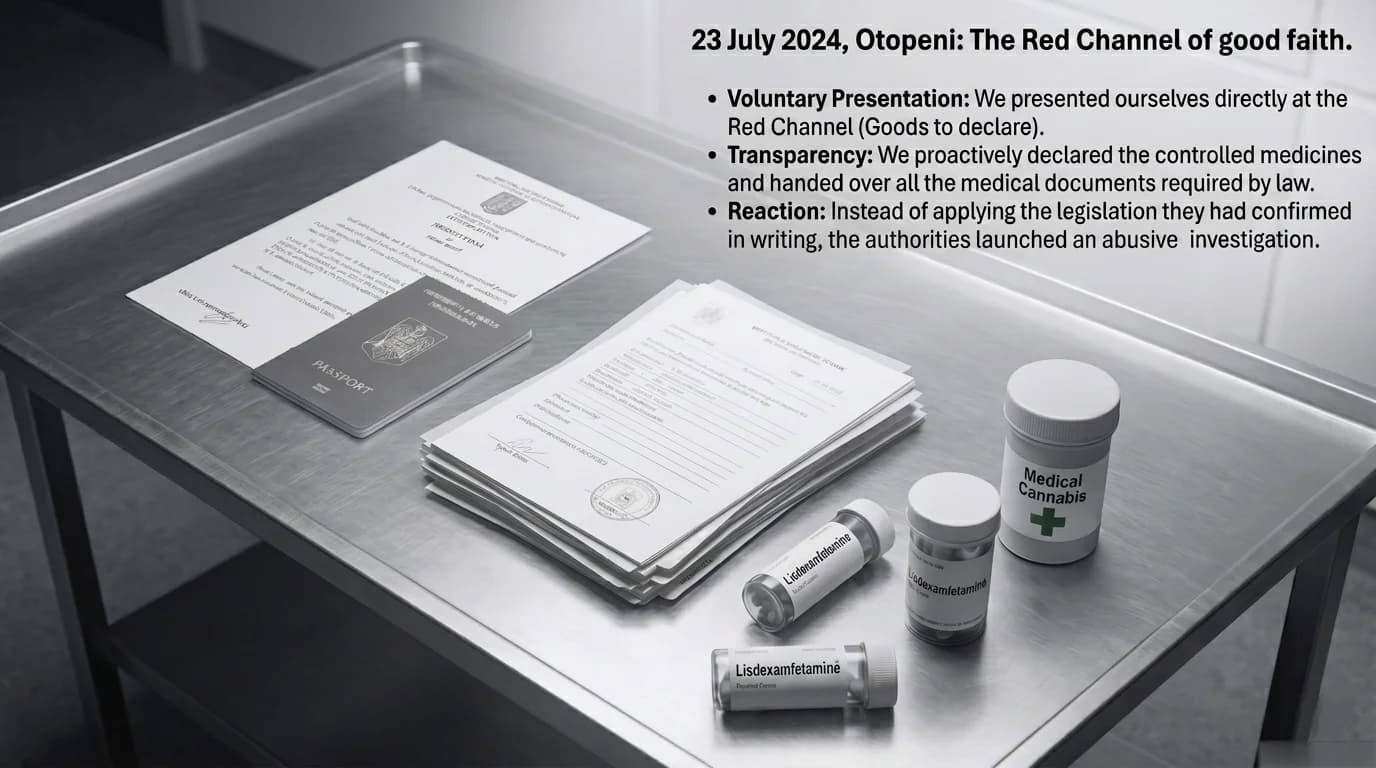
On 23 July 2024, I landed at Henri Coandă Airport — this time on holiday, together with my wife and daughter. I voluntarily declared the treatment at customs and presented all documents — the same valid medical prescriptions, the same certificates, the same written confirmations I had used in 2023 without any incident.
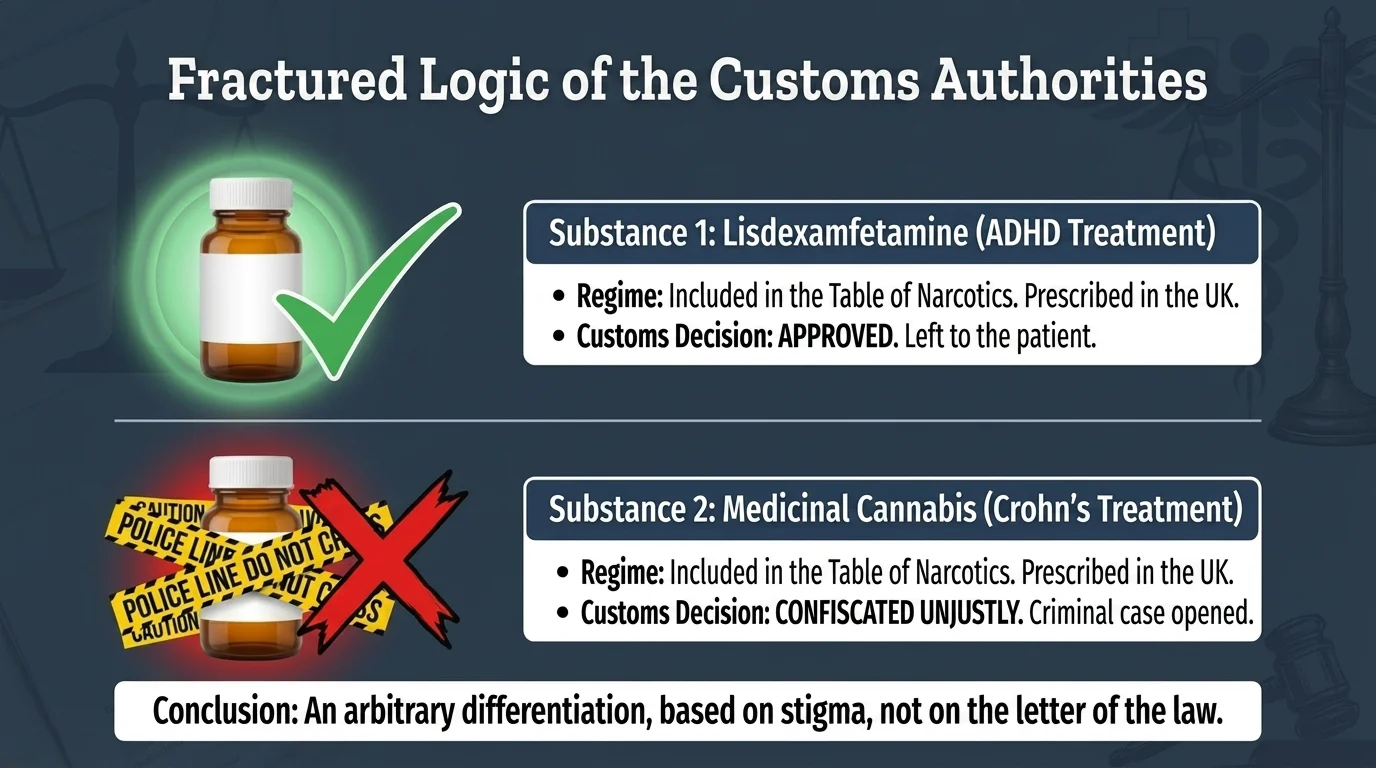
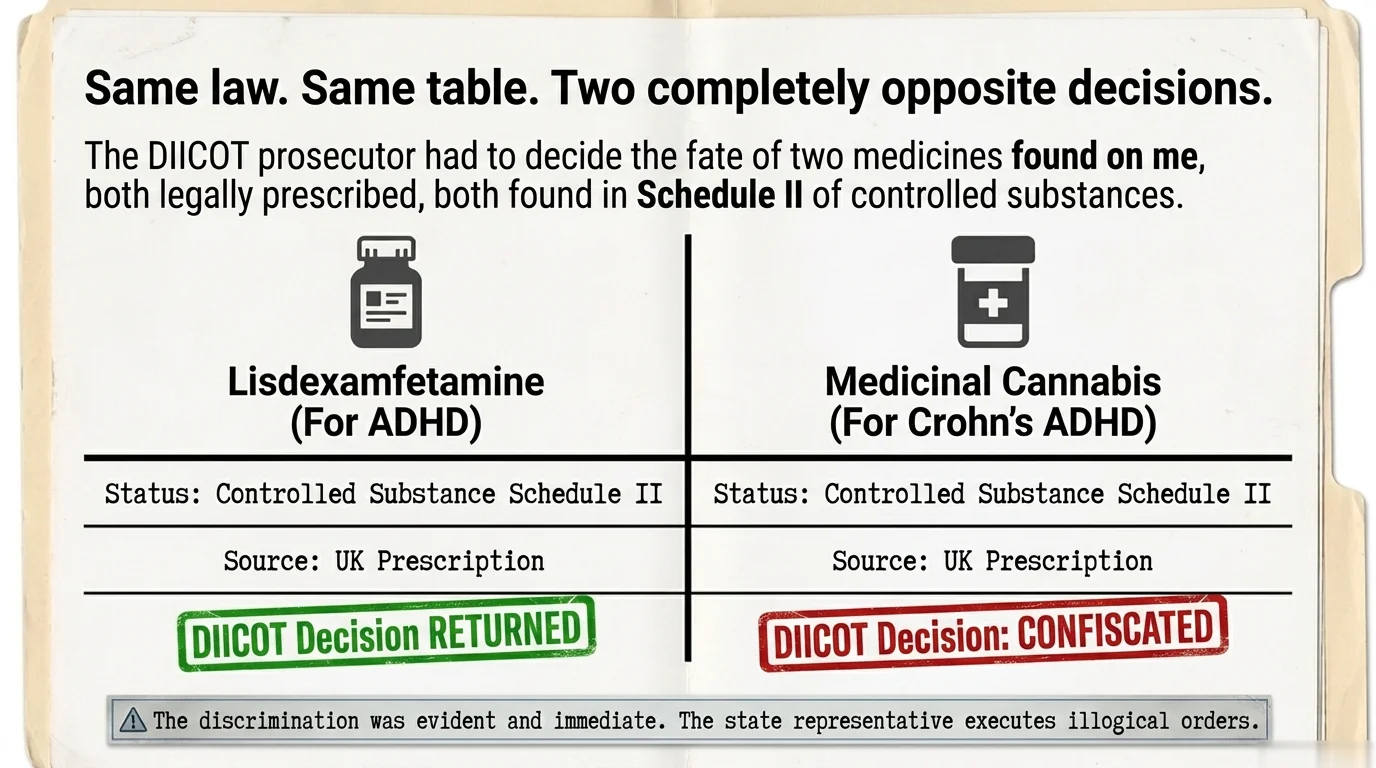
Customs authorities confiscated the medical treatment — both mine and my wife's. The confiscated quantities: 9.67 grams and 14.68 grams of medical cannabis — quantities calculated strictly for the duration of our stay, according to the medical prescription. They also confiscated lisdexamfetamine — my ADHD medication — even though it falls under a more restrictive regime than medical cannabis (Table II of Law 143/2000, equivalent to UK Schedule 2; cannabis sits in Table III of the same Law).
The scene unfolded with an absurdity Kafka would have envied. The customs officer's tone shifted from irony to complete bewilderment. When I opened the container to show them the original pharmaceutical packaging, the authorities were stunned. As he led us toward the control office, the officer told us — unprompted — about a friend of his with stage-4 cancer who had been forced to relocate permanently to the Netherlands simply to survive on THC. The state's representative knew perfectly well the medical benefits. And still followed orders.
At the desk, we laid out everything: the original UK prescriptions, travel letters, receipts — and crucially, the written confirmations previously obtained from the IGPF and Customs Authority confirming that our entry was legal. The officers' initial response was to make jokes about the situation, giving the impression they hadn't even read the legal provisions being cited (Art. 49, HG 1915/2006). Then the tone changed.
Four hours of detention, interrogation and intimidation followed — all in the presence of our minor daughter. We were explicitly ordered to sign the goods seizure report (LP 568.434/23.07.2024) under the direct threat that refusing would result in "far more serious measures" and we would not be allowed to leave the airport.
What followed was a four-hour interrogation. My wife and our minor daughter witnessed everything. The DIICOT prosecutor eventually agreed to return the lisdexamfetamine — but maintained the confiscation of the medical cannabis. Both substances under the same legal schedule. The discrimination was obvious.
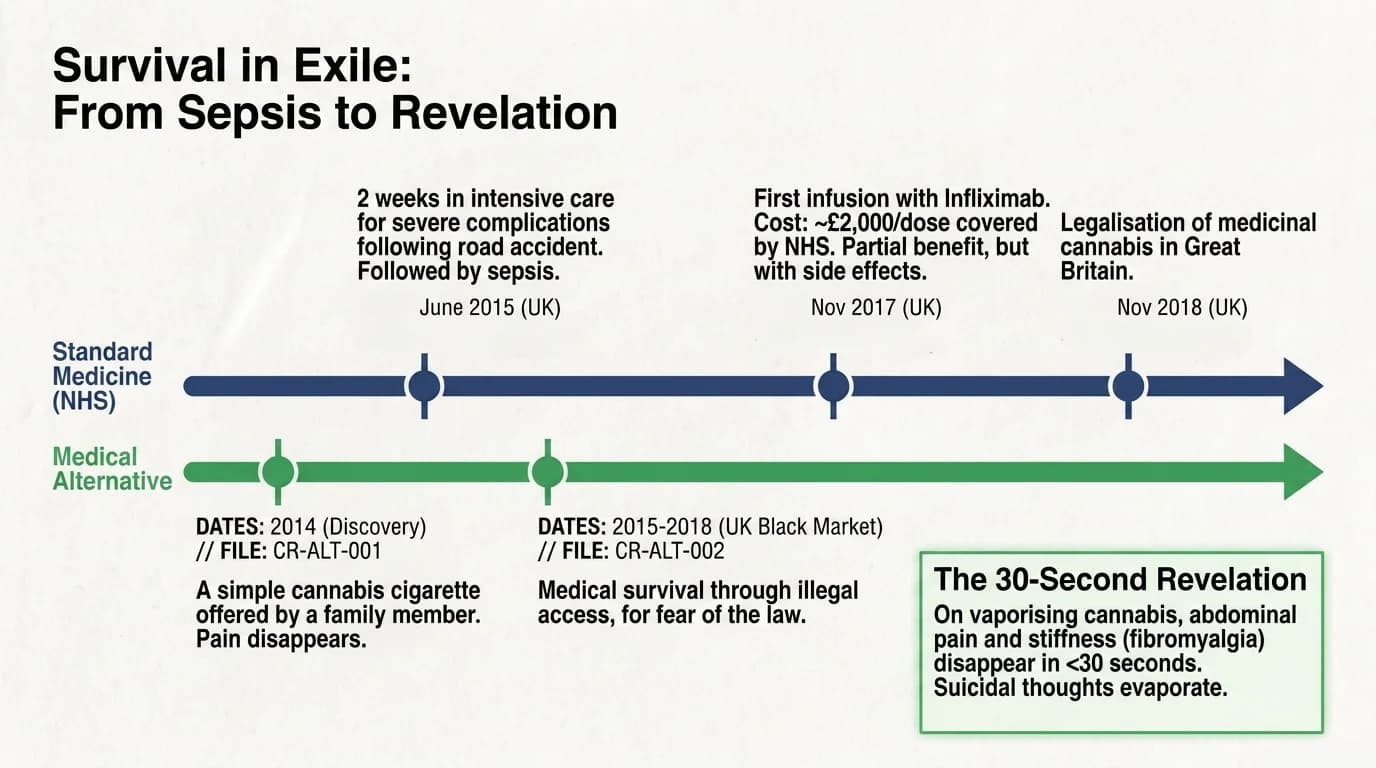
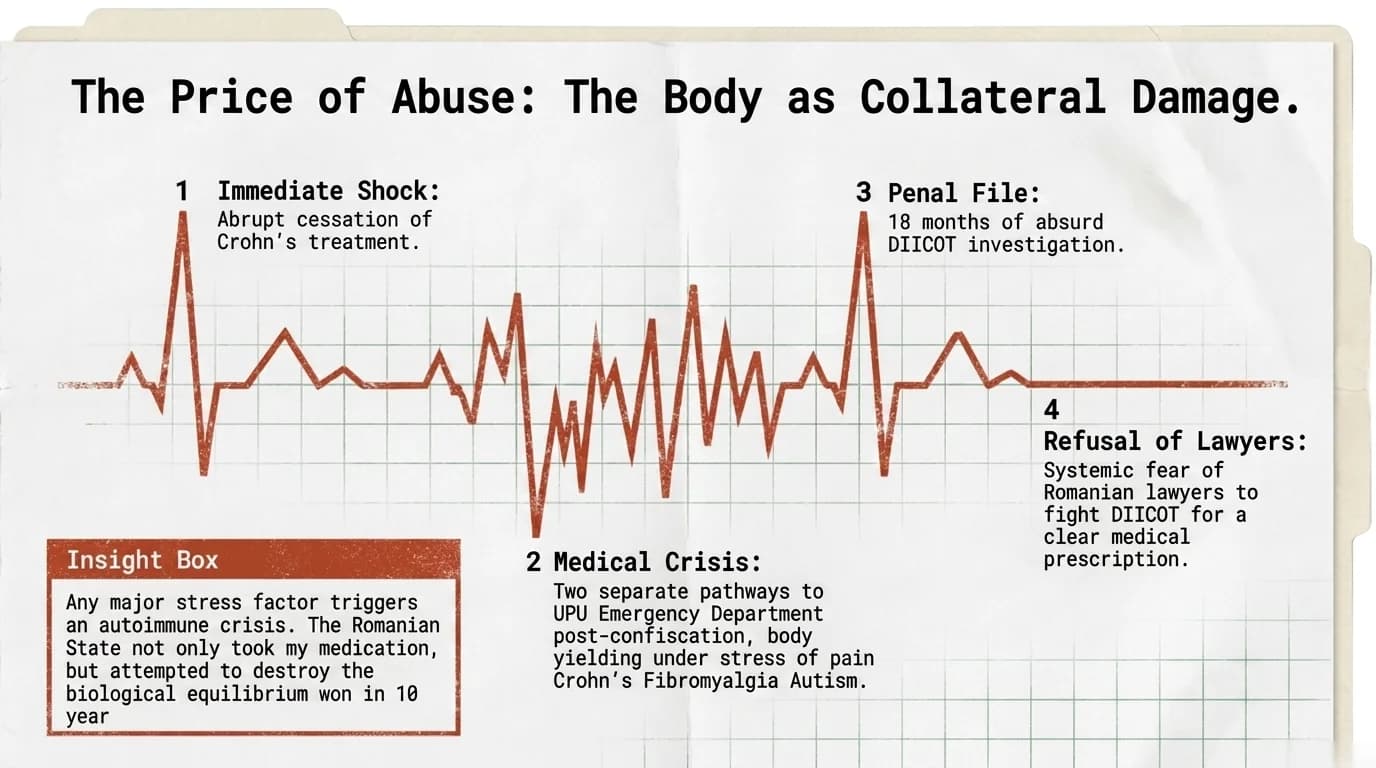
The consequences were immediate and devastating. The abrupt interruption of the medical cannabis treatment triggered a severe medical crisis — Crohn's disease symptoms returned in full force, and in the following days I was rushed to emergency hospitalisation. Treatment deprivation was not merely a legal act — it was an act of medical violence.
On 25 July 2024 — two days after the confiscation — my wife Suzana was taken to the emergency department at UPU Spitalul Universitar de Urgență București (Bucharest University Emergency Hospital), Surgical Emergency ward. On 26 and 27 July, I was admitted in turn — receiving only palliative treatment, as there was no way to replace the confiscated medication during the stay. A UK specialist subsequently confirmed irreversible adverse effects resulting from the abrupt interruption of treatment.
The customs inspectors confiscated the quantity of medical cannabis. IGPF was notified. A few hours later, DIICOT opened a criminal case — ignoring Art. 49 of GD 1915/2006, ignoring the written confirmations received from the very same authorities who were now prosecuting me, and ignoring the valid medical prescription.
On 24 July 2024, DIICOT formally opened criminal case no. 4050/19/P/2024. The charge: Art. 3 para. (1) of Law 143/2000 — international drug trafficking. The forensic report, no. 303014/29.07.2024, confirmed the quantities: 10.06g → 9.67g and 15.08g → 14.68g — figures that would later prove the prosecution had no grounds, since both fell within the limits prescribed for a 9-day stay.
What followed was 18 months of criminal prosecution — 18 months during which I lived with the status of a suspect, my medication confiscated, my health deteriorating without adequate treatment. All because I had chosen to respect the law and declare what I was carrying.
"I declared voluntarily at customs — exactly what I was told to do. Four hours of interrogation in the presence of our minor daughter. 18 months later: 3 courts, 3 victories, case closed."
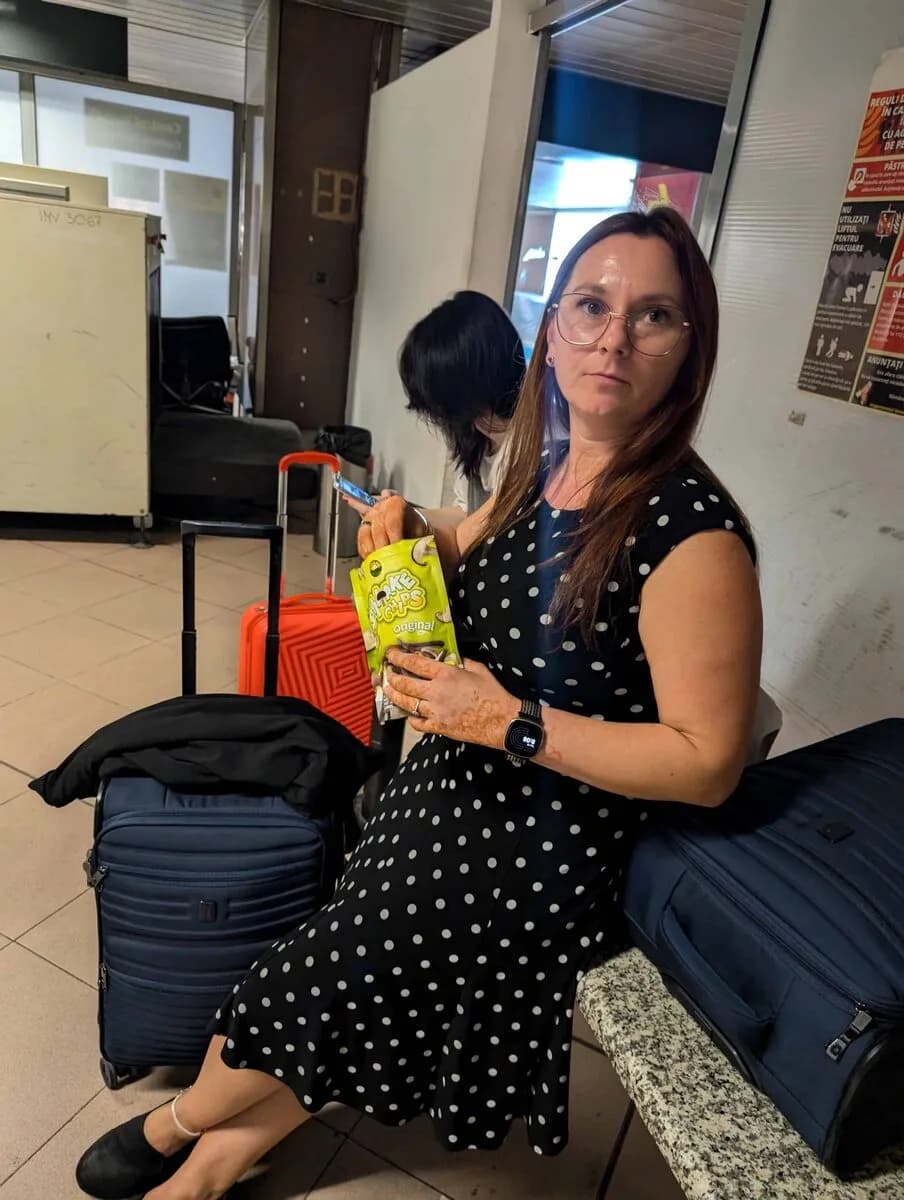
Giancarlo Cristea (2024)I chose the red channel. I declared my medication. I presented their own written confirmation. And they still treated me like a drug trafficker.
Terminological stigma and the psychological violence of mislabelling
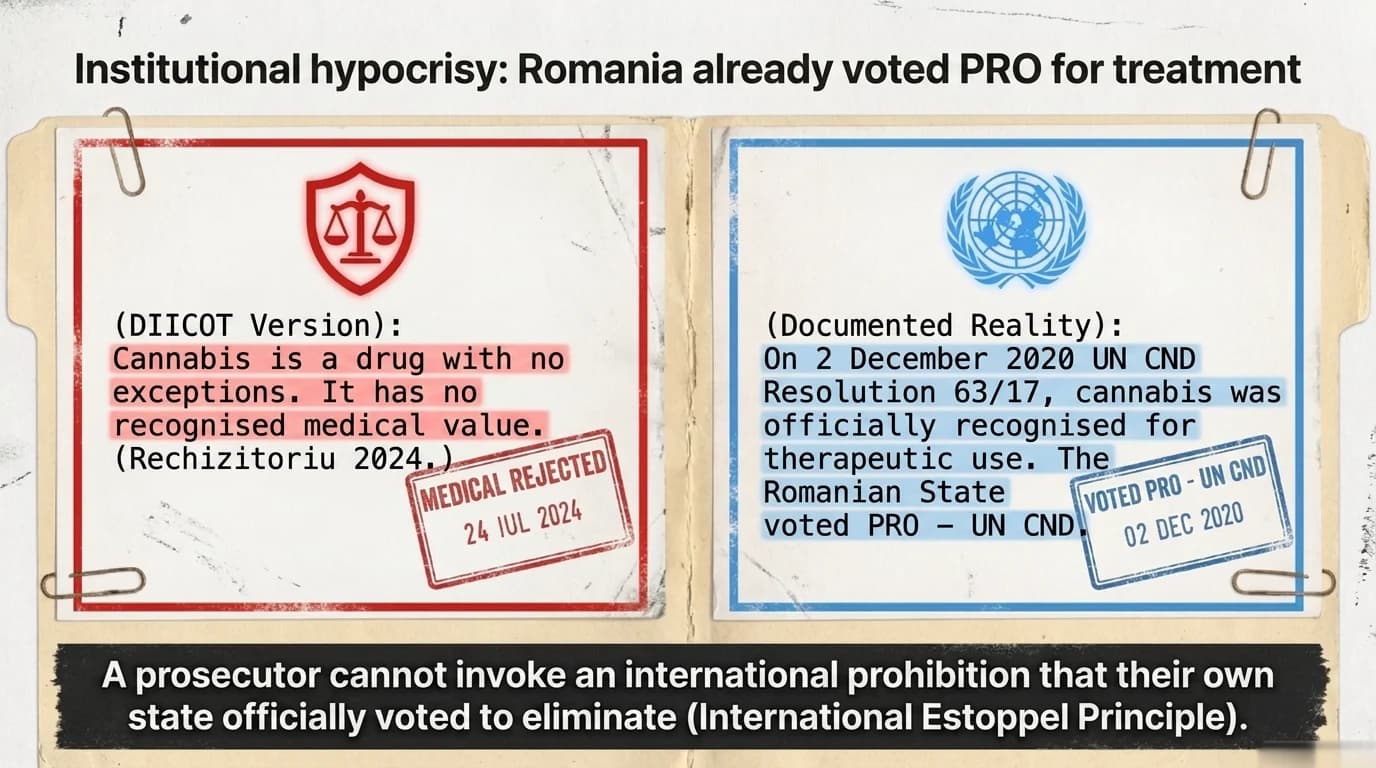
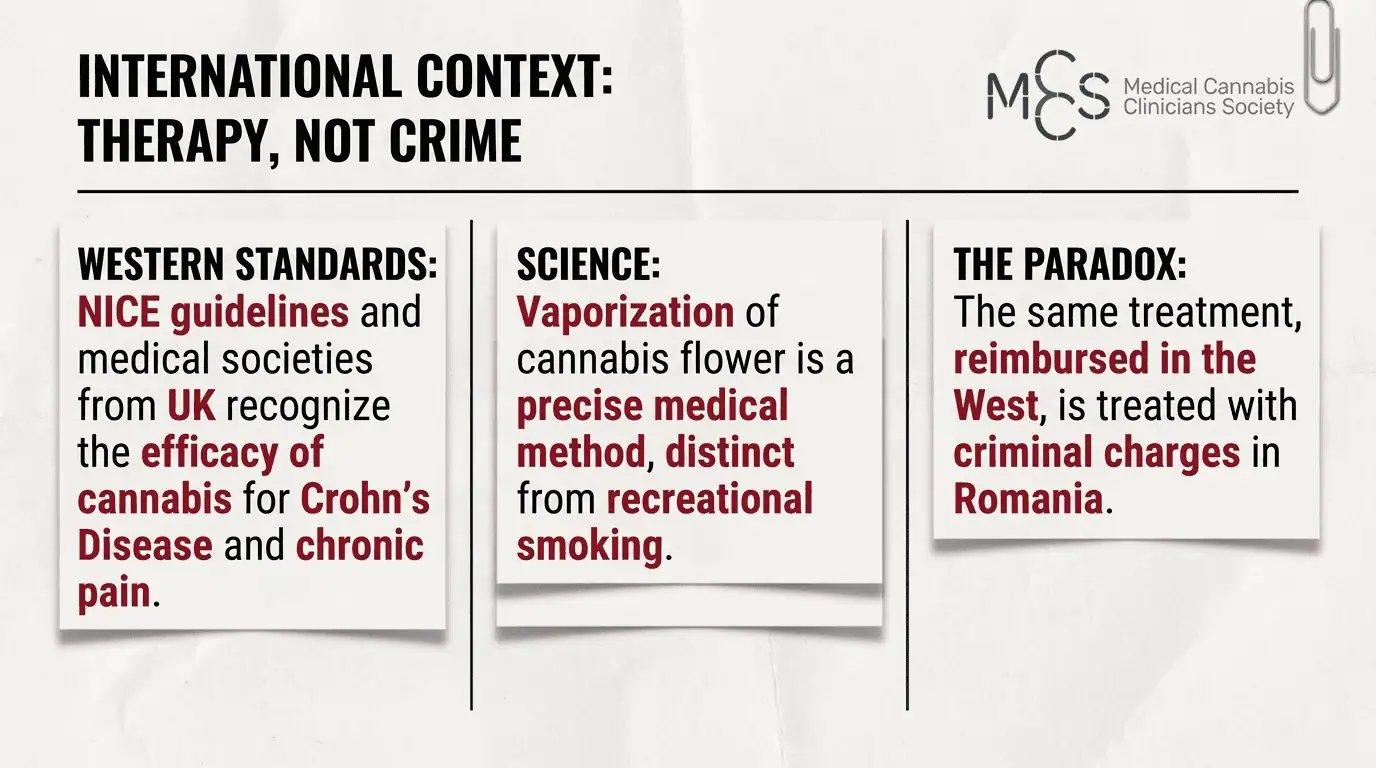
Substance . The 1961 UN Single Convention on Narcotic Drugs placed cannabis in Schedule IV — the category reserved for substances with "no recognised medical value" — until 2 December 2020, when UN CND Resolution 63/17 formally removed it, following the WHO ECDD 2019 report confirming therapeutic utility. Romania voted YES to reclassification. And yet, from the July 2024 confiscation onwards, DIICOT's language and press coverage continued to label a prescribed medicine as "a drug" — a semantic gap of over four years between the medical science endorsed by the state itself and Romanian criminal practice. This is not a technical oversight. It is a linguistic choice: "drug" mobilises fear, "medicine" mobilises protection. The state chose the first for a patient holding a prescription.
Patient stigma. Being labelled an "international drug trafficker" while carrying a valid prescription from an EU state is not a mere procedural error. It is institutional psychological violence: four hours of interrogation in the presence of a minor child, 18 months of criminal uncertainty, judicial terror documented in evidence. The treatment interruption equals objective medical violence (Crohn's flare + emergency hospitalisation, 138 BPM heart rate documented on smartwatch). Mislabelling penetrates strata protected by the European Convention on Human Rights: private life (Art. 8 ECHR), psychological integrity and dignity (Art. 3 ECHR — degrading and inhuman treatment), family life (prolonged interrogation with a child as witness). Stigma is not a side-effect of the confiscation — it is a separate injury, with separate damages.
Stigma as structural discrimination. When one EU state classifies the same medicine as "therapeutic" and another as "illegal," and institutions choose to ignore EU law outright (Directive 2011/24/EU on cross-border patients' rights, GD 1915/2006 Art. 49, CJEU C-663/18 Kanavape), mislabelling ceases to be accidental. It becomes state policy. The 3–0 court victories legally confirm what is ethically obvious: DIICOT's criminal language did not describe medical reality — it described an ideological fiction. The prospective civil action against the Customs Agency and DIICOT will claim this component explicitly: distinct moral damages for direct stigmatisation, separate from material damages for the confiscated medicine, and separate from damages for the medical harm. Three heads of claim, not one.
The DIICOT Case
18 months of criminal prosecution for a legal medicine
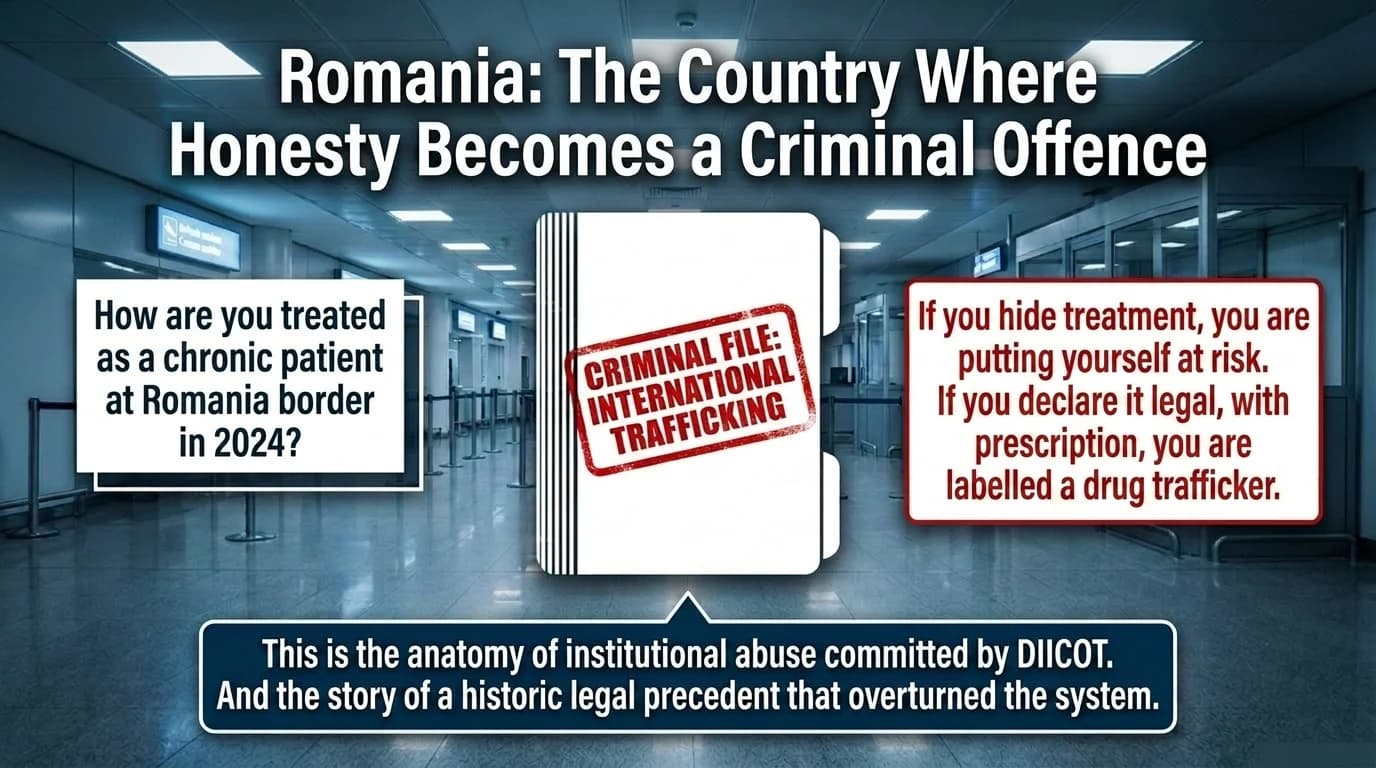
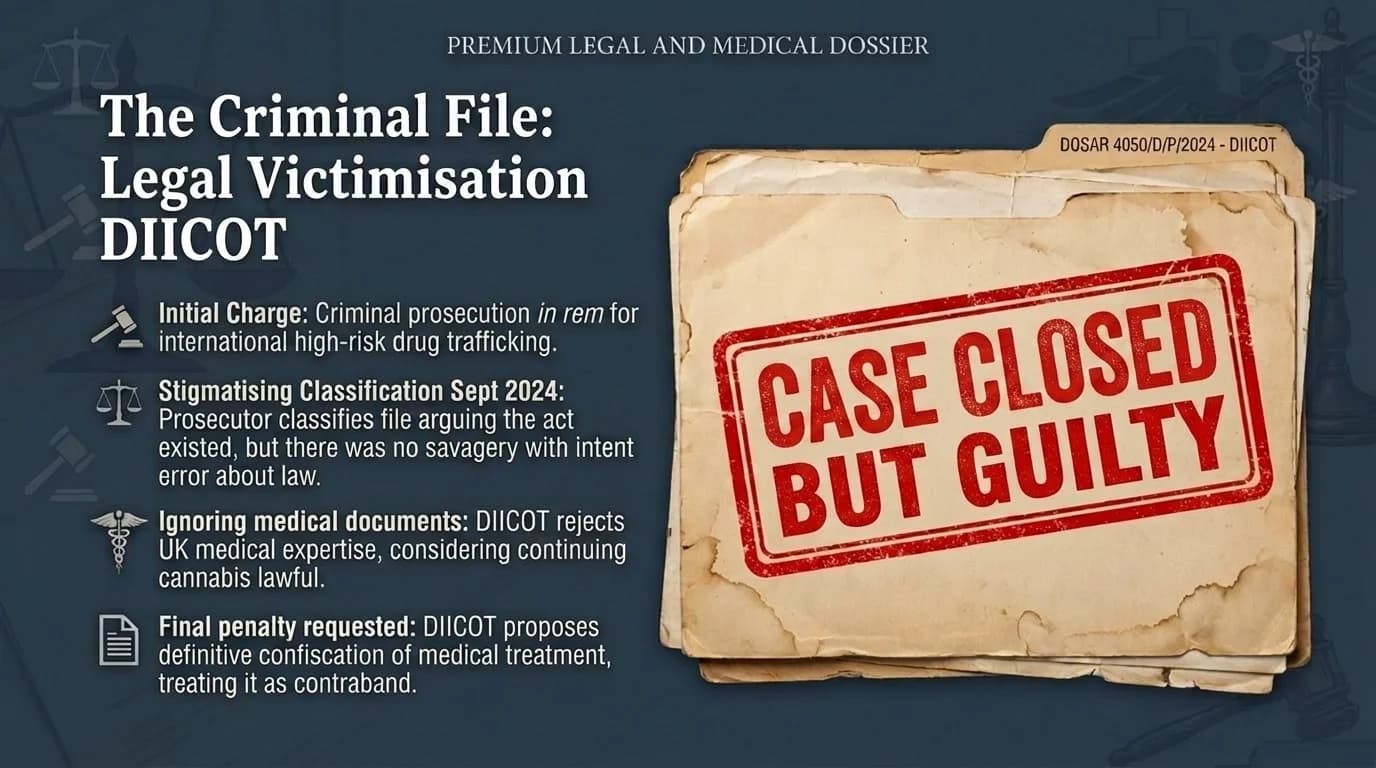
DIICOT consistently maintained that Romanian criminal law does not recognise exceptions based on health status or medical prescriptions issued in other states. Their argument was simple and brutal: cannabis is a controlled substance in Romania, regardless of context.
On 20 September 2024, the DIICOT prosecutor issued a classification order — but with deliberately ambiguous wording: classified under art. 16(1)(b) second thesis of the Code of Criminal Procedure. In plain terms: "the trafficking offence exists, but we forgive you because you lacked intent." We appealed. On 7 November 2024, the deputy chief prosecutor rejected the complaint with an argument that the courts later demolished: cannabis is not a medicinal product in Romania, the UK prescription has no legal standing on Romanian territory, and state policy is to criminalise any operation involving this plant.
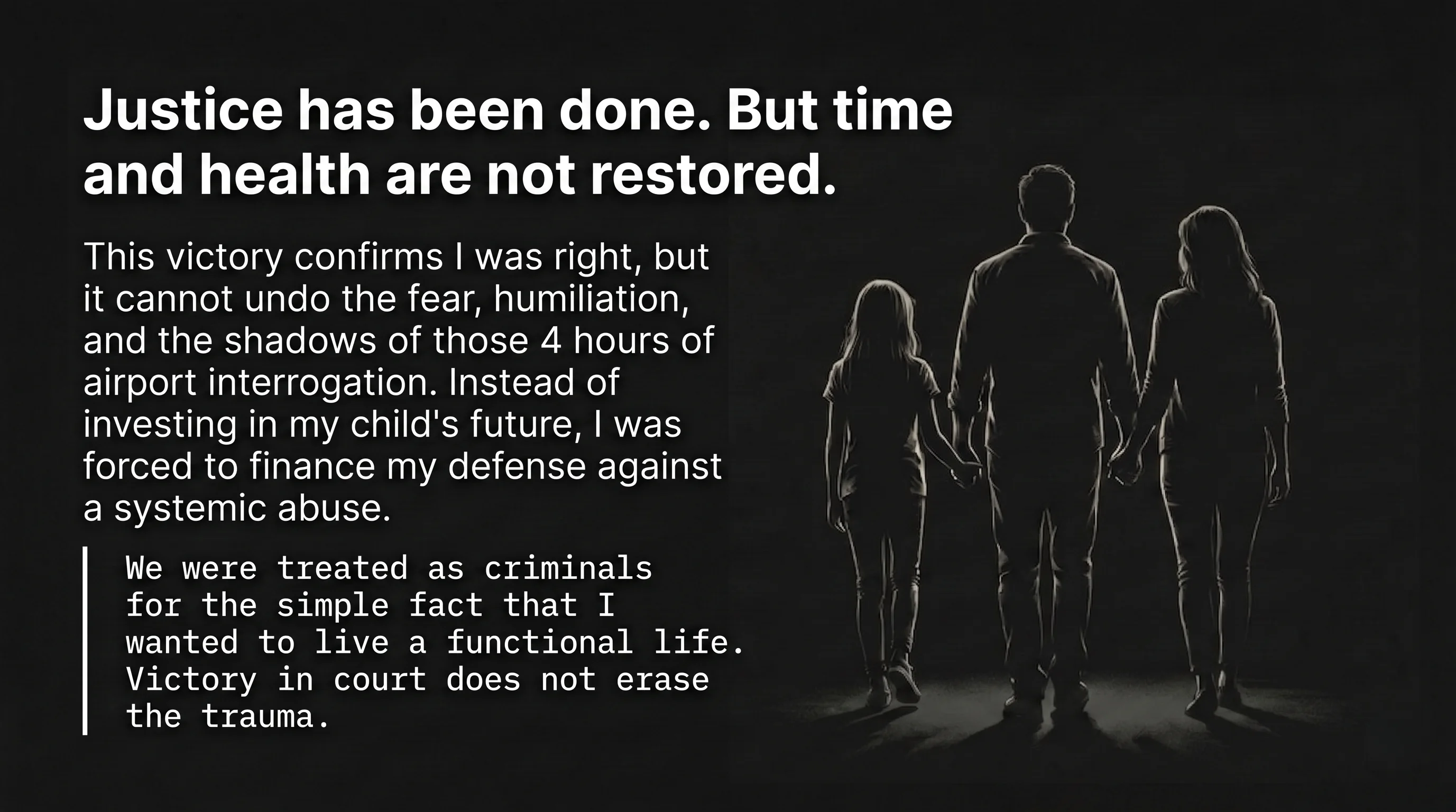
For 18 months, we carried not just the physical suffering of withdrawal and chronic illness, but the psychological terror of an open criminal case for "international drug trafficking." We spent substantial financial resources on lawyers and legal proceedings — money that should have gone toward education and healthcare. I was in my third year of university in the UK, training to become a psychotherapist — a path of recovery that medicinal cannabis had made possible after years in which I could barely sit with my daughter. The Romanian state attempted to end that too.
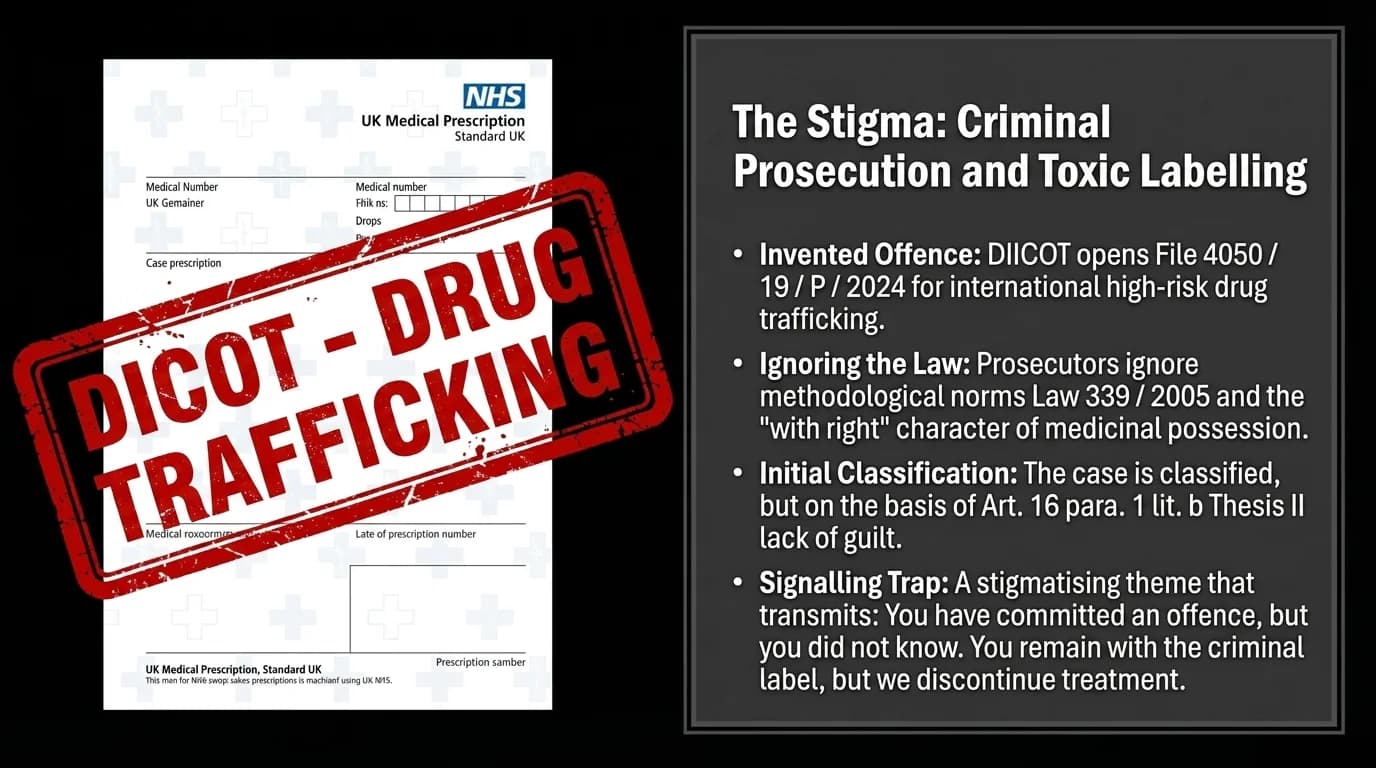
DIICOT Indictment (2024), paraphrasedRomanian criminal law does not recognise exceptions based on a citizen's health status for the possession of controlled substances, regardless of medical prescriptions issued in other states.
DIICOT's Version
“The law knows no exceptions”
- Cannabis = illegal drug, regardless of prescription
- UK prescriptions are irrelevant in Romanian criminal law
- GD 1915/2006 creates no criminal exceptions
- European legislation does not modify domestic legislation
The Documented Reality
“Legal patient, legal medicine”
- Valid prescription — European state (UK)
- Art. 49 GD 1915/2006 explicitly protects patients
- 3 courts: Bucharest Tribunal, Court of Appeal, Final Ruling — all pro-patient
- National precedent: medical cannabis ≠ criminal offence
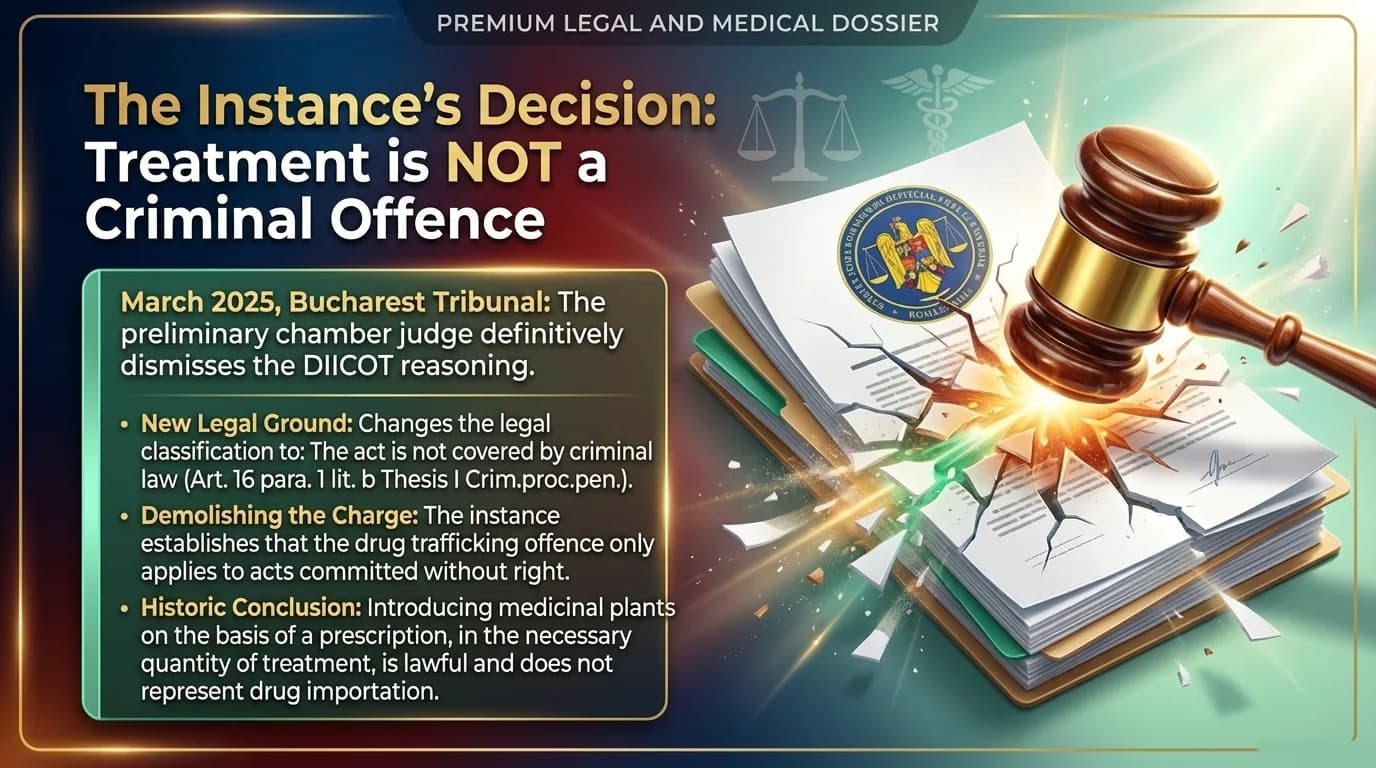
The timeline below condenses 18 months of legal proceedings into a single visual thread. Each entry marks a turning point — from the initial confiscation at Henri Coanda Airport, through the DIICOT investigation, to the three court hearings that each confirmed the same conclusion: the patient acted within the law. Reading them in sequence reveals both the emotional toll and the procedural absurdity of criminalising a legal medical treatment.
Case Timeline
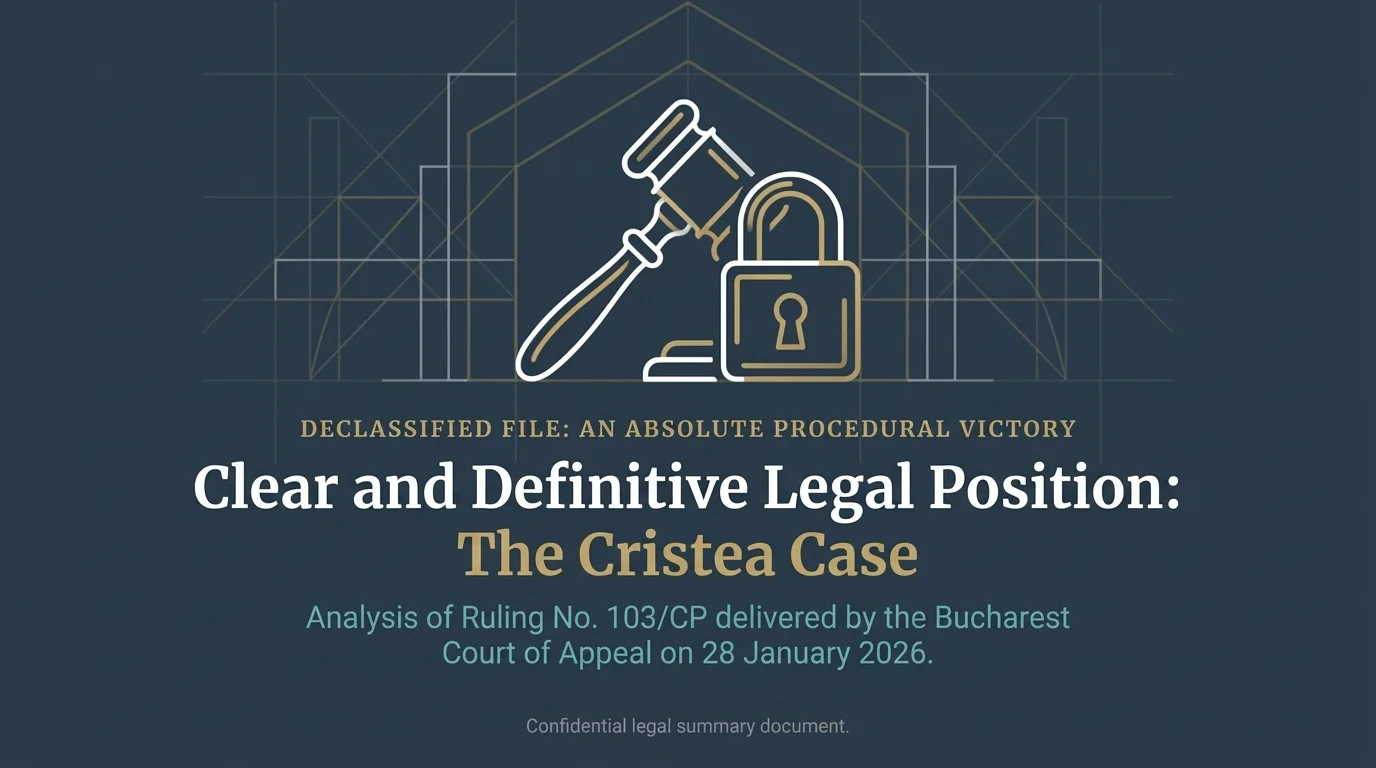
From the airport confiscation (23 July 2024) to the definitive ruling of the Bucharest Court of Appeal (28 January 2026) — 18 months, three courts, three victories, a score of 3–0. My right to be treated legally with medical cannabis on Romanian territory was confirmed definitively.
How fast the authorities responded
Days to the first written reply, by institution. The paper confirmations came quickly; the hard part was not speed but silence: of 15 direct requests to institutions, 4 went completely unanswered.
September 2022
IGPF + DGPV Written Confirmations
Written confirmations received from IGPF (no. 28850-28909, 23 Sep 2022) and DGPV (no. 20264, 22 Sep 2022) confirming the legality of transporting prescribed controlled substances at Romanian customs.
March 2023
Press Conference at the Romanian Parliament
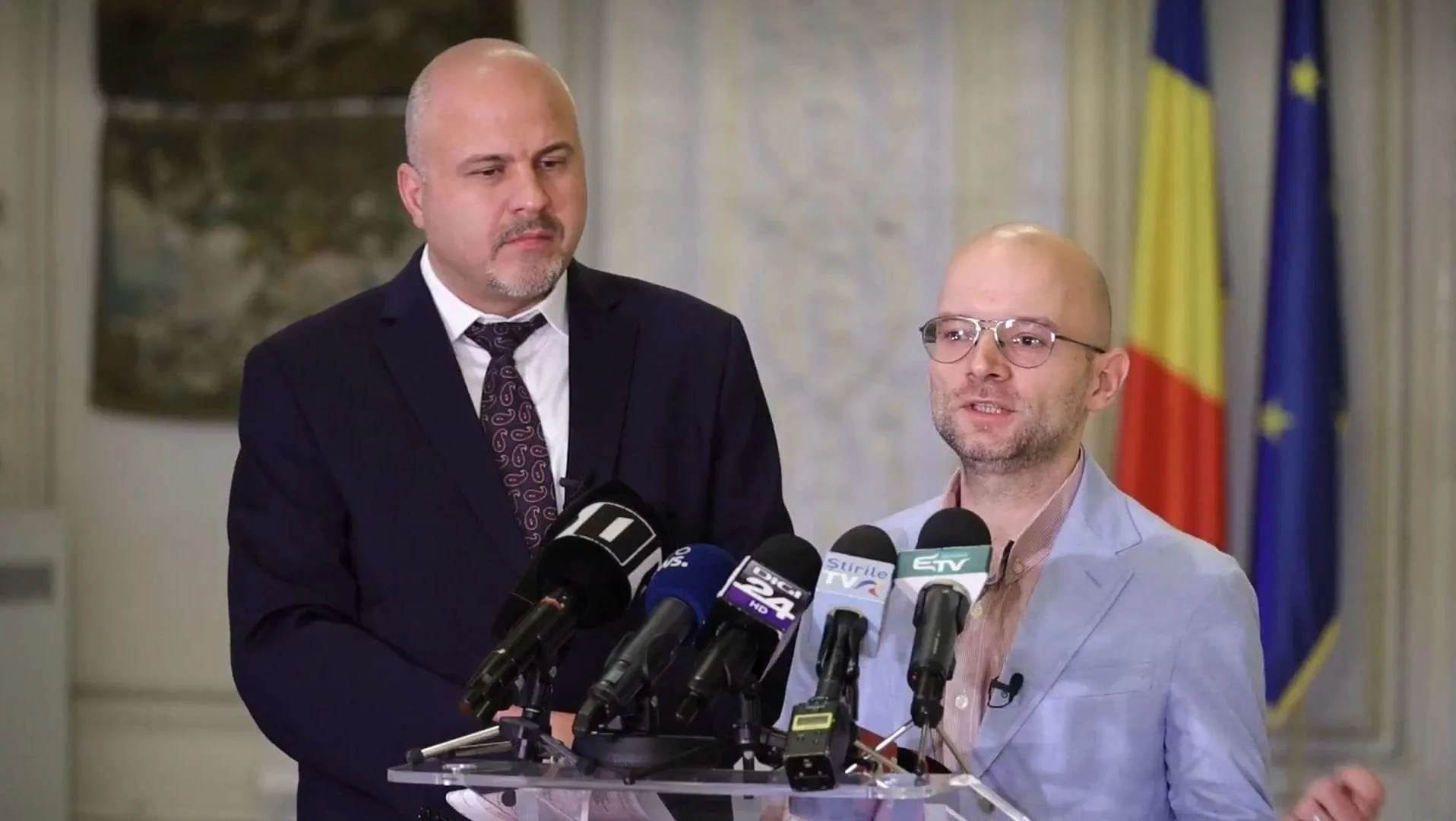
Alongside MP Emanuel Ungureanu, I brought my case to the attention of parliamentarians and the press. Victoria Law — the proposal for regulating access to medical cannabis — is put forward for debate. The law remains blocked.
2023
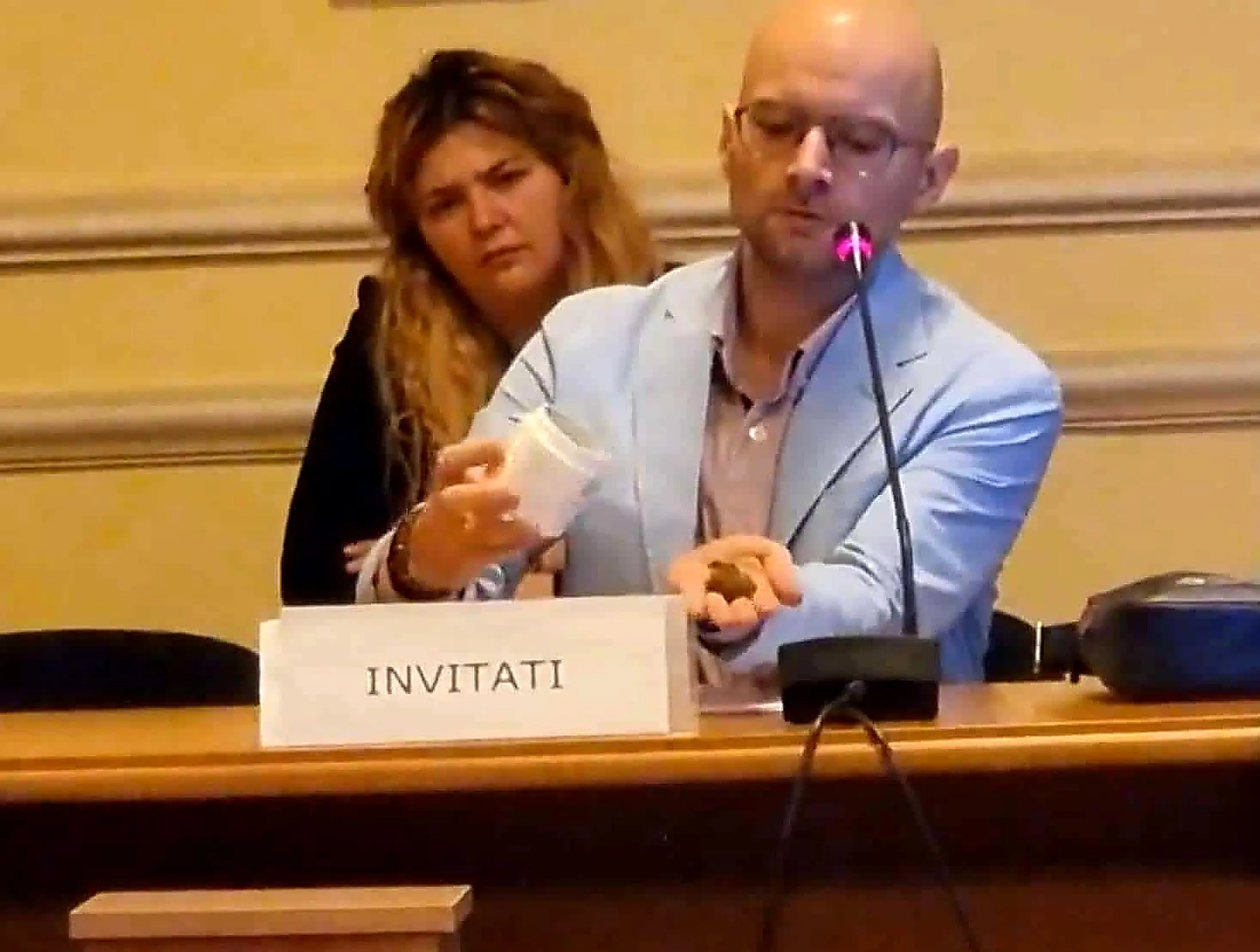
Health Commission — demonstrating the medical cannabis vaporizer
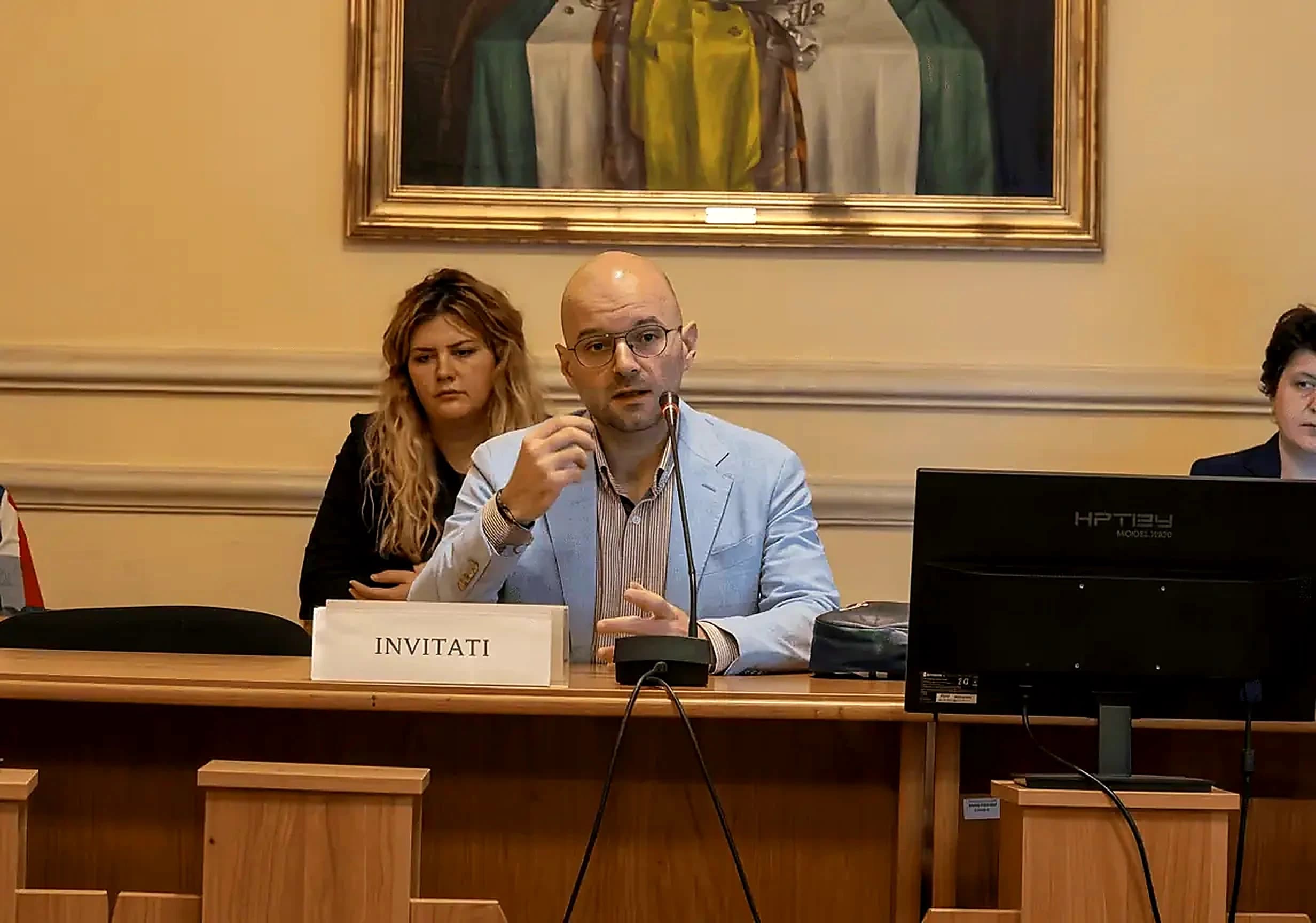
I presented the Romanian Parliament's Health Commission with what medical cannabis actually looks like — not pills or conventional medication, but cannabis flower meant to be vaporized with a specialized medical device. I demonstrated in front of the commission how the vaporizer works.
23 July 2024
Confiscation at Henri Coanda Airport (family holiday)
At the red channel, customs officers confiscate 9.67g + 14.68g of medical cannabis with valid UK prescription. My wife and I presented complete documentation. DIICOT opens a criminal file the next day (24.07.2024). A four-hour interrogation follows in the presence of our minor daughter.
20 Sept. 2024 — 7 Nov. 2024
DIICOT — Dismissal with confiscation proposal
DIICOT dismisses the case (20.09.2024) under Art. 16(1)(b) Thesis II — lack of culpability — but still proposes special confiscation of the treatment. On 7 November 2024, DIICOT rejects the complaint against the dismissal order. The medication remains confiscated.
11 March 2025 · Case 45878/3/2024
Bucharest Tribunal — First Victory
The Bucharest Tribunal changes the dismissal basis from Thesis II to Thesis I — the act is not provided for by criminal law. The court recognises the validity of the medical prescription and Art. 49 of GD 1915/2006. Patient acquitted. First of three victories.
17 October 2025 · Case 24750/3/2025
Bucharest Tribunal — Second Victory (Restitution)
The Tribunal rejects DIICOT confiscation and orders full restitution: 9.67g + 14.68g medical cannabis. Court costs at state expense. Patient conduct confirmed as lawful under Art. 16(1)(b) of the Criminal Code.
28 January 2026 · Bucharest Court of Appeal · Case 4362/2025
Bucharest Court of Appeal — Final Definitive Ruling
The Bucharest Court of Appeal delivers the final and irrevocable ruling: DIICOT appeal dismissed as inadmissible, score 3–0. All three courts reached the same conclusion: “The state does not return drugs. The state returns medicines.”
Continue to Part III
What comes after victory
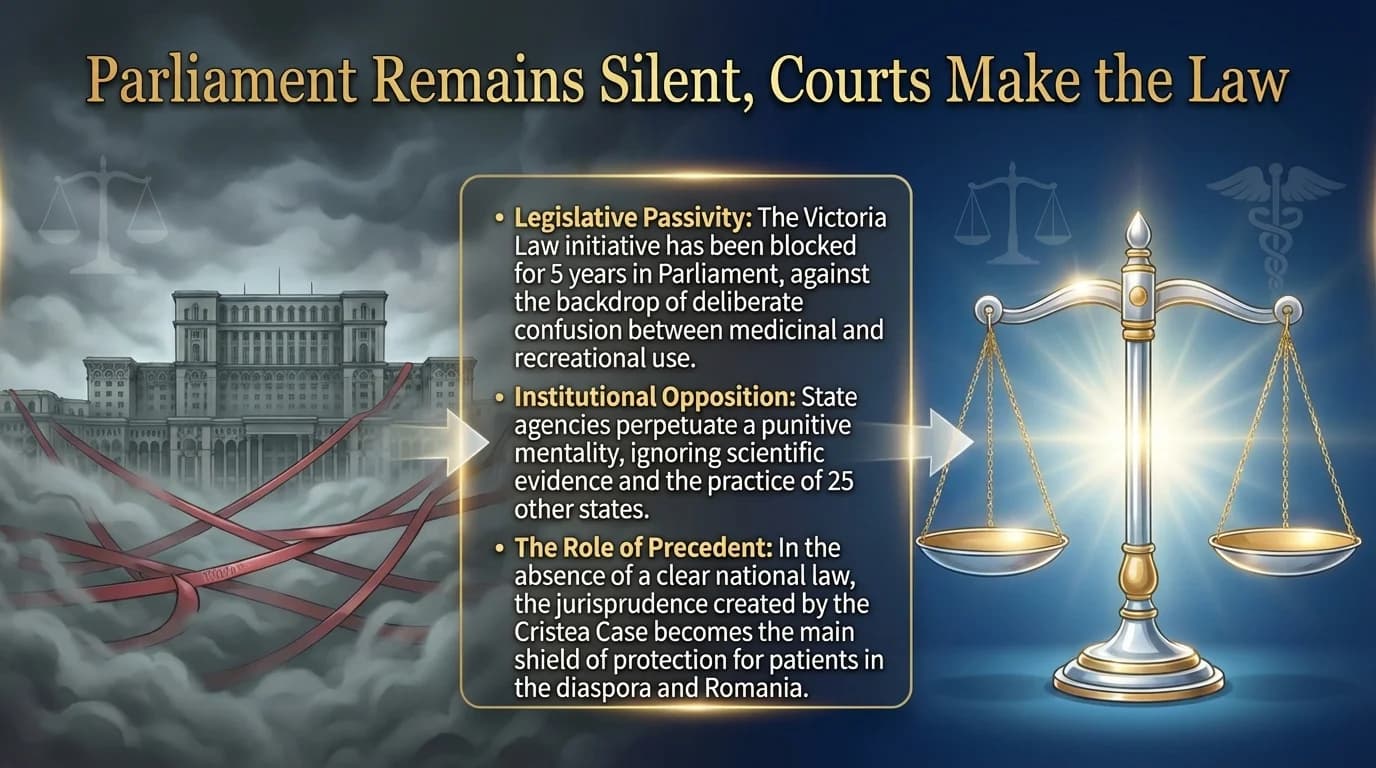
The court victory is not the end. I have filed a lawsuit against the Romanian state, the Customs Agency, and DIICOT for the abuses committed — from the illegal confiscation and partial destruction of medication through laboratory testing, to 18 months of criminal proceedings for an act that does not exist. The precedent is established, but in Romania a precedent does not apply automatically. That is why political and legislative pressure must continue.
The story continues with DIICOT vs. Patient, the three court victories, international law, and the urgency of Victoria Law.
New articles, directly to your inbox
Neuro-affirming content on ADHD, autism, AuDHD and PDA
— no spam, no aggressive frequency.