What We Know About ADHD in 2026: Medication, the Body and What Actually Helps
The new international consensus on ADHD and the major studies of the last five years: what medication does, what is worth monitoring, how ADHD connects to physical health and which kinds of support really work.
For a few years now, two stories about ADHD have been doing the rounds, and they contradict each other. One says ADHD has become a fashion, that it is handed out too easily and that the pills just keep people quiet. The other says ADHD is everywhere and medication fixes everything. Neither is true. And if you have ADHD, both can leave you doubting what you live with every day.
In November 2026 the most comprehensive scientific summary of ADHD so far was published: the updated international consensus statement from the World Federation of ADHD. I read it and set it alongside the major studies of the last five years. As a therapist, and as someone who has ADHD himself, I wanted to understand what has actually changed. Here is what I found.
In short
- ADHD is a real and common condition across the whole lifespan: it affects almost 8% of children and around 3% of adults.
- Medication has the strongest evidence of any form of support. In studies of hundreds of thousands of people, starting it is linked to fewer accidents, fewer suicide attempts and fewer early deaths. Taken for many years, it can raise blood pressure, so it is worth keeping an eye on.
- ADHD is also connected to physical health: blood pressure, diabetes, sleep, migraine.
- Exercise that also makes you think helps, and so does psychotherapy for adults (most of the evidence is for cognitive behavioural therapy). Supplements and neurofeedback have not stood up to rigorous testing.
What this consensus is
The first consensus statement came out in 2021 with 208 conclusions. The 2026 update is signed by 118 researchers and clinicians from 29 countries on six continents.
The authors only included studies published between January 2021 and July 2025 that met a strict threshold. Either cohorts of at least 2,000 people, or meta-analyses (studies that pool the results of other studies) of at least five studies or 2,000 participants, which had checked whether inconvenient results might have gone unpublished. That process produced 252 conclusions.
The threshold matters. The document does not rest on small studies or on impressions. It rests on what holds up when you look at hundreds of thousands of people, sometimes millions.
The overall message is clear: ADHD is a real, common and well documented neurodevelopmental condition. The authors state plainly that trivialising it has serious consequences.
How common ADHD is
Careful population studies, which assess people whether or not they have ever asked for help, find ADHD in 7.6% of children, 5.6% of adolescents and around 3% of adults. The figure falls with age, to under 1% after 65, partly because older generations describe their experiences differently.
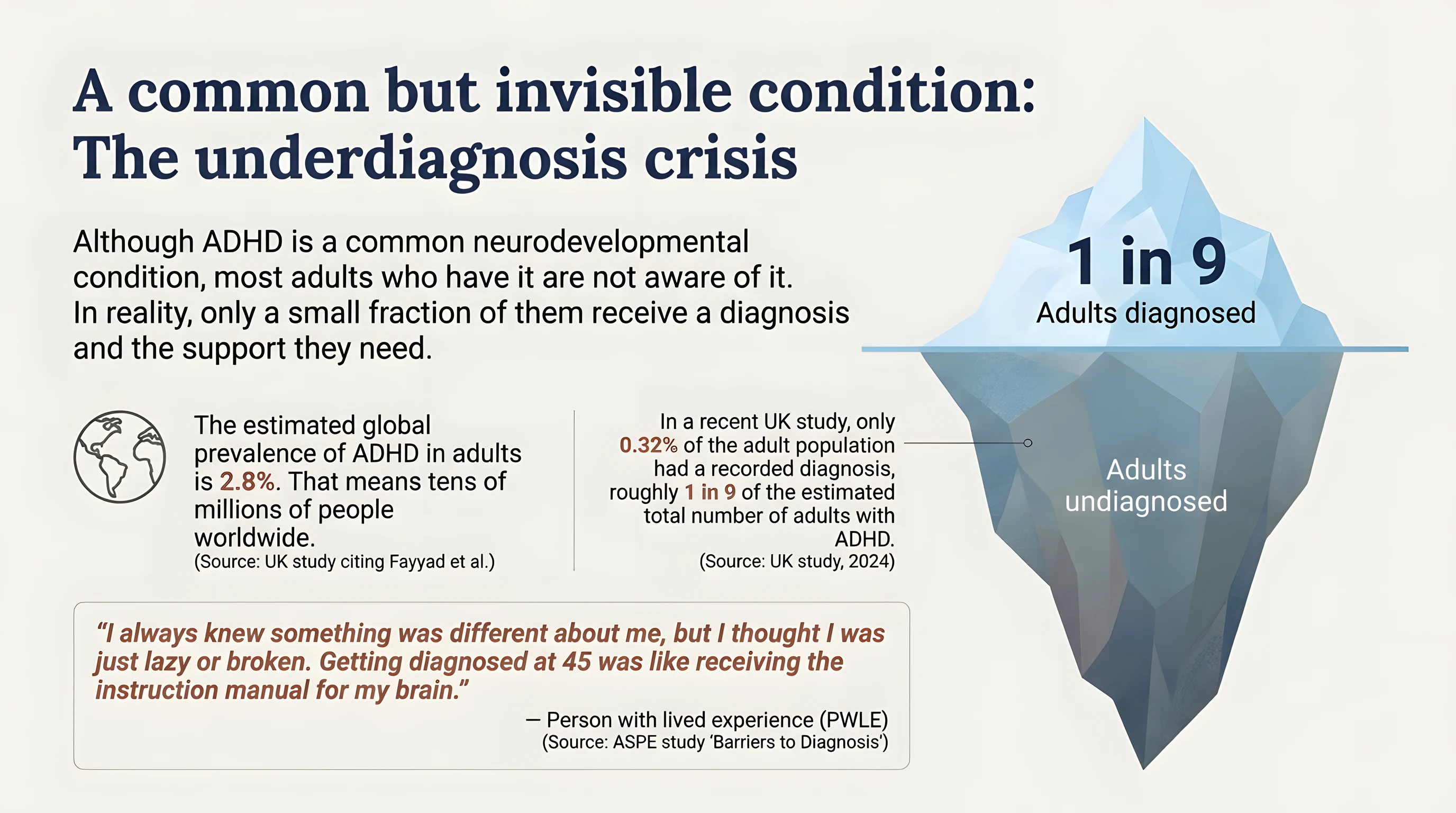
The consensus draws a distinction I find very useful. One thing is how many people have ADHD. Another is how many have been diagnosed. The second figure varies enormously between countries and between social groups. In some health systems more diagnoses are made than population studies would suggest. In others, even within the same country, many people are never seen at all.
So the answer to "is ADHD overdiagnosed or underdiagnosed?" is: both, in different places and for different people. The authors suggest a different question, which I think is the right one: are people with ADHD getting the support they need?
Two details say a lot:
- In adults, ADHD that started in childhood is just as common in women as in men. Yet in childhood, boys are diagnosed almost twice as often as girls. The difference does not come from the brain. It comes from who gets noticed.
- The youngest children in a school year, born just before the cut-off date, are diagnosed more often. What is ordinary for their age is sometimes read as ADHD. It is one of the reasons a careful assessment makes a difference.
What turned out not to cause ADHD
Genes remain the main factor. Heritability, the share of the differences between people that is explained by genetic inheritance, is estimated at 75 to 80%. There is no single "ADHD gene". There are thousands of small variants, each with a tiny effect, meeting the environment.
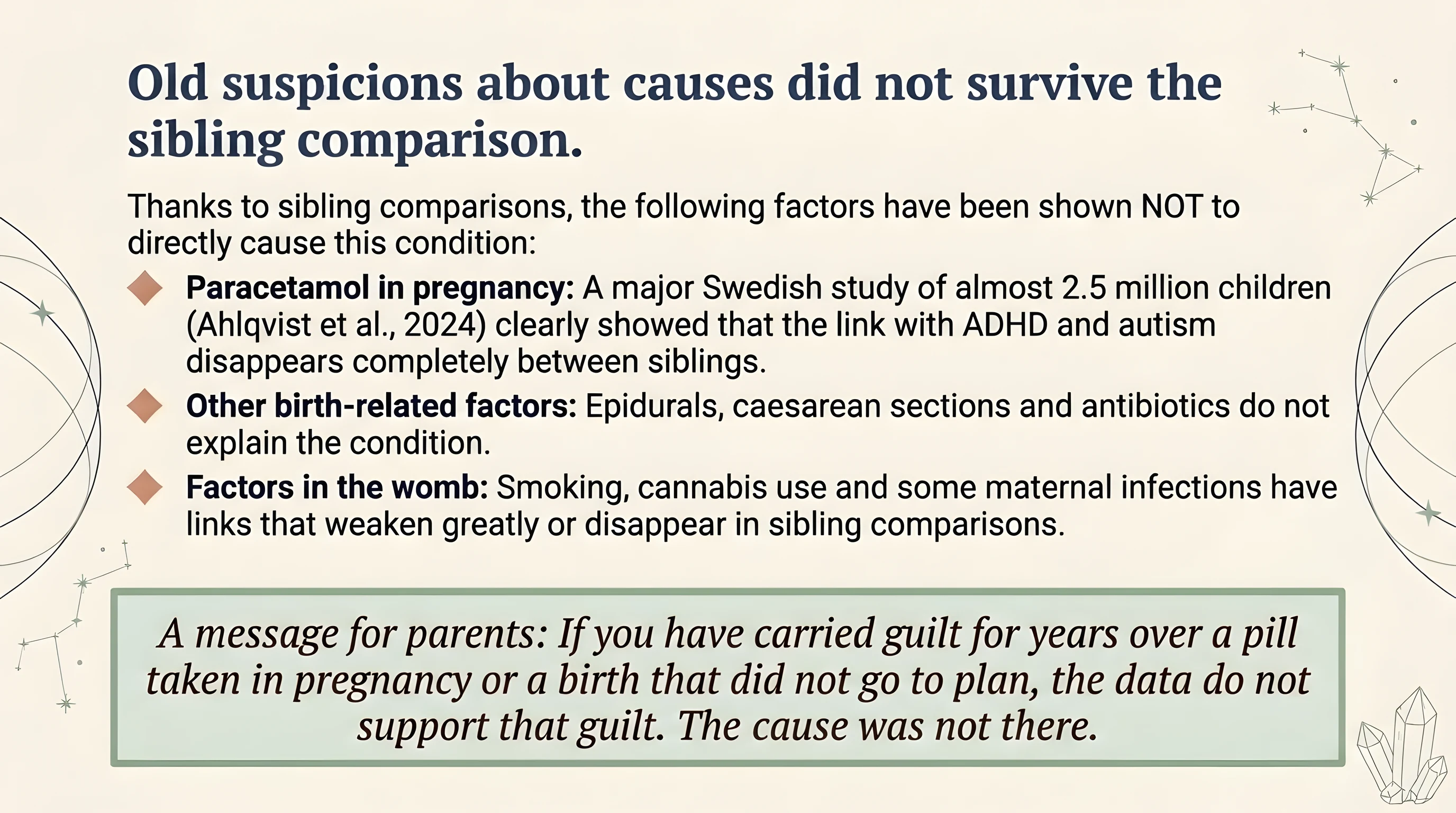
The most interesting findings of recent years come from a simple method: comparing siblings. Siblings share a family, a home, some of their genes and many habits. If something, say a medicine taken during pregnancy, looks linked to ADHD across the population, but the link disappears when you compare two siblings, one exposed and one not, then that factor was not the cause. It was a marker of things the family already had in common.
That is how several old suspicions have fallen away:
- Paracetamol in pregnancy. A Swedish study of almost 2.5 million children (Ahlqvist and colleagues, 2024) first found a very small link. When the researchers compared siblings, the link vanished completely, and so did the link with autism. The topic came back into public debate in 2025, so it is worth saying clearly: the most robust data do not show that paracetamol causes ADHD.
- Epidurals, caesarean births, some maternal infections, antibiotics, and smoking and cannabis in pregnancy. Their links with ADHD weaken a lot or disappear in sibling comparisons. That does not mean smoking in pregnancy is harmless. It means it is not what explains ADHD.
What does remain linked to ADHD: premature birth, low birth weight, some metabolic conditions in the mother during pregnancy, and severe adversity in the first years of life.
If you are a parent and have carried guilt for years over a tablet taken in pregnancy, or over a birth that did not go the way you hoped, it may be time to put that guilt down. The data do not support it.
ADHD and the body
This is one of the biggest changes since 2021. ADHD is not only about attention, school or work. National health registers show that people with ADHD more often have diabetes (type 1 and type 2), excess weight, high blood pressure and other heart and circulation problems, epilepsy, migraine, chronic pain, sleep problems, some allergies and autoimmune conditions, and dental problems. Later in life there is also a higher likelihood of dementia.
The authors stress that these links are not explained only by other mental health conditions, nor by medication. They probably come from several places at once: shared genes, habits that are hard to keep up when takes a lot of effort (sleep, regular meals, medical appointments) and, importantly, a lack of preventive care.
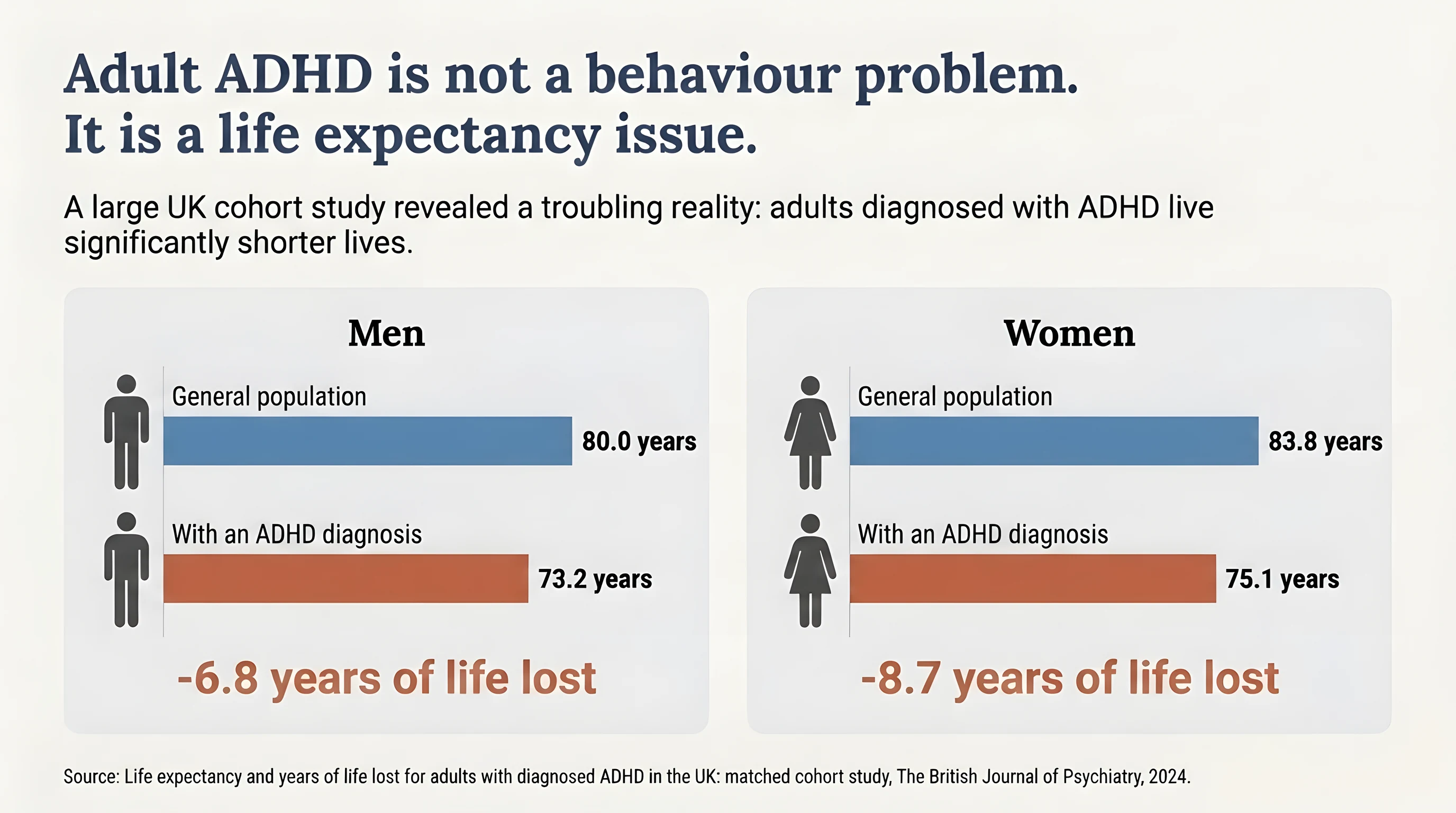
A UK study feels essential here. O'Nions and colleagues (2025) compared more than 30,000 adults diagnosed with ADHD with 300,000 people without ADHD, using GP records. Adults with ADHD lived on average around 6.8 years less if they were men and 8.6 years less if they were women. The authors do not draw a fatalistic conclusion. They believe the gap comes largely from things that can change, and from support needs left unmet, both for ADHD itself and for the health around it.
For me the conclusion is simple: when we talk about ADHD, we are also talking about blood pressure, sleep and check-ups. They are not a separate chapter. If you have ADHD and haven't seen your GP in a long while, I'd say you should book an appointment: a blood test, a blood pressure reading, a conversation about sleep. Small things that matter a great deal over the long run. I have written more about this in Why I ask how you're sleeping, what you're eating and where it hurts.
Medication, without the exaggeration
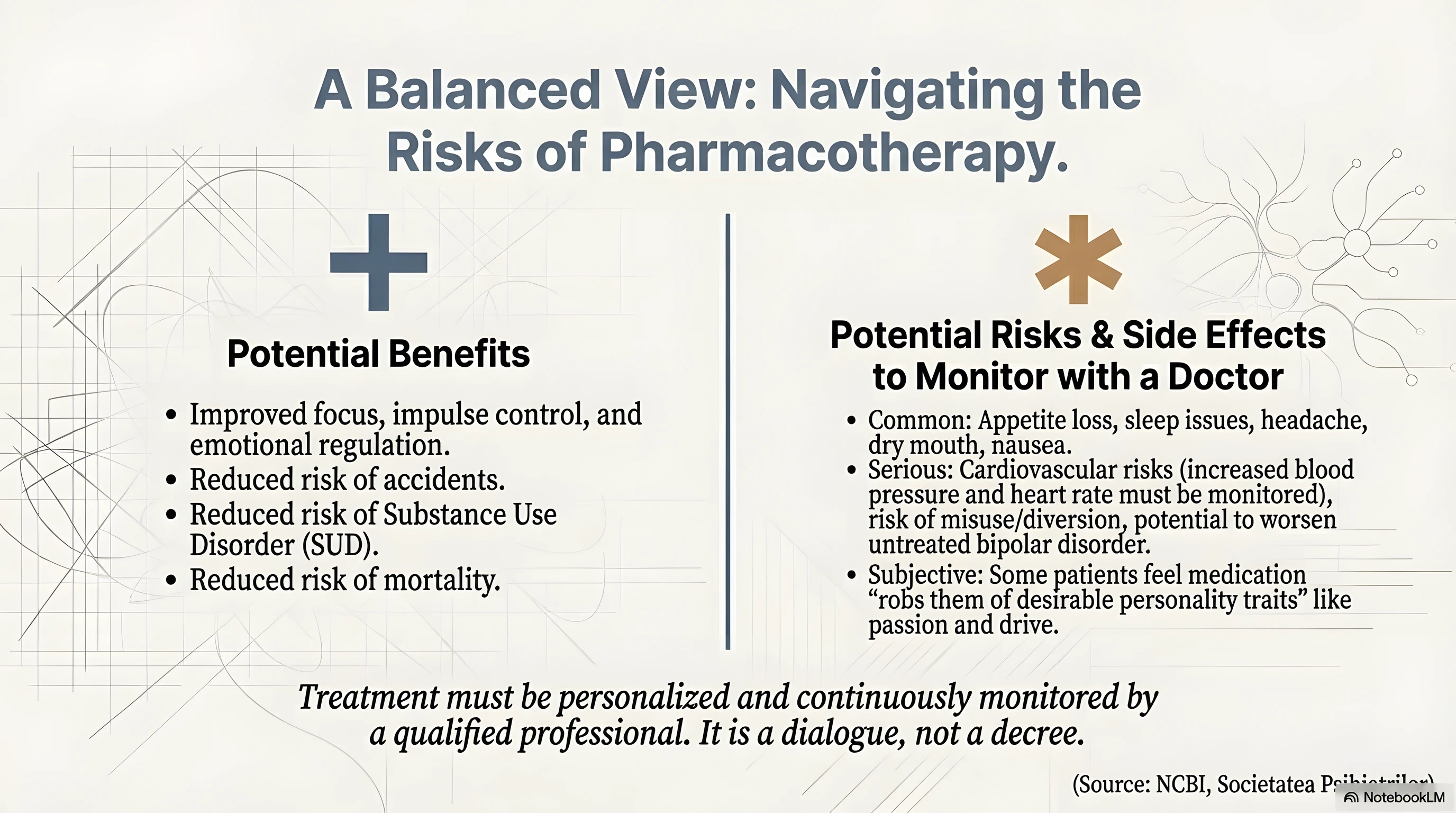
I know this is the most charged topic. Some people are afraid of medication. Others experienced it as the moment when, after years of effort, things finally started to work. Let me tell you up front what I think, having read the studies: medication deserves to be taken seriously as an option. It shouldn't be dismissed out of fear or because of what circulates on social media, but it isn't a solution to everything either. You make the decision with your doctor. What matters is that you make it informed.
In the short term
Medication remains the form of support with the strongest evidence for the core difficulties of ADHD: attention, , restlessness.
For children and adolescents, a large review in the BMJ (Gosling and colleagues, 2025), which re-analysed 221 meta-analyses, shows medium to large effects for methylphenidate, amphetamines (including lisdexamfetamine), atomoxetine, guanfacine and viloxazine. Methylphenidate has the most consistent results, whoever does the rating: parent, teacher or clinician.
For adults, an analysis comparing 113 trials with almost 15,000 participants (Ostinelli and colleagues, 2025) found that stimulants and atomoxetine were the only treatments that reduced core difficulties on both clinician ratings and people's own ratings. The effects are moderate, smaller than in children. Bupropion and modafinil did not prove better than placebo.
Two nuances I think matter. First, the placebo response in ADHD is large. That does not mean medication does nothing. It means expectations, the attention you receive and the structure of a study also help. It is one more reason to judge the effect in your everyday life, not only on a questionnaire. Second, in adults, doses above the recommended range add very little benefit and a lot more unpleasant side effects. If your dose keeps going up and you don't feel a clear gain, it is worth asking why.
In real life
Clinical trials usually last a few weeks. For the big questions (what happens over years, in everyday life?) researchers use national health registers, especially in Sweden, with methods designed to mimic a clinical trial.
A study of almost 150,000 Swedes diagnosed with ADHD (Li and colleagues, 2024) found that people who started medication within three months of diagnosis had 21% fewer deaths from any cause over the next two years. The difference came mostly from deaths from unnatural causes (accidents, accidental poisoning, suicide), which were 25% lower. There was no clear difference in deaths from illness.
In the same population (Zhang and colleagues, 2025), starting medication was linked to 17% fewer suicidal behaviours, 15% less substance misuse, 12% fewer road traffic accidents and 13% less offending. For everyday injuries the difference was not clear. The effects were larger in people who had been through such events before.
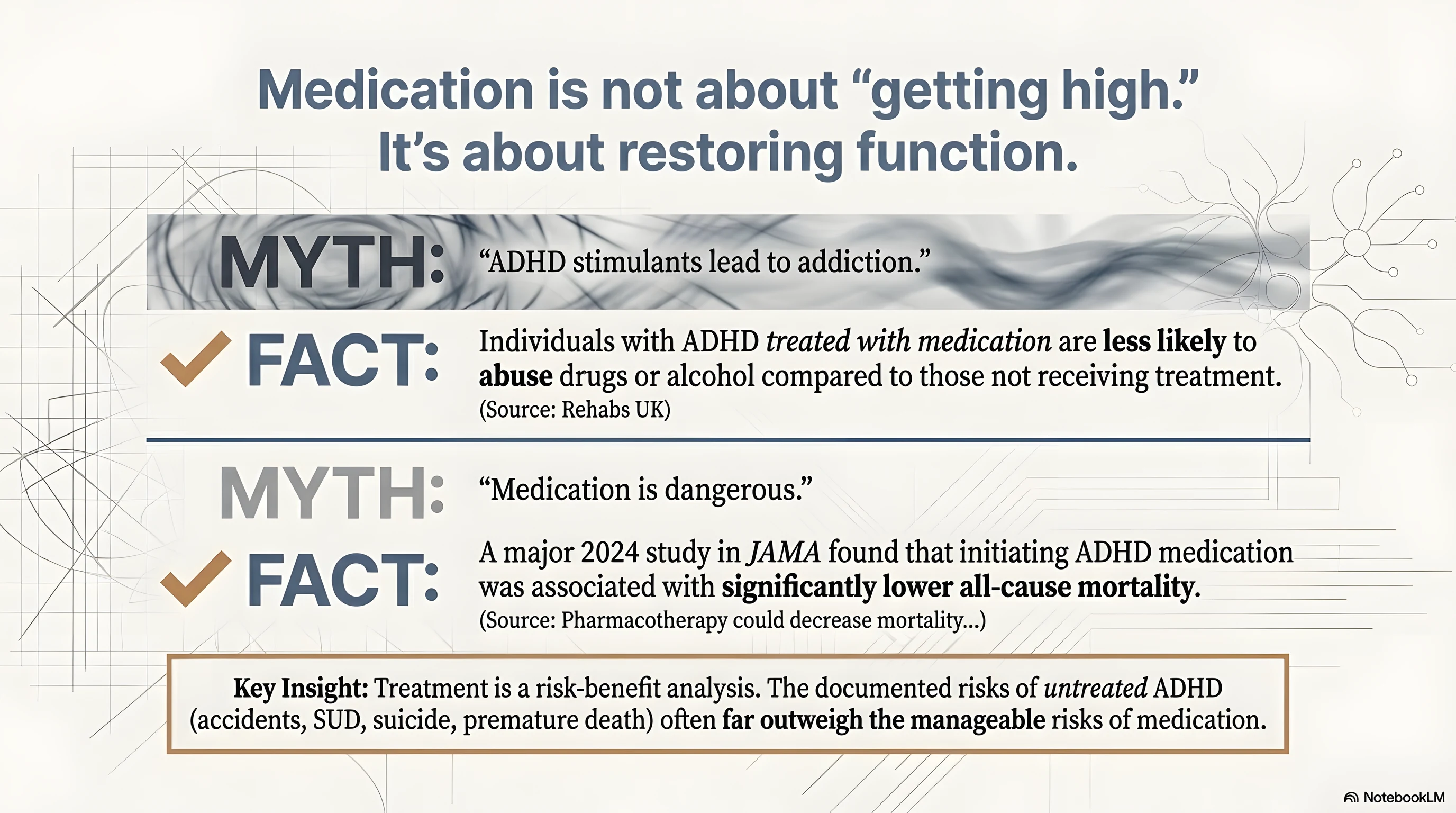
Other register studies link medication to fewer hospital admissions and less unemployment.
The consensus also includes an honest nuance. A Swedish study following the years 2006 to 2020 (Li and colleagues, 2025) found that the benefits, while still present, shrank as medication reached more and more people. The reduction in road traffic accidents, for example, fell from 29% to 13%. One possible explanation: when people with milder difficulties also receive medication, the average gain gets smaller. Medication does not help everyone equally.
There is something else I appreciate about this consensus. It acknowledges that clinical trials do not always look like real people. In one Swedish analysis, more than half of people with ADHD, and three quarters of adults, would not have qualified for standard clinical trials, because they had other conditions, used substances or had more complicated lives. In other words, exactly the people I often meet in my practice.
Safety
Heart and blood pressure. In the short term, stimulants raise heart rate and blood pressure slightly, and so does atomoxetine. Guanfacine lowers them (Farhat and colleagues, 2025). Large meta-analyses have not found more heart attacks, strokes or heart rhythm problems. A 14-year Swedish study (Zhang and colleagues, 2024), however, showed that long-term use, especially of stimulants, is linked to a higher likelihood of high blood pressure: each year of medication added on average around 4% to the likelihood of heart or circulation disease, mainly through hypertension. This is why the consensus authors and clinical guidelines recommend regular blood pressure and heart rate checks, especially for adults and for people who already have heart or blood pressure problems. If you have been on medication for a few years, you should know your blood pressure. A home upper-arm monitor is inexpensive and gives you numbers you can show your doctor.
Psychosis and mania. These are rare. Still, a 2024 study (Moran and colleagues) found that high doses of amphetamines, above the equivalent of 30 mg of dexamfetamine a day, were linked to a several times higher likelihood of a first psychotic or manic episode. No such link was seen with methylphenidate. It is one of the reasons doses are adjusted gradually, together with your prescriber.
Dependence. One of the most widespread fears is "if I take stimulants, I'll get hooked". Large studies following teenagers for years show that prescribed ADHD medication does not increase the likelihood of later cocaine, methamphetamine or other substance use, and may even lower it. The real problem lies elsewhere: stimulants taken by people without ADHD, "for exams", usually supplied by friends. That pattern is linked to later problematic use. If fear of dependence is the only reason you are avoiding medication, today's data do not back it up. And if you do take medication, you shouldn't share it with anyone, not even "just for an exam".
Pregnancy. Studies from Denmark and Sweden covering more than 1.9 million children (Bang Madsen and colleagues, 2023 and 2025) found no higher likelihood of autism, ADHD or other developmental differences in children exposed in pregnancy to methylphenidate, amphetamines or atomoxetine, compared with children whose mothers had stopped their medication. Other studies found no increase in birth defects or miscarriage either. It remains a decision to make with your doctor, but it can be made without a fear the data do not support.
What we don't know yet
The BMJ review says it directly: for no form of ADHD support, neither medication nor therapy, do we yet have high-certainty evidence over the long term. We have very good data over weeks and months, and good observational data over years, but no clinical trials following people for decades. The adult analysis did not find, in short trials, a clear effect of medication on quality of life, although other meta-analyses show small to moderate improvements. Many people stop medication at some point, and research into who needs it long term is only just beginning.
What helps beyond medication
This is where the consensus changes most compared with 2021.
Exercise has gained ground. In 2021, after statistical corrections, its effect on ADHD looked close to zero. Now the studies show that regular, moderate to vigorous physical activity, especially the kind that also makes you think (sports where you react, decide and adapt on the move), clearly improves executive function: stopping an impulse, switching between tasks, . The effect on the core difficulties is smaller. The consensus recommends it as additional support, not a replacement. If I had to pick one thing to add alongside medication or therapy, I would pick movement. Ideally something that makes you think, not just running on a treadmill: a team sport, dance, climbing, martial arts.
Cognitive behavioural therapy for adults is the only non-medication support with at least moderate-certainty evidence, according to the BMJ review. It helps with remaining difficulties, with anxiety and with self-esteem. The effects are smaller in more rigorous studies, where the people doing the rating don't know who received the therapy.
Parent programmes change how parents feel and their relationship with their child, and this shows, a little to moderately, in the child's life too. Good programmes do not try to "fix" the child. They change the environment around them.
Mindfulness shows good results mainly against groups who receive nothing. Compared with other active support, the advantage disappears.
What has not held up:
- Supplements. Omega-3, vitamins, zinc, ginkgo, antioxidants and probiotics showed no clear benefit over placebo. In 2021 omega-3 was still seen as a possible help. That conclusion has now changed.
- Neurofeedback. A 2025 meta-analysis of 38 studies (Westwood and colleagues) found that when the raters don't know who received the real version and who a simulated one, the effect on ADHD is practically zero.
- Computer-based cognitive training improves the exercises that were practised, working memory for example, but the effect does not carry over into everyday life.
- Electrical or magnetic brain stimulation still has too few good studies to draw a conclusion.
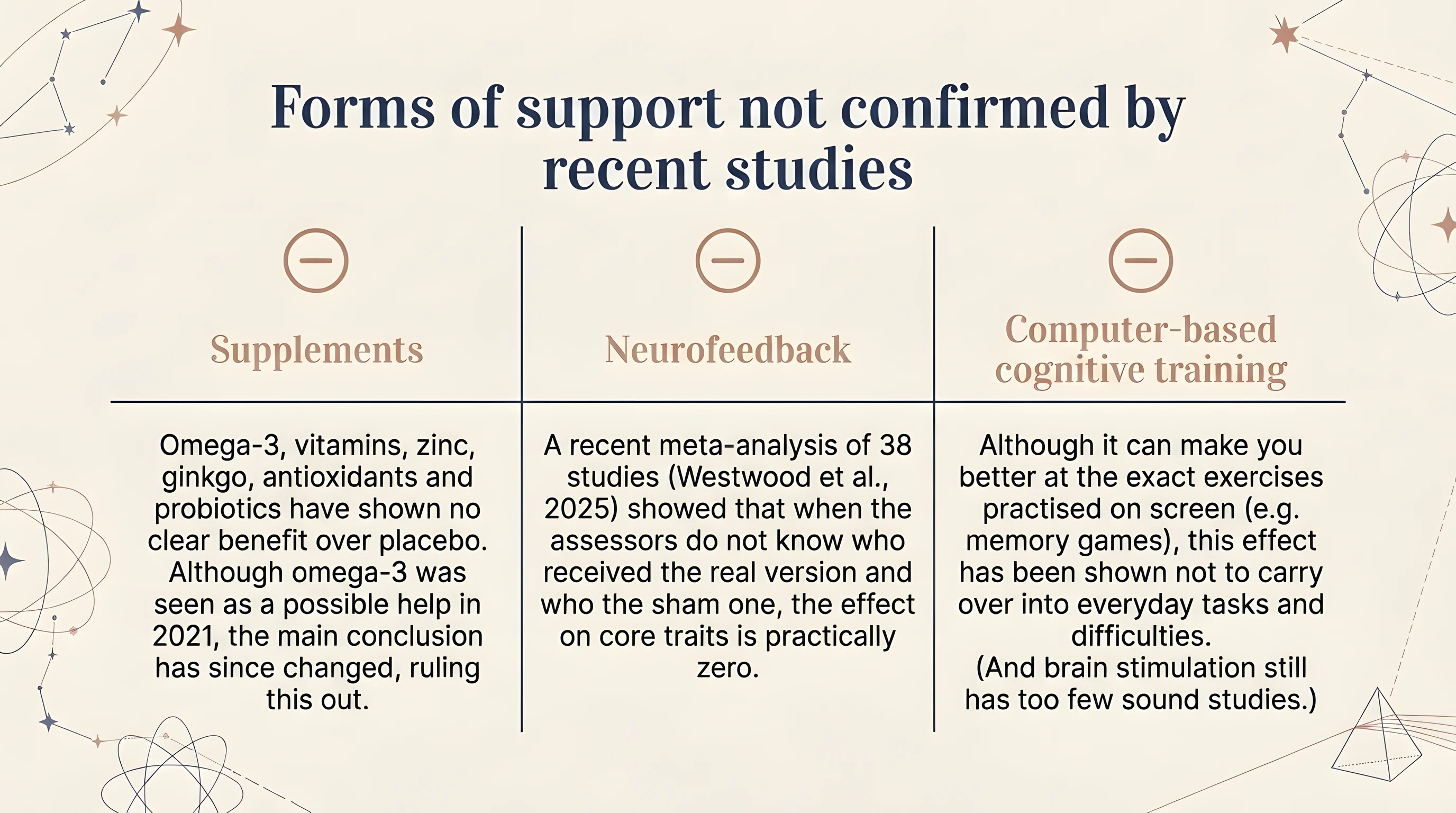
None of this means these approaches have never helped anyone. It means that, taken together, the studies do not support them. Personally, I wouldn't spend money on supplements or neurofeedback for ADHD. Your money, time and energy are better spent on movement, sleep and therapy.
What remains after all the numbers
When I read these studies, I think of the people I work with. Many heard for years that they just needed to "try harder". Some found out they had ADHD at 30, 40 or 50. Others wrestle with the idea of medication, because they grew up being told it would be a crutch.
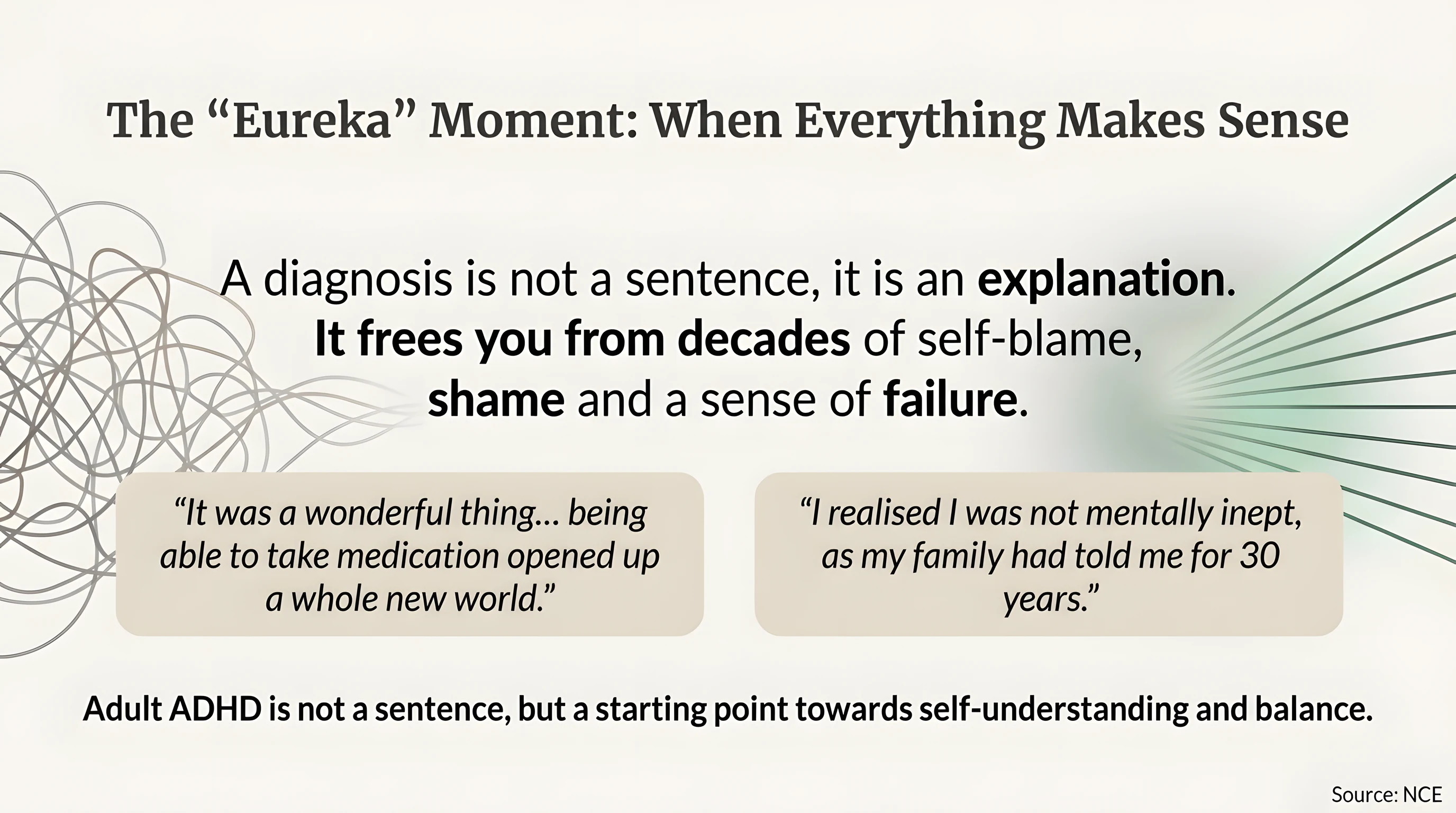
The numbers don't choose for you. But after everything I have read, a few things seem fairly clear to me:
- Your difficulties have a real basis. They are not a flaw of character, and you shouldn't keep treating them as one.
- Medication deserves a serious conversation with a doctor, not a refusal on principle. It has real benefits and side effects that can be monitored. It is not compulsory, and it does not help everyone equally.
- Your body is part of the story. Sleep, movement, blood pressure and check-ups should be on your list, not at the bottom of it.
- Therapy works alongside medication, not instead of it, and often on different levels: the shame built up over years, how you see yourself, relationships, a life shaped around how your mind works rather than how you were told it should.
- What has no evidence behind it (supplements, neurofeedback, miracle programmes) can wait.
The authors close the document by saying it shows how science corrects itself: some old impressions are confirmed, others are refined, others are replaced altogether, as bigger and better studies arrive. I would like us to approach ADHD the same way: with curiosity, and without dogma in either direction.
If you recognise yourself in what you've read and would like to talk about how ADHD shapes your life, with or without medication, the first conversation lasts 30 minutes and is free. I have also written about how I work with adults with ADHD on the ADHD therapy page.
Sources
Main source:
- Faraone, S. V., Pritchard, A. E., Bellgrove, M. A. et al. (2026). The World Federation of ADHD International Consensus Statement: 2026 update. Neuroscience & Biobehavioral Reviews, 193, 107083. doi:10.1016/j.neubiorev.2026.107083
Studies cited directly:
- Ahlqvist, V. H. et al. (2024). Acetaminophen use during pregnancy and children's risk of autism, ADHD, and intellectual disability. JAMA. doi:10.1001/jama.2024.3172
- Bang Madsen, K. et al. (2023). In utero exposure to ADHD medication and long-term offspring outcomes. Molecular Psychiatry. doi:10.1038/s41380-023-01992-6
- Bang Madsen, K. et al. (2025). In utero exposure to methylphenidate, amphetamines and atomoxetine and offspring neurodevelopmental disorders. Molecular Psychiatry. doi:10.1038/s41380-025-02968-4
- Farhat, L. C. et al. (2025). Comparative cardiovascular safety of medications for attention-deficit hyperactivity disorder in children, adolescents, and adults. The Lancet Psychiatry. doi:10.1016/S2215-0366(25)00062-8
- Gosling, C. J. et al. (2025). Benefits and harms of ADHD interventions: umbrella review and platform for shared decision making. BMJ. doi:10.1136/bmj-2025-085875
- Li, L. et al. (2024). ADHD pharmacotherapy and mortality in individuals with ADHD. JAMA. doi:10.1001/jama.2024.0851
- Moran, L. V. et al. (2024). Risk of incident psychosis and mania with prescription amphetamines. American Journal of Psychiatry. doi:10.1176/appi.ajp.20230329
- O'Nions, E. et al. (2025). Life expectancy and years of life lost for adults with diagnosed ADHD in the UK: matched cohort study. The British Journal of Psychiatry. doi:10.1192/bjp.2024.199
- Ostinelli, E. G. et al. (2025). Comparative efficacy and acceptability of pharmacological, psychological, and neurostimulatory interventions for ADHD in adults. The Lancet Psychiatry. doi:10.1016/S2215-0366(24)00360-2
- Westwood, S. J. et al. (2025). Neurofeedback for attention-deficit/hyperactivity disorder: a systematic review and meta-analysis. JAMA Psychiatry. doi:10.1001/jamapsychiatry.2024.3702
- Zhang, L. et al. (2024). Attention-deficit/hyperactivity disorder medications and long-term risk of cardiovascular diseases. JAMA Psychiatry. doi:10.1001/jamapsychiatry.2023.4294
- Zhang, L. et al. (2025). ADHD drug treatment and risk of suicidal behaviours, substance misuse, accidental injuries, transport accidents, and criminality: emulation of target trials. BMJ. doi:10.1136/bmj-2024-083658
Taken from the consensus: Li, L. et al. (2025) on benefits shrinking over time; Garcia-Argibay, M. et al. (2025) on how well clinical trials represent real people; McCabe, S. E. et al. (2023, 2024) on stimulants and substance use; Song, P. et al. (2021) and Salari, N. et al. (2023) on how common ADHD is.
The effects of each form of support, by age group and time frame, are freely available on the platform built by the authors of the BMJ review: ebiadhd-database.org.
This article is for information only and does not replace medical advice. Decisions about medication are made together with a psychiatrist or your GP.
New articles, directly to your inbox
Neuro-affirming content on ADHD, autism, AuDHD and PDA
— no spam, no aggressive frequency.

More in this series

Next Steps
If this resonated, here are practical ways to go deeper.