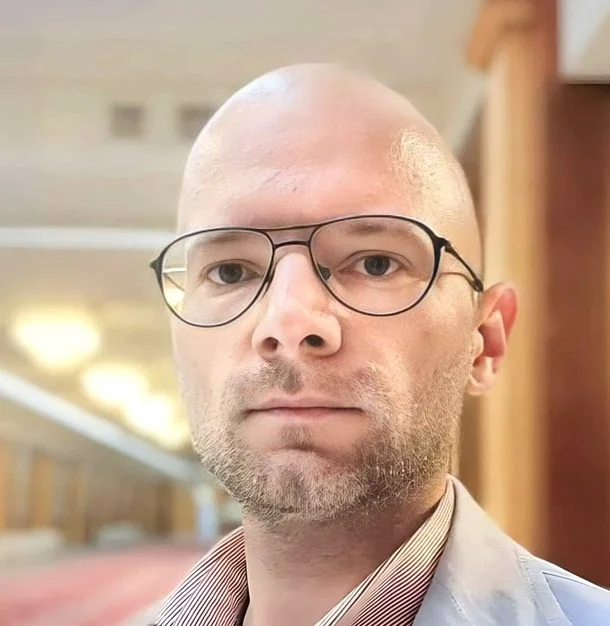
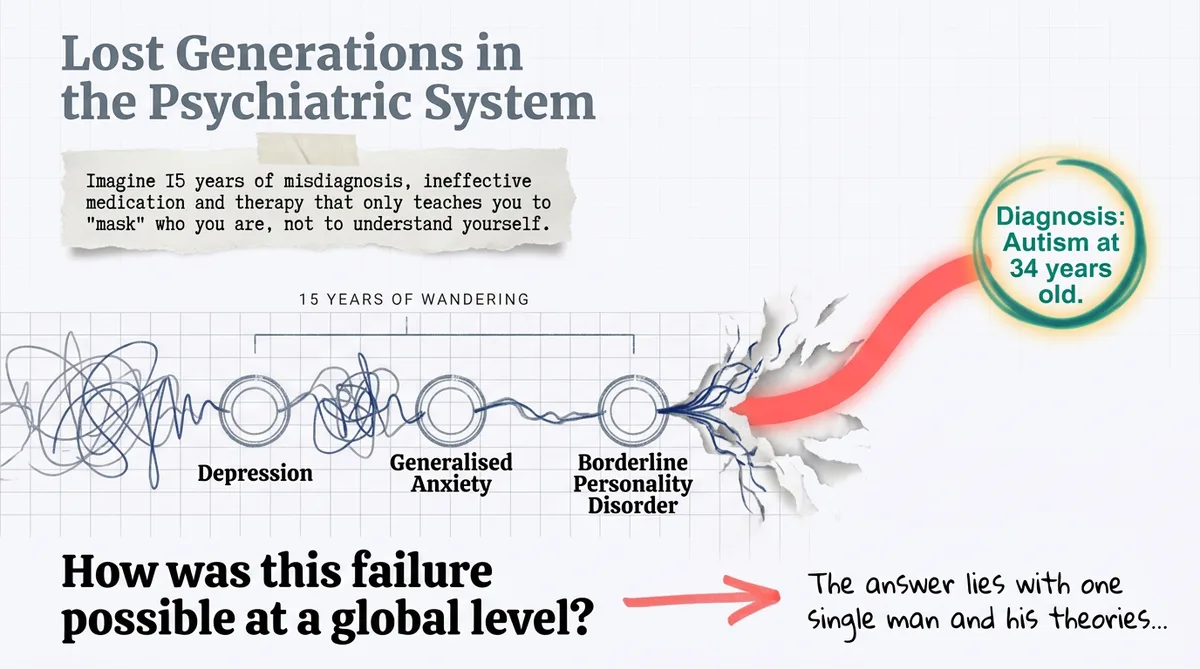
For years, I moved through the world feeling like I was on the wrong frequency. Too sensitive, too intense, too restless — or somehow never enough. I masked my way through classrooms, relationships, and workplaces, performing a version of myself that was palatable to neurotypical expectations. The cost? Burnout. Anxiety. A persistent sense that something was fundamentally wrong with me.
Receiving my autism and ADHD diagnoses as an adult didn't just change my understanding of myself — it transformed my entire approach to therapy. I realised that the therapeutic models I'd trained in often didn't account for neurodivergent minds. The standard approaches assumed neurotypical processing, neurotypical emotions, neurotypical communication. And I knew, from the inside, that this was failing an enormous population of people.
"I spent years believing something was wrong with me. Diagnosis didn't fix me — it freed me. And now I help others find that same freedom."
That's why I built my practice around neurodivergent-affirming principles. I integrate modalities — IFS, ACT, DBT, somatic work, trauma-informed approaches — but I filter everything through an understanding of how neurodivergent minds actually work. Not how textbooks say they should work. How they actually do.
I know what it's like to sit in a therapy room and feel unseen. To have your experiences pathologised rather than understood. To be offered coping strategies designed for brains that work nothing like yours. My practice exists so you never have to feel that way again.
My approach centres your neurodivergent experience — not as something to overcome, but as the foundation we build from.
∞
Neurodivergence is difference, not deficiency
I don't work from the medical model that asks, "What's wrong with you?" I work from the neurodiversity paradigm, which asks, "How does your brain actually work, and what does it need?" When you stop trying to "fix" neurodivergence and start understanding it, something softens. Shame begins to loosen its grip. Your neurodivergent traits are not personal failings — they are adaptations that make sense when we look at your nervous system, your history, and your environment.
◎
Integration means wholeness
I don't separate your mind from your body, your thoughts from your emotions, or your struggles from your strengths. You are one whole system, and therapy needs to reflect that. If we work only on "coping skills" but ignore burnout, oppression, or misattuned environments, we miss the heart of the issue. Integration means we situate your pain and your brilliance in the full picture of your life, so that change becomes more sustainable and less self-blaming.
♡
Your autonomy is sacred
I don't impose goals on you. I don't define what "healthy," "independent," or "functional" should look like. I don't demand compliance or push you into strategies that feel wrong in your body. Together, we explore what you genuinely want — beyond the "shoulds" you've internalised from family, culture, or professionals. Therapy, in this frame, is not about making you easier for others to be around. It's about helping you feel more at home in your own brain and body.
Before We Work Together
What you should know
before working with me
This is a space built on neurodivergent reality — not neurotypical expectations. Here's what that means in practice:
I don't believe in "high-functioning" narratives▾
Functioning shifts moment to moment. Both your capable days and your struggling days are valid here.
Functioning is not a fixed trait; it shifts day to day, hour to hour, moment to moment. Some days you can show up, meet expectations, and mask so well that no one would guess how much effort it takes. Other days the same tasks feel completely inaccessible, your capacity drops, and your system simply cannot meet the same demands — and that is not a failure, it is information about your nervous system and environment. Both are valid. Both are welcome here.
I understand masking▾
You don't have to keep up the performance of appearing "normal" in this space.
Masking is the exhausting performance of appearing "normal" enough to be accepted or to stay safe. It can mean constantly scanning the room, monitoring your tone, eye contact, body language, and facial expressions. It often involves translating your natural neurodivergent experience into something more palatable for neurotypical people, even when that translation costs you clarity and authenticity. I understand how masking can slowly erode your sense of identity. You do not have to keep up that performance here.
I take autistic burnout seriously▾
We don't push through. We slow down and take your nervous system seriously.
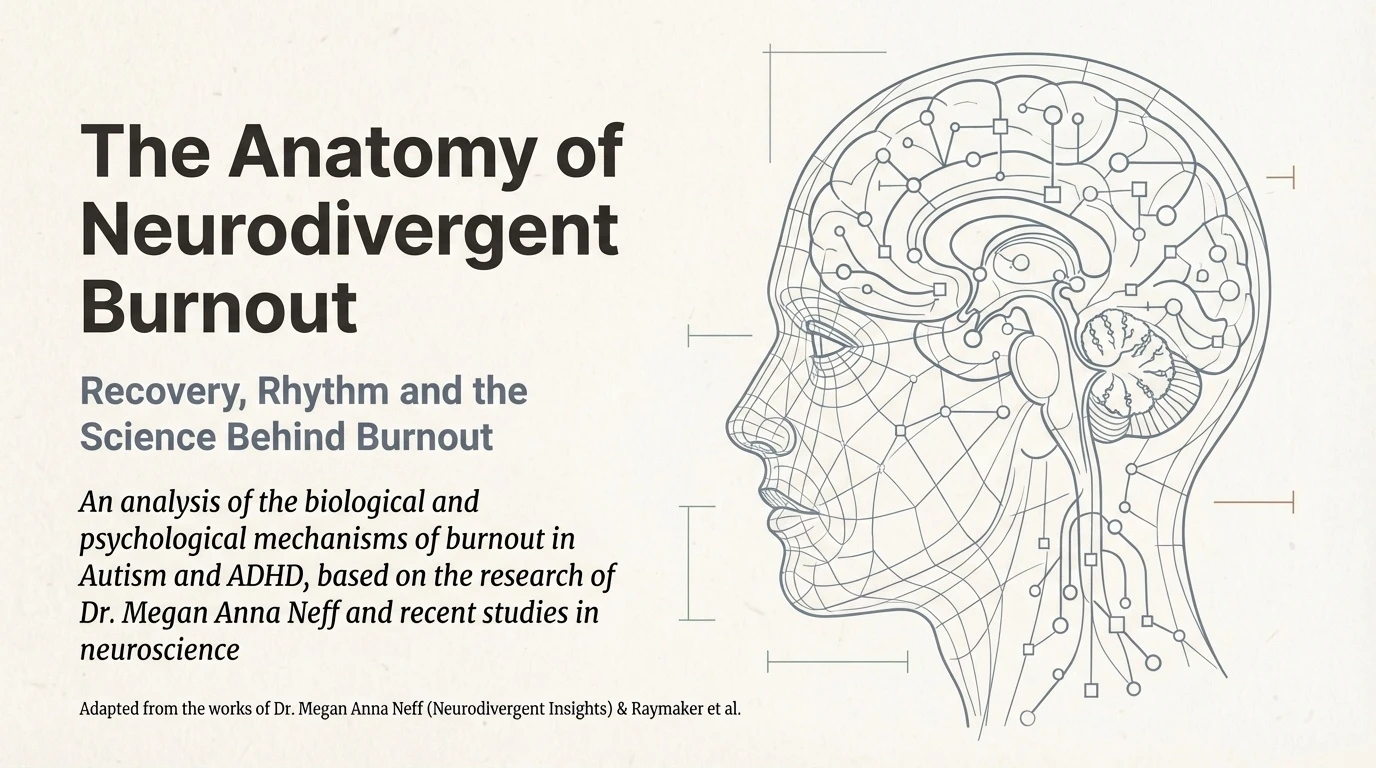
Autistic burnout is not depression and it is not laziness. It is a state of deep physical, cognitive, sensory, social, and emotional exhaustion that comes from long-term overwhelm, chronic masking, and living in environments that are not designed for your needs. It can show up as losing skills you once had, feeling unable to do basic tasks, or feeling emotionally numb and detached. If you are burned out, we do not push through. We slow down and take your nervous system seriously.
I recognise RSD as a real, neurobiological phenomenon▾
You're not "too sensitive." Your nervous system has learned to detect social threat intensely.
You are not "being dramatic" or "taking things too personally." Rejection Sensitive Dysphoria describes the intense emotional and often physical pain that can arise in response to real or perceived rejection, criticism, or failure. It can feel like a sudden emotional collapse, a sharp sense of shame, or a powerful urge to withdraw. These responses are not evidence that you are "too sensitive"; they reflect how your nervous system has learned to detect and react to social threat.
I respect PDA — your drive for autonomy▾
Your need for autonomy is not defiance. We work with it, not against it.
Your need for autonomy is not defiance and not something to "fix." PDA describes a profile where everyday demands and expectations can trigger intense anxiety and a fight-flight-freeze response. Even small requests or self-imposed goals can feel like pressure that registers in your nervous system as a threat to your freedom. In this space, we honour that drive for autonomy and treat it as part of how your nervous system protects you. We work with it, not against it.
I get it when you shutdown or meltdown▾
These are nervous system responses, not failures. Neither needs an apology here.
Shutdowns and meltdowns are not tantrums, manipulation, or moral failings. They are signs that your nervous system has reached its limit — nervous system overflow in response to sensory input, social intensity, emotional load, or cognitive demands. When you meltdown, we pause and orient toward safety, regulation, and grounding. When you shutdown, we respect that protective response and adjust the pace. Neither reaction is something you need to apologise for here.
I understand the gap between how you appear and how you feel▾
Looking "fine" on the outside doesn't cancel your inner experience of struggle.
Many neurodivergent people are highly skilled at "passing." From the outside, you may look capable, articulate, organised, and "fine." Internally, though, you might feel overwhelmed, constantly vigilant, exhausted from masking, and terrified of dropping even one of the plates you're spinning. I am not guided only by how things look on the surface. I care deeply about how things actually feel in your body and in your day-to-day life, even when that reality is invisible to everyone else.
Ready to work with a therapist who gets it?
I offer a free introductory session so we can see if we're a good fit — no pressure, no commitments.
Exploring your inner parts with curiosity and compassion — understanding each protective strategy your system developed. IFS helps you build a relationship with all parts of yourself, especially the ones you've been taught to suppress.
ACT
Acceptance & Commitment
ACT
Building psychological flexibility — learning to hold difficult thoughts while moving toward what matters to you. Particularly powerful for perfectionism, RSD, and the paralysis that comes from overthinking every decision.
DBT
Dialectical Behaviour
DBT
Practical strategies for emotional regulation, distress tolerance, and interpersonal effectiveness — adapted for neurodivergent needs. These skills become anchors when your nervous system is overwhelmed and you need something concrete.
Schema
Schema Therapy
Schema
Identifying early patterns and core beliefs formed in childhood — understanding how unmet needs shaped your coping strategies. For neurodivergent adults, schema work reveals how invalidation became internalised as self-blame.
Somatic
Somatic Approaches
Somatic
Your body holds wisdom. Through somatic work, we reconnect with physical sensations and release stored tension and trauma. Especially important when interoception is atypical and the mind-body connection needs gentle rebuilding.
Trauma
Trauma-Informed
Trauma
Recognising that many neurodivergent people carry layers of trauma — from masking, invalidation, and systems that weren't built for them. Safety comes first; we never push beyond what your nervous system can hold.
Polyvagal
Polyvagal Theory
Polyvagal
Mapping your nervous system states — understanding why you freeze, fight, flee, or fawn. Polyvagal work helps you recognise your body's signals and find pathways back to safety and connection.
CFT
Compassion-Focused
CFT
Developing a compassionate inner voice to counter years of self-criticism and shame. CFT is especially transformative for neurodivergent adults who've internalised the message that they're fundamentally flawed.
Person-Centred
Person-Centred
Person-Centred
At the core of everything: unconditional positive regard, empathy, and genuineness. You deserve to be met as you are. This foundation ensures that every technique serves your autonomy, never someone else's agenda.