Love, Communication and Practical Strategies for Neurodiverse Couples — NAT (Part 2)
Practical strategies for neurodiverse couples: reconceptualised love languages, communication and sensory intimacy. Based on Neurodivergent Attachment Theory.

This second part of the material on Neurodivergent Attachment Theory (NAT) moves from the theoretical foundation to practical applications. If in the first part we explored the 5 neurodivergent attachment styles and the 7 fundamental assumptions of the NAT model (Letsoalo, 2025), here we focus on what all of this means in real couple life.
We integrate the practical perspectives of McNulty (2020) — probably the most accessible practical guide for couples where one partner is on the autism spectrum — with research on the double empathy problem (Crompton et al., 2020) and the neuro-affirmative framework of NAT. The result: a set of practical, clinically tested tools for navigating love, communication, and intimacy in neurodiverse couples.
Important note: These strategies are guidelines and must be adapted to each couple. There is no universal "recipe" for neurodiverse relationships, just as there is no recipe for neurotypical relationships. What we offer here are principles and directions, not prescriptions.
Love and Affection in the Neurodivergent Context
Love Languages Reconceptualized
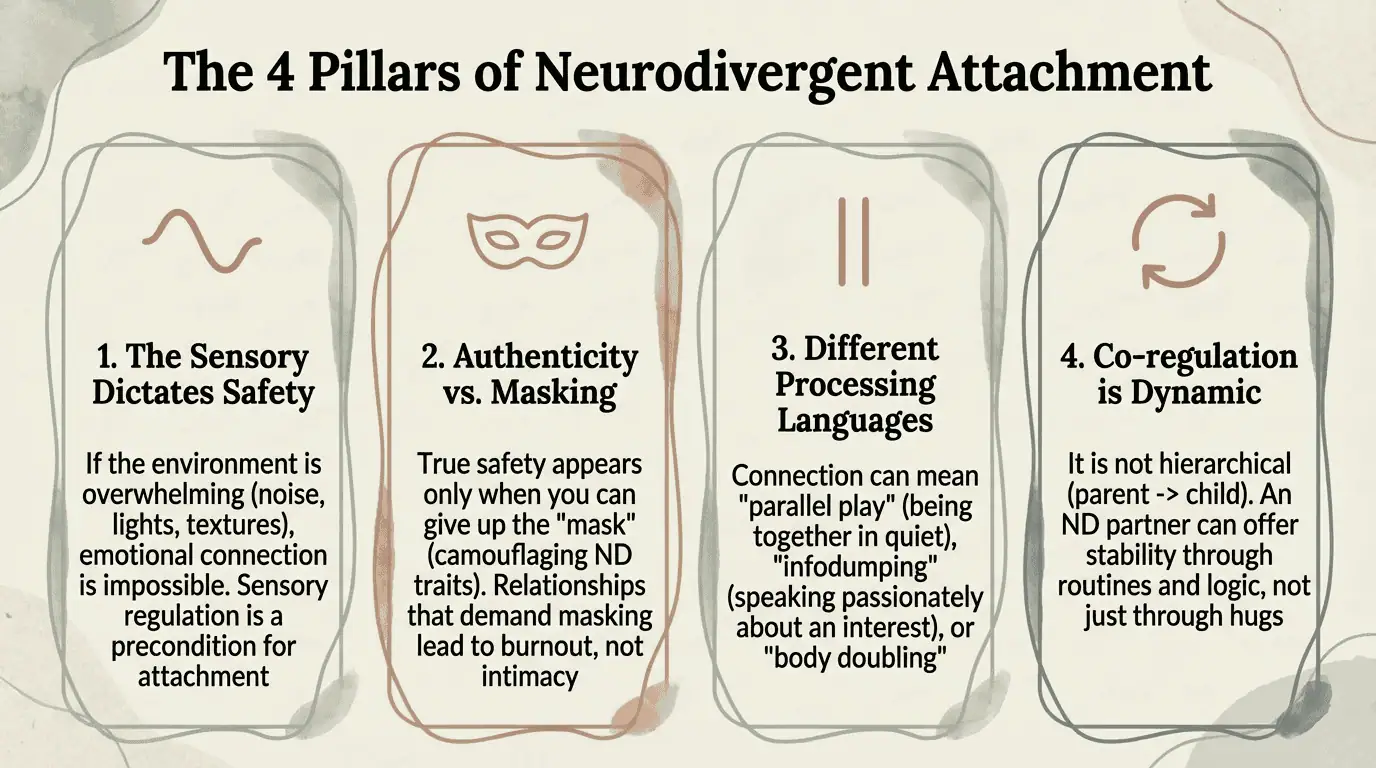
Gary Chapman identifies five main "love languages": words of affirmation, physical touch, gift giving, acts of service, and quality time together. In neurodiverse couples, these languages may be expressed and received differently by neurodivergent people.
Words of affirmation can be complex For an autistic person, receiving praise can be surprisingly complicated. Compliments may involve the sensation of being evaluated and examined, which many autistic people find stressful. It can trigger a feeling of insincerity or false self-representation if the compliment doesn't match the internal self-image.
A neuro-affirmative approach to compliments in a couple includes: specificity (instead of "You're wonderful," "I appreciate how you organized the vacation — your detailed plan helped us all"), consistency (spontaneous compliments can be stressful; those integrated into routines are easier to process), and written form (many neurodivergent people process compliments better when read than when heard, because they can return to them without the pressure of immediate response).
Touch is not always off limits Contrary to cultural stereotypes, many autistic people express themselves comfortably through touch or pressure — but only under specific conditions. Some crave deep body pressure and love various types of massage, while others appreciate certain types of touch but only in particular contexts.
Frank and patient conversations help a neurodiverse couple determine the role of touch in their expressions of affection.
McNulty (2020) recommends creating a "touch menu" — an explicit and detailed list of types of touch that are comfortable, neutral, and uncomfortable, organized by context (morning, evening, in public, in private, after a stressful day vs. a relaxing one). This tool eliminates guessing and reduces anxiety for both partners. It can be updated periodically as mutual understanding deepens.
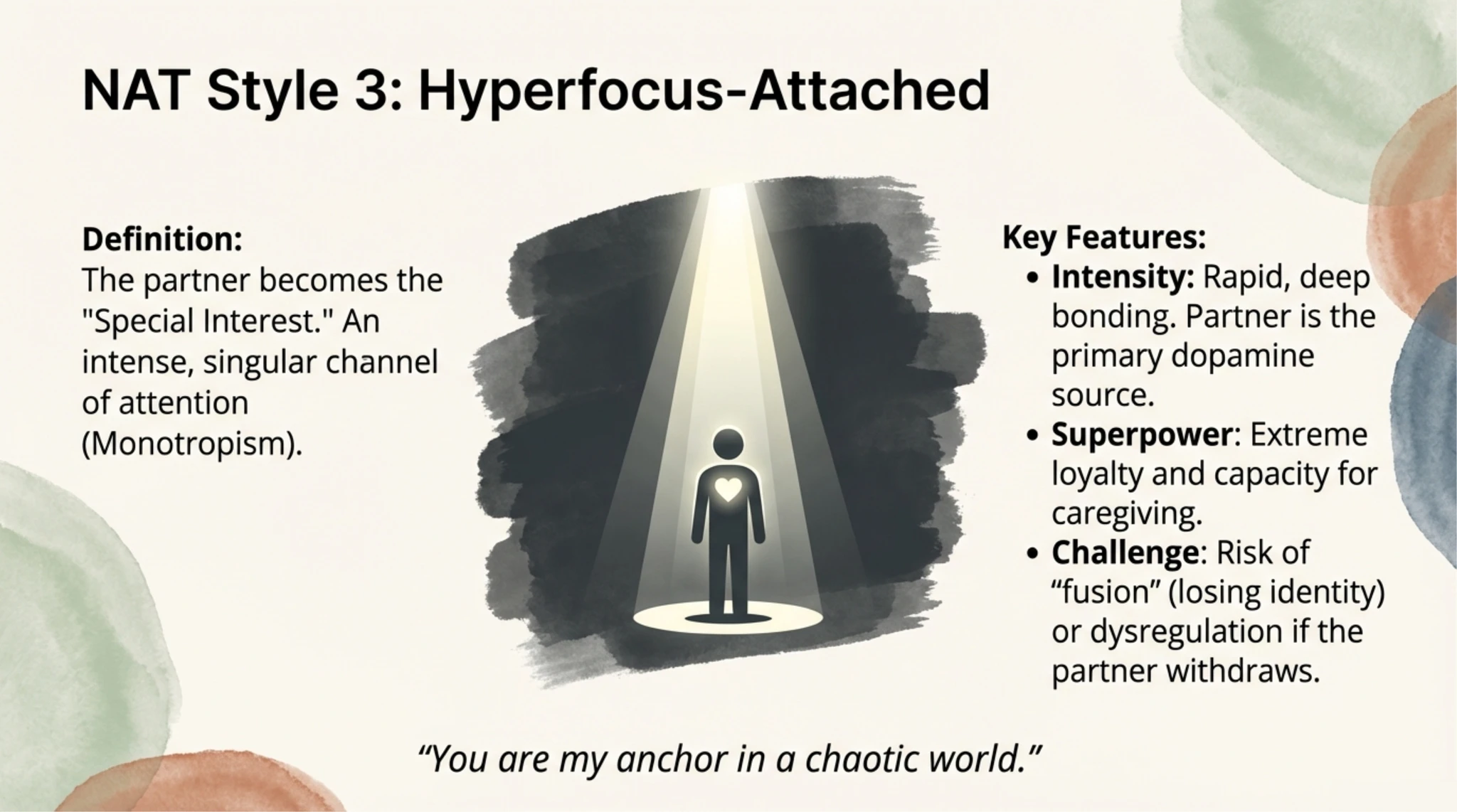
Special interests as a love language When a neurodivergent person becomes enthusiastic about a favorite topic, this can be a way to express affection and feel a bond. The neurotypical partner can foster closeness through genuine participation in the neurodivergent partner's intense interests.
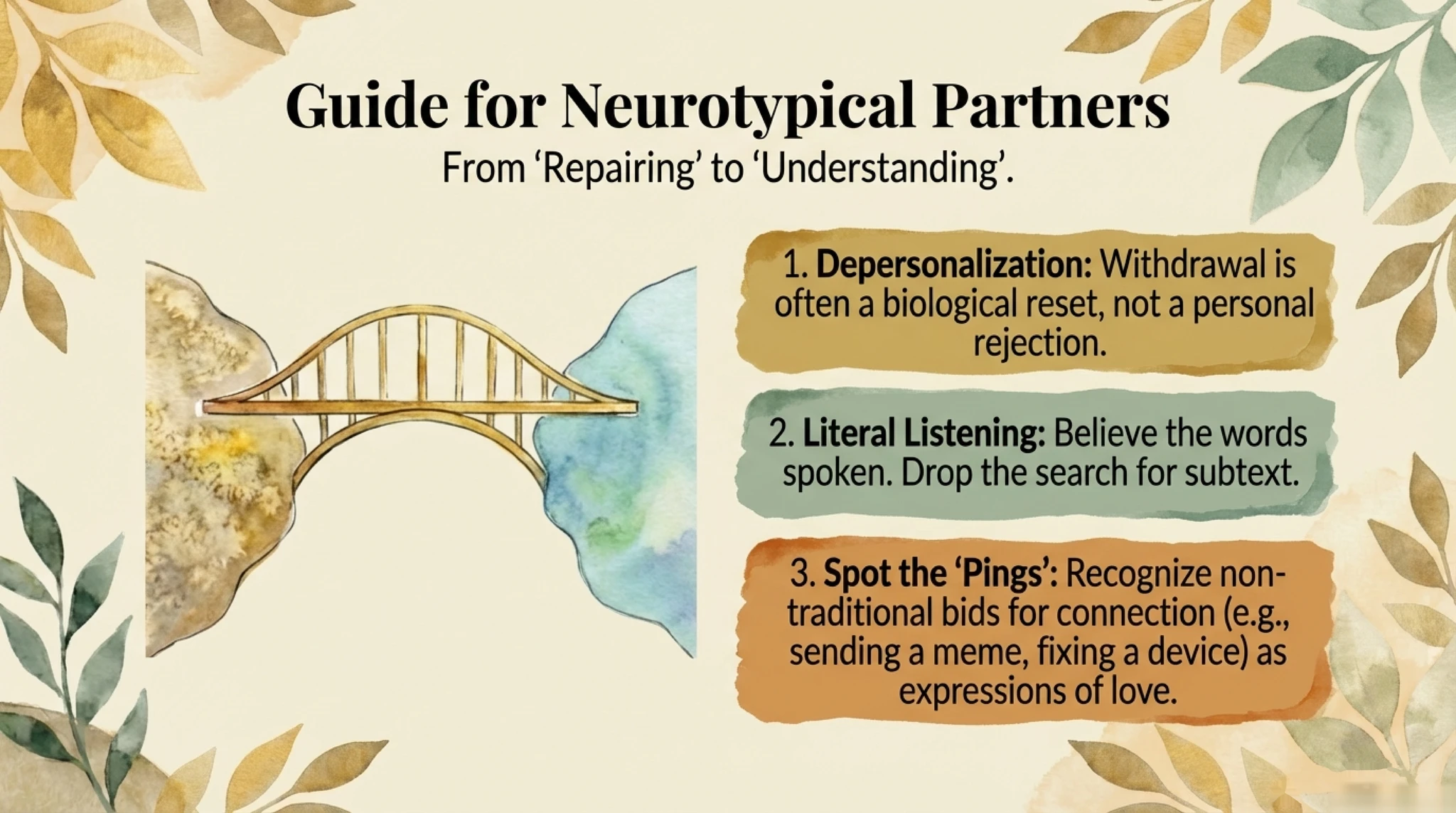
Sometimes, seemingly obvious ways of showing affection may require additional explanation. The neurotypical partner usually shows how much they care by researching topics their partner values — but in response, the neurodivergent partner may express gratitude in a way that isn't perceived as romantic. Openness to the partner's unconventional methods of expressing affection is essential.
A valuable therapeutic exercise is the "translated love journal": for one week, each partner daily notes a gesture from the other that they perceived as an expression of love — even if the gesture doesn't look "traditionally romantic." At the end of the week, the couple compares and discusses the lists. Often, the neurotypical partner discovers they've been "loved" much more than they thought — just in a language they hadn't recognized.
Communication in Neurodiverse Couples
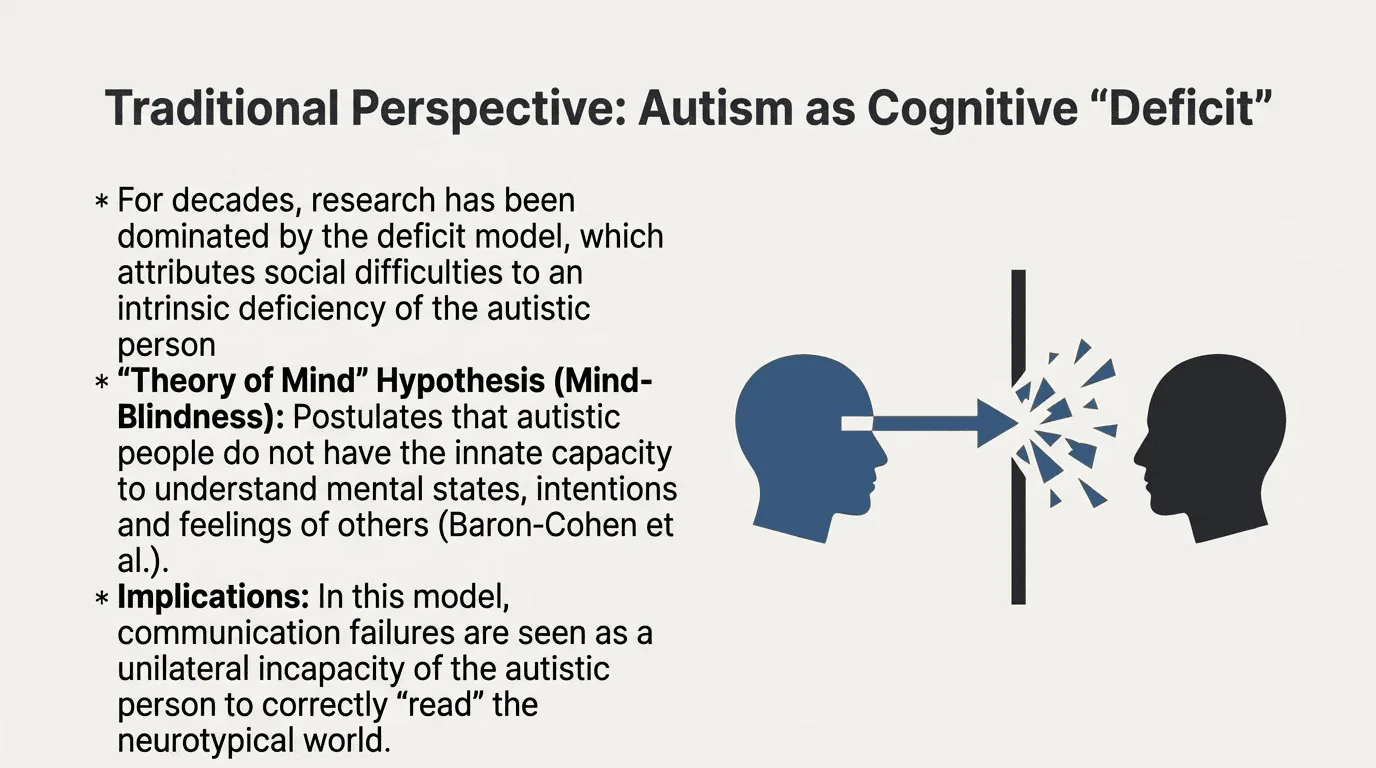
Crompton et al. (2020) introduced the concept of the "double empathy problem," demonstrating that relational breakdowns between neurotypical and neurodivergent people are not the result of autistic social deficits, but of mutual misunderstanding. This reframing positions neurodivergent people as relationally capable in their own right, especially when interacting with others who share or understand their neurocognitive experiences.
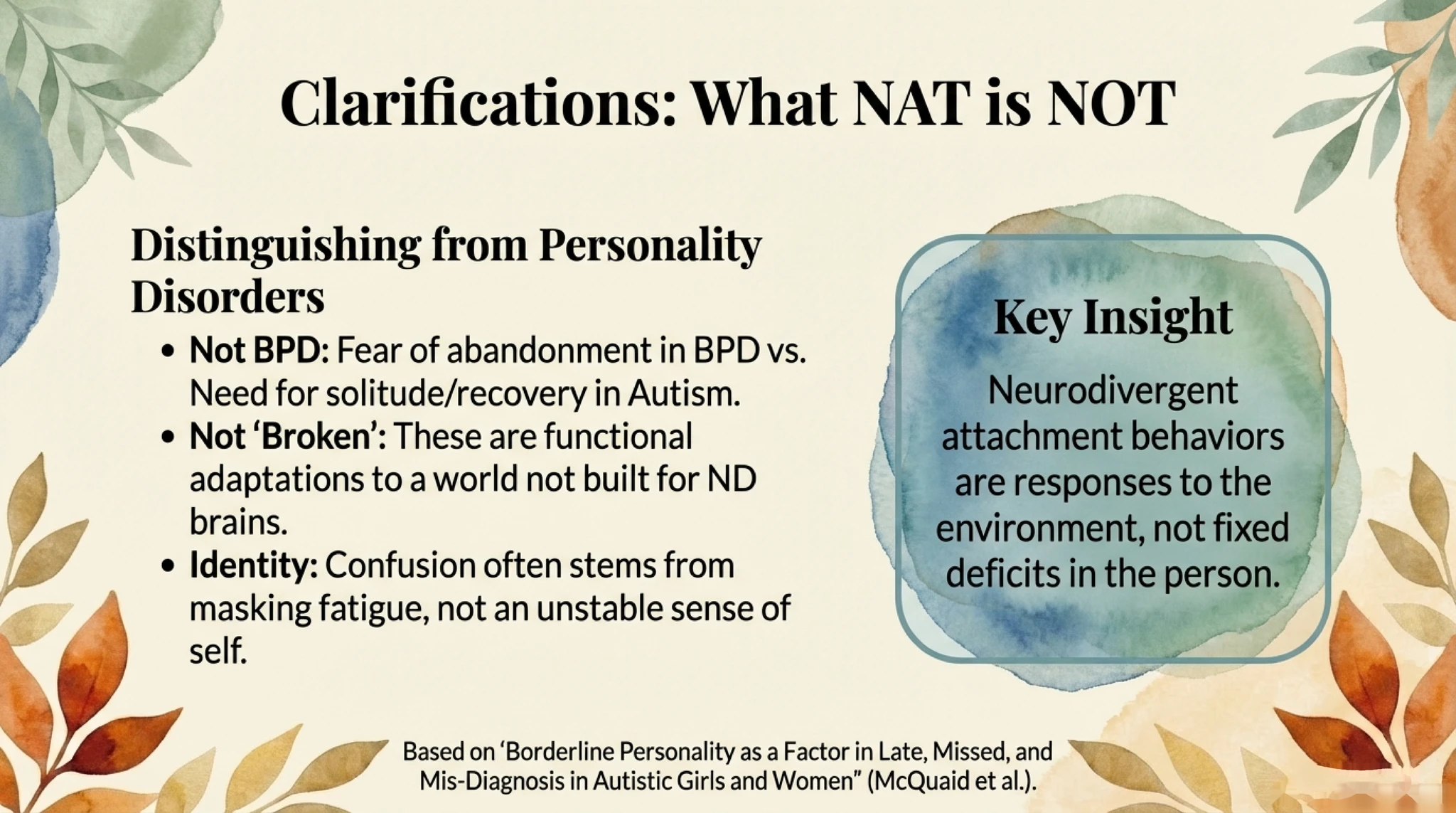
Literal communication and processing time The neurodivergent partner may tend to communicate literally — social nuances may escape them. When facing emotional situations, they may need to slow down the interaction and take more processing time than a neurotypical person expects. At the end of the day, focus may be exhausted, and the need for distraction to quiet the mind and relax is not a sign of lack of interest — it's a genuine neurological need.
A concrete strategy for managing processing time: the "pause agreement." The couple establishes together a signal (a word, a gesture) that means "I need time to process — I'm not rejecting you, I'll be back." A time interval is agreed upon in advance (30 minutes, 2 hours, the next day) after which the conversation resumes. This protocol prevents conflict escalation and respects different neurological needs, without leaving problems unresolved.
Communication mode preferences A neurotypical person tends to prefer phone calls, while the neurodivergent partner may prefer written communication. This may mean fewer long phone calls and more connections through texts, memes, photos, and shared videos — equally valid forms of affectionate communication.
Flexibility in communication mode is a relational adaptation, not a concession. Research shows that autistic people communicate efficiently and with nuance in writing, often articulating complex emotions they cannot express verbally in real time. A neurodiverse couple can benefit from a "multimodal" system: important conversations via text or email (for processing), short vocal check-ins (for emotional connection), and silent physical presence (for co-regulation). Each channel serves a different purpose, and none is "inferior."
Facial expression and tone of voice Many neurodivergent people may display minimal facial expression or speak with a flat vocal tone. This outward appearance does not reflect the internal experience — in fact, they sometimes have waves of intense emotions that become overwhelming. These qualities fluctuate depending on energy level and comfort in the social situation.
The neurotypical partner can learn to "read" subtle cues of emotion that aren't facial: changes in speech rhythm, stimming intensity, choice of conversation topics, or physical energy level. This "alternative emotional alphabet" becomes, over time, just as readable as facial expressions — but requires patience, curiosity, and the willingness to learn a new language. It's like learning a foreign language: at first you seem "deaf" to nuances, but with practice, understanding becomes natural.
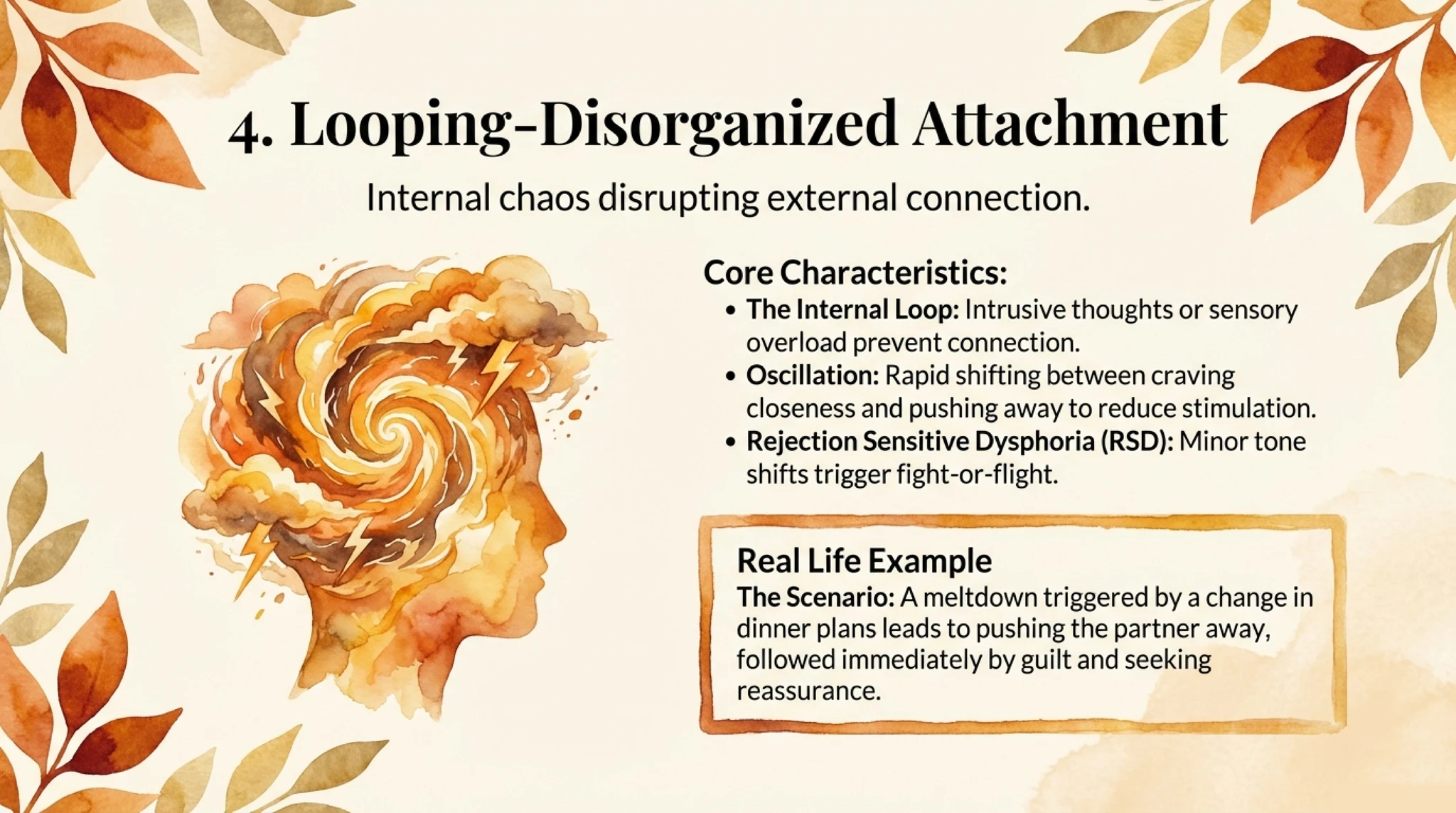
Physical Intimacy and Sensoriality
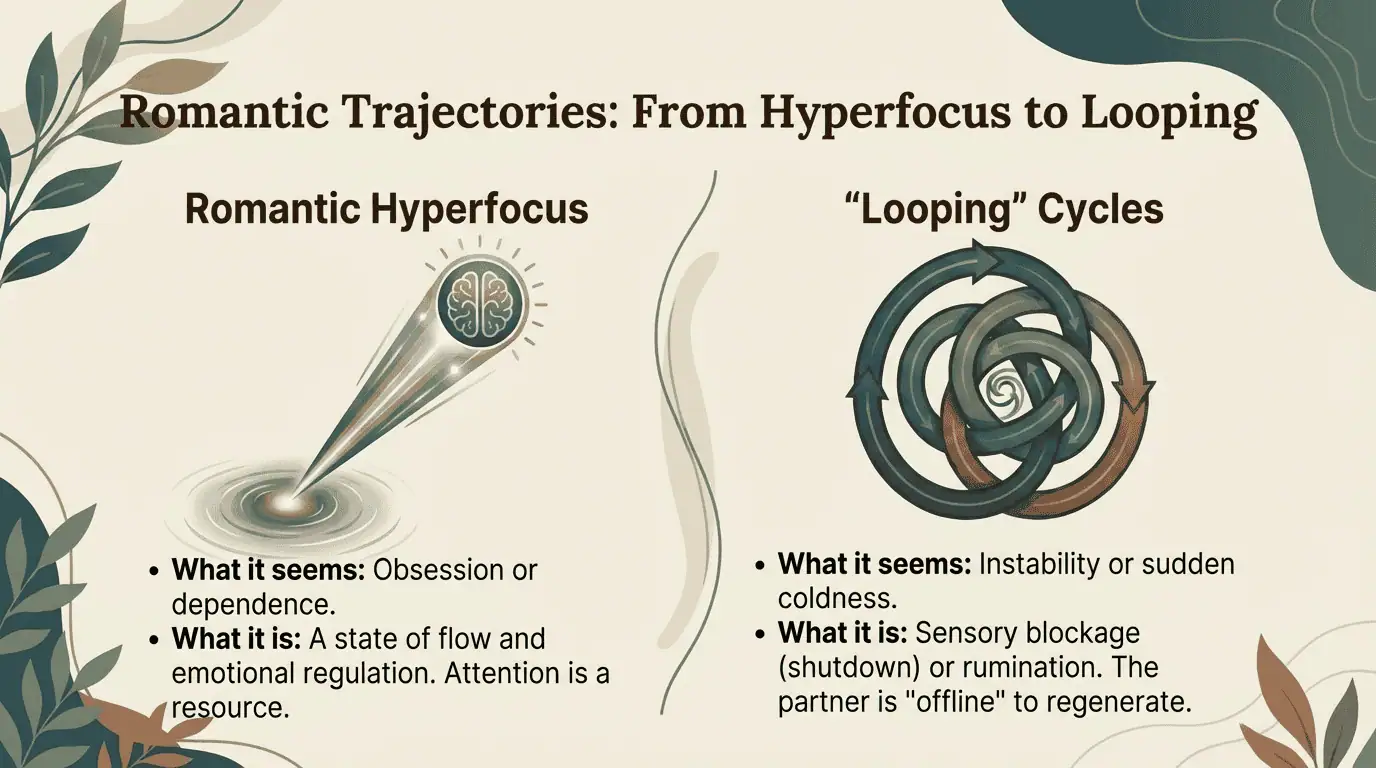
Neurodivergent people vary significantly in their sensory needs — some are "sensation-seeking," others "sensory-avoiding." Moreover, the capacity to tolerate sensory stimuli fluctuates depending on fatigue, stress level, and social context.
Stimming in intimate contexts Stimming (self-sensory stimulation) — rocking, hand flapping, humming, or repeating words — is a form of self-regulation. In intimate contexts, acceptance and respect for the need to stim are essential. Many autistic people have periods where it is intolerable to refrain from stimming. This need should not be interpreted as disconnection from the partner.
McNulty (2020) suggests exploring tactile preferences through non-sexual touch sessions, alternating the roles of giver and receiver, and building a shared vocabulary of sensory pleasure. Couples with a satisfying intimate life provide each other with plenty of reciprocal feedback and learn not to take differences personally, seeing the process of sensory discovery as another way to know each other more deeply.
The physical environment of intimacy is just as important as the interaction itself. Lighting, temperature, bedding texture, background sounds — each sensory element can facilitate or block intimate connection. A practical adaptation: creating a "sensory safe space" dedicated to intimacy, with controllable lighting, preferred textile materials, and elimination of disruptive stimuli (screens, notification sounds). This space becomes a "safety niche" that signals to the nervous system: "Here you are safe to connect."
Practical Strategies for Neurodiverse Couples
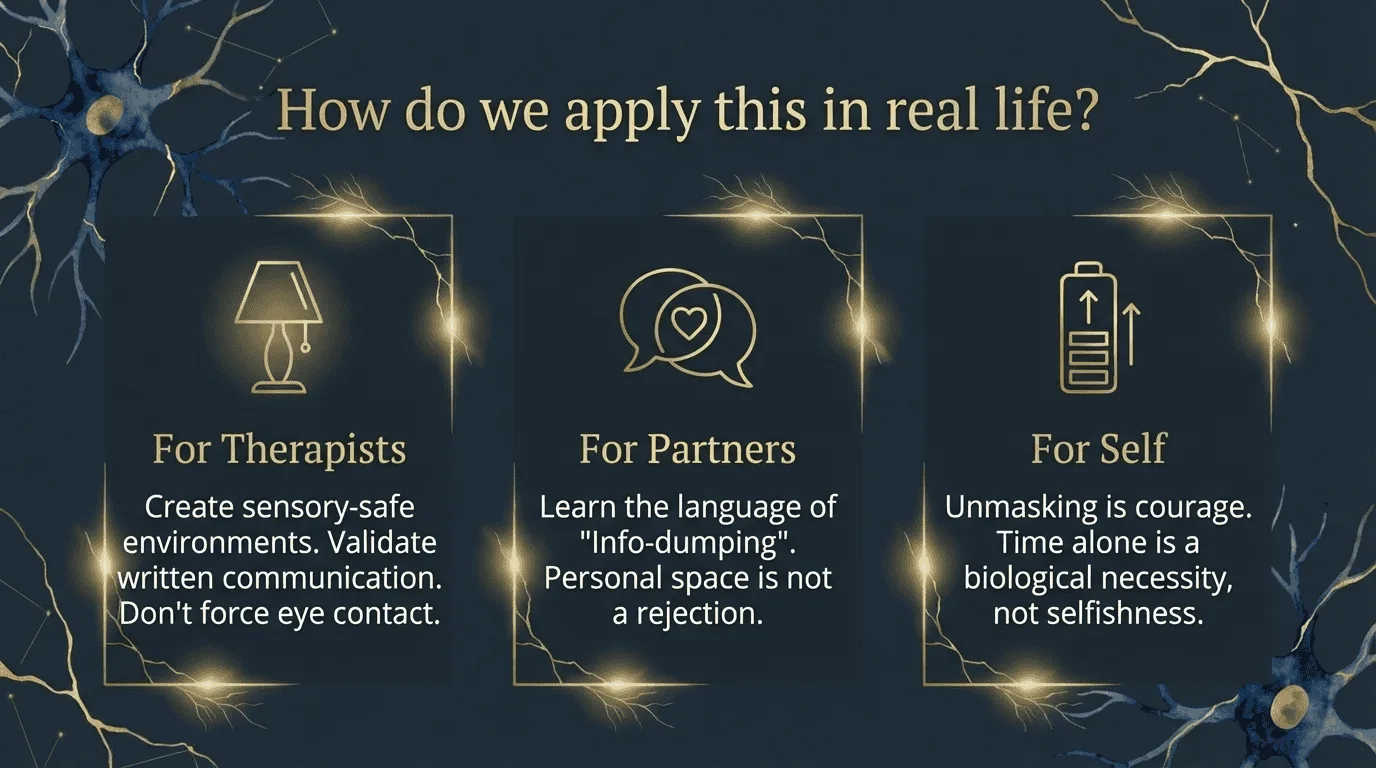
Social Energy Management
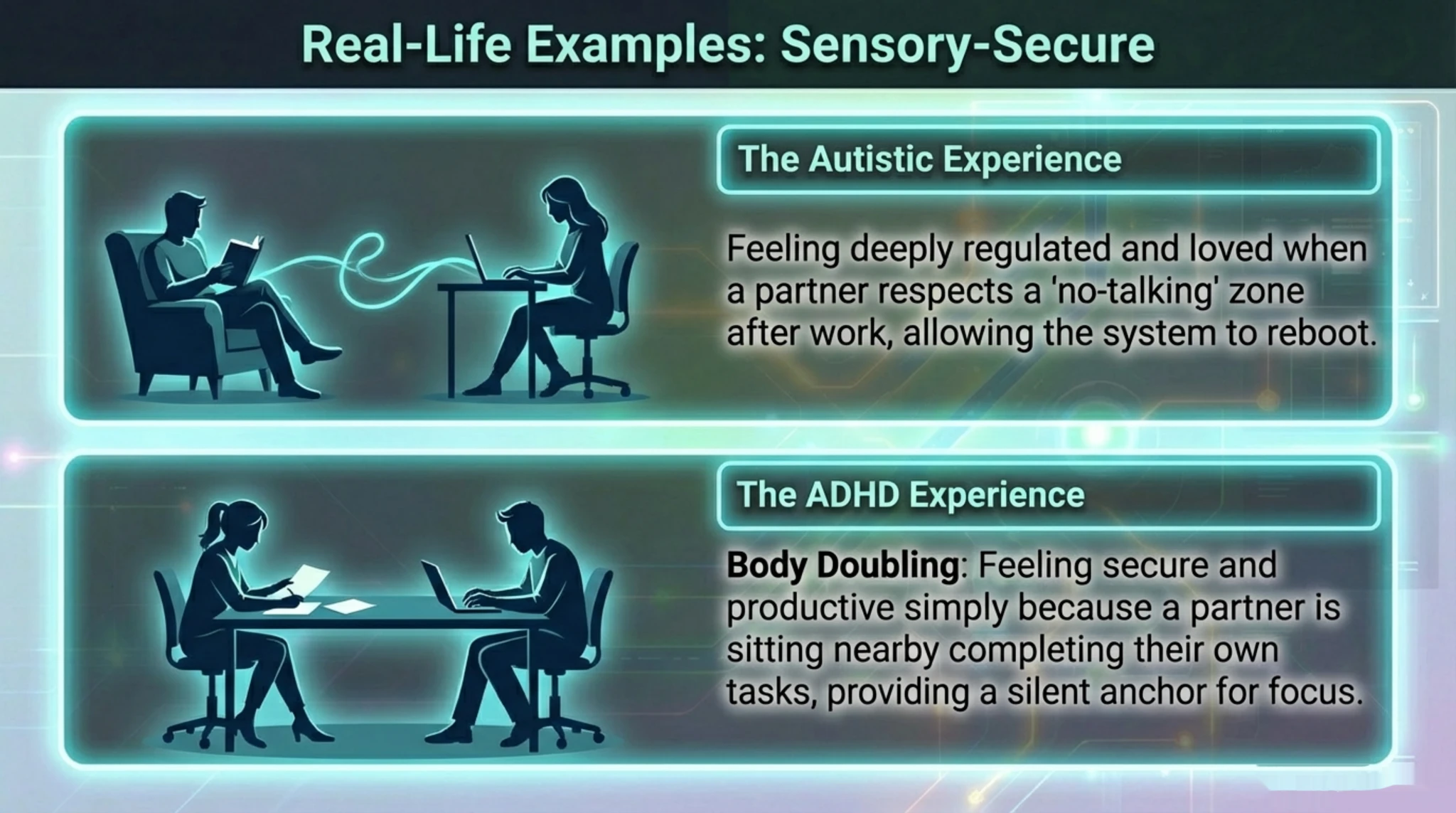
A social interaction that is effortless for a neurotypical person can be quite exhausting for someone neurodivergent. A predictable schedule and advance planning help the neurodivergent person manage their limits — maintaining familiar routines reduces the frequency and intensity of sensory reactions.
Alone time is essential The neurodivergent person usually needs more downtime than their partner. This may involve reading, watching media, gaming, or simply being quiet. It's a necessary break from the exhaustion of managing moods and adult life expectations. Scheduling alone time, with clear external cues (alarm, timer) and a prior agreement about what happens if the alarm is ignored, helps both partners feel respected.
An advanced strategy: the "social energy budget." The couple estimates together the energy cost of different activities (dinner with friends = high cost, a walk in nature = low cost, a quiet evening at home = regeneration) and plans the week according to this budget. This tool makes visible an invisible neurological reality and prevents situations where the neurodivergent partner reaches exhaustion without warning.
Sensory Overload Support Kit
McNulty (2020) suggests creating a "support kit" that neurodiverse couples can have on hand when attending potentially challenging events. It may contain: noise-cancelling headphones, sunglasses, a water bottle, a shawl or bandana for protection, cotton gloves, fidget toys or familiar objects to handle, chewing gum or hard candy, and a small bottle of essential oil (peppermint or lemon).
Proactive preparation for challenging sensory situations communicates an important message to the neurodivergent partner: your sensory needs are valid and worth planning for, they are not an inconvenience to "overcome."
An important element of the support kit is the "exit plan." Before any social event, the couple establishes: the signal indicating the need to leave (a code word, a gesture), the exit strategy (who drives, the quickest route), and the agreement that leaving requires no justification or negotiation. Knowing they can leave at any time, the neurodivergent person paradoxically feels more capable of staying — because safety doesn't come from the absence of sensory threat, but from the certainty of having control over the situation.
Shared Goals and Recreation
Relationships flourish when partners share a goal or a sense of common purpose. Sometimes, a neurodiverse couple can get excited about a shared goal because it provides a concrete focus — instead of talking about the relationship or emotions (with all the challenges those conversations can have), the two can enter "action mode" and feel a sense of purpose.
Recreational activities and shared goals — home projects, career aspirations, cooking together, outdoor activities, taking courses together, or planning trips — provide structure and joy. Nature outings can be particularly good options, offering pleasant sensory stimulation and a less overwhelming environment than typical social spaces.
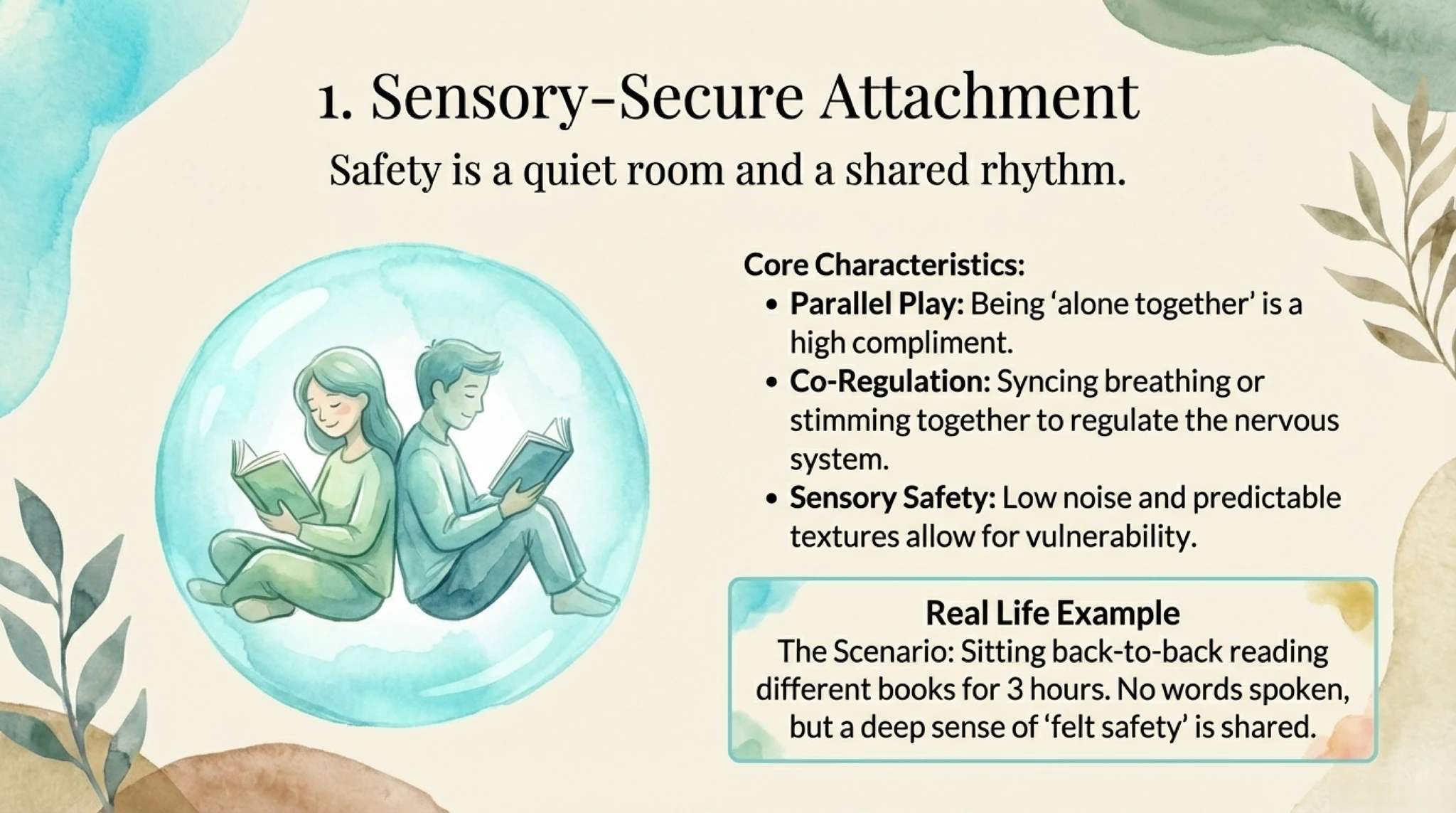
A valuable therapeutic perspective: parallel activities (each partner working on their own project, but in the same room) are just as valid as interactive activities. For many neurodiverse couples, "body doubling" — the simple physical presence of the other, without the requirement of interaction — is a profound form of intimacy and co-regulation. The therapist can normalize and encourage these moments, helping the couple recognize them for what they are: not "isolation together," but "connection through presence."
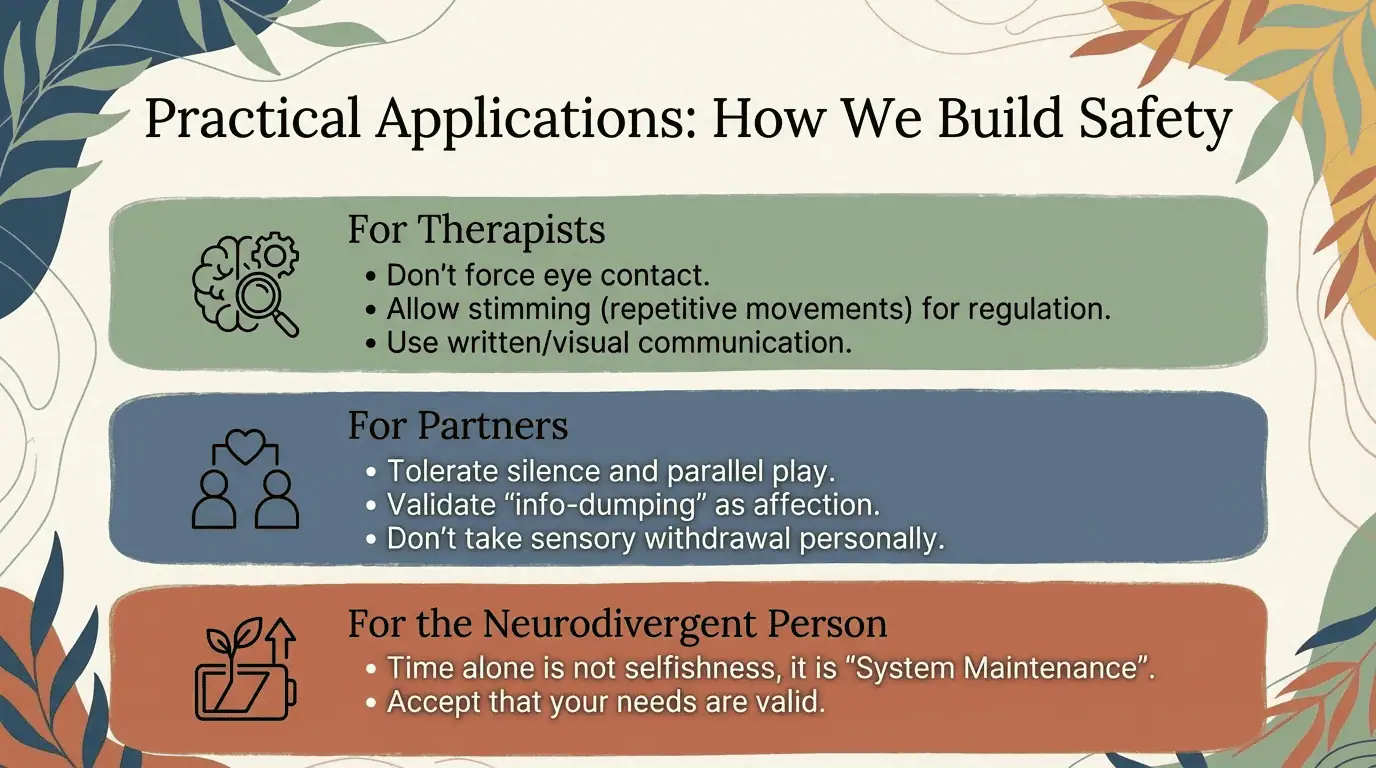
The journey from traditional attachment theory to the NAT framework is not a rejection of the past, but a necessary expansion. Bowlby and Ainsworth gave us a valuable map; Letsoalo, McNulty, and Crompton give us the complementary compasses we need to navigate the vast territory of neurological diversity.
The central message remains simple and profound: safety means being understood. Not being "fixed," not being "normalized," not being "adapted to standards" — but being seen, heard, and accepted exactly as you are. For neurodiverse couples, this message translates into a daily practice: curiosity instead of judgment, translation instead of assumptions, and flexibility instead of rigidity.
If you are neurodivergent and recognized yourself in these pages, we hope you found validation and a new language for your experiences. If you are a neurotypical partner, we hope you gained a window into the inner world of the most important person in your life. And if you are a therapist, we hope these tools will enrich your practice with a truly neuro-affirmative perspective.
Ready to take the next step?
If what you've read resonates with you, you are not alone. Neurodivergent attachment theory validates your experience — and there are neuro-affirmative strategies that can help.
Book an Initial Consultation → Content synthesized and written by Giancarlo Cristea, neuro-affirmative integrative psychotherapist, based on the research of Dr. Monsheng Letsoalo, McNulty's work (2020), and neuro-affirmative literature.
Bibliography
Ainsworth, M. D. S., Blehar, M. C., Waters, E., & Wall, S. (1978). Patterns of attachment: A psychological study of the strange situation. Lawrence Erlbaum.
Bowlby, J. (1969). Attachment and loss: Vol. 1. Attachment. Basic Books.
Cage, E., & Troxell-Whitman, Z. (2019). Understanding the reasons, contexts and costs of camouflaging for autistic adults. Journal of Autism and Developmental Disorders, 49(5), 1899-1911.
Chapman, G. (2015). The 5 love languages: The secret to love that lasts. Northfield Publishing.
Crompton, C. J., Ropar, D., Evans-Williams, C. V. M., Flynn, E. G., & Fletcher-Watson, S. (2020). Autistic peer-to-peer information transfer is highly effective. Autism, 24(7), 1704-1712.
Hull, L., et al. (2017). "Putting on my best normal": Social camouflaging in adults with autism spectrum conditions. Journal of Autism and Developmental Disorders, 47(8), 2519-2534.
Letsoalo, M. (2025). Neurodivergent Attachment Theory. Global Scientific Journal, 13(5), 2082-2104.
McNulty, K. (2020). Love and Aspergers: Practical strategies to help couples understand each other and strengthen their connection. Rockridge Press.
Milton, D. E. M. (2012). On the ontological status of autism: The 'double empathy problem'. Disability & Society, 27(6), 883-887.
Schore, A. N. (2001). Effects of a secure attachment relationship on right brain development, affect regulation, and infant mental health. Infant Mental Health Journal, 22(1-2), 7-66.
Walker, N. (2021). Neuroqueer heresies: Notes on the neurodiversity paradigm, autistic empowerment, and postnormal possibilities. Autonomous Press.


Next Steps
If this resonated, here are practical ways to go deeper.