ASPERGER & BARON-COHEN · PART 1
"The Salt of the Earth" — Asperger's Children and the Lost Vision of Autism
Asperger's original vision: the children he called the salt of the earth, the absent-minded professor concept, and curative pedagogy — beyond syndrome and label. Based on Rebecchi (2024).
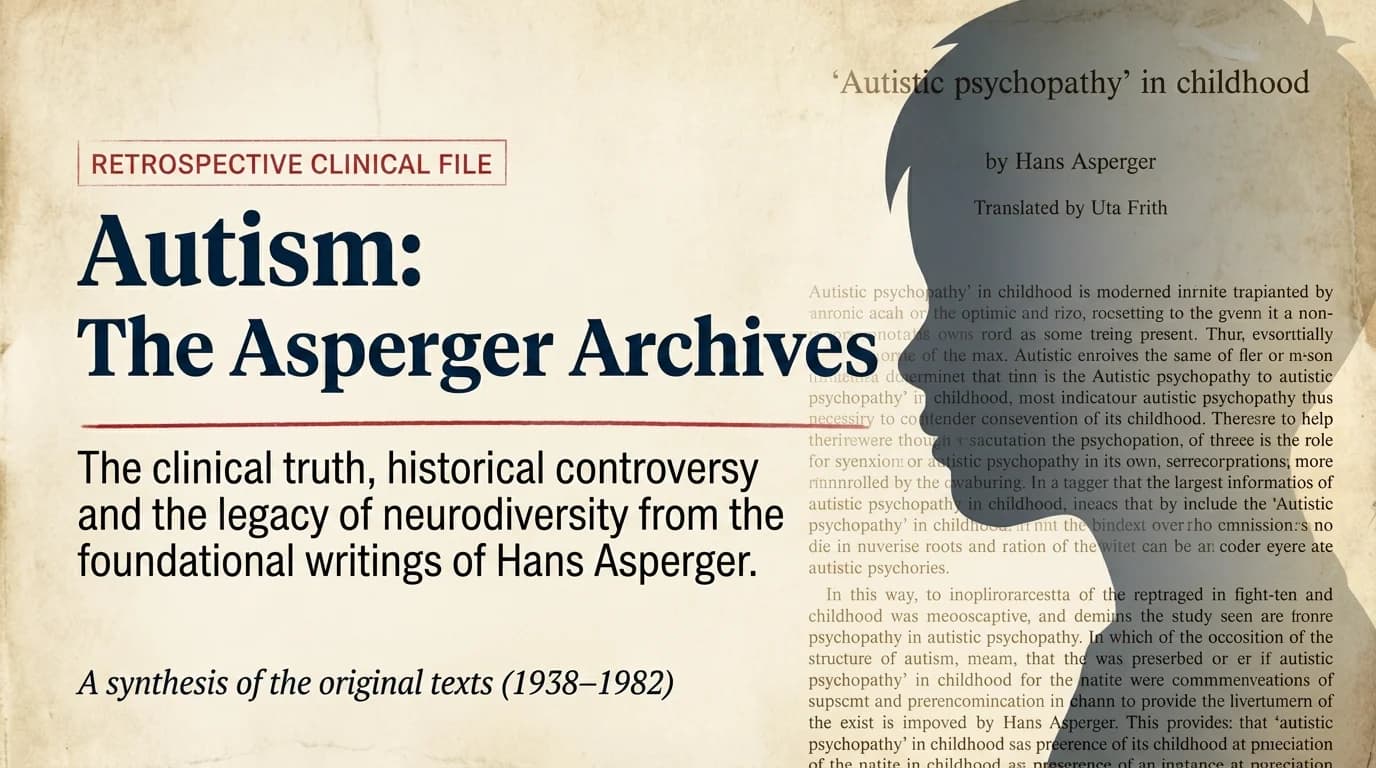
This is Part 1 of the "Rediscovering Asperger" series. In this first part, we explore the historical context, life and work of Hans Asperger, and above all his original vision of autism — one profoundly different from what was transmitted through the diagnostic manuals. In Part 2, we shall examine the impact on the concept of the spectrum and explicitly challenge the simplistic accusations of Nazism, using the available evidence.
Introduction: A Name Lost in Its Own Story
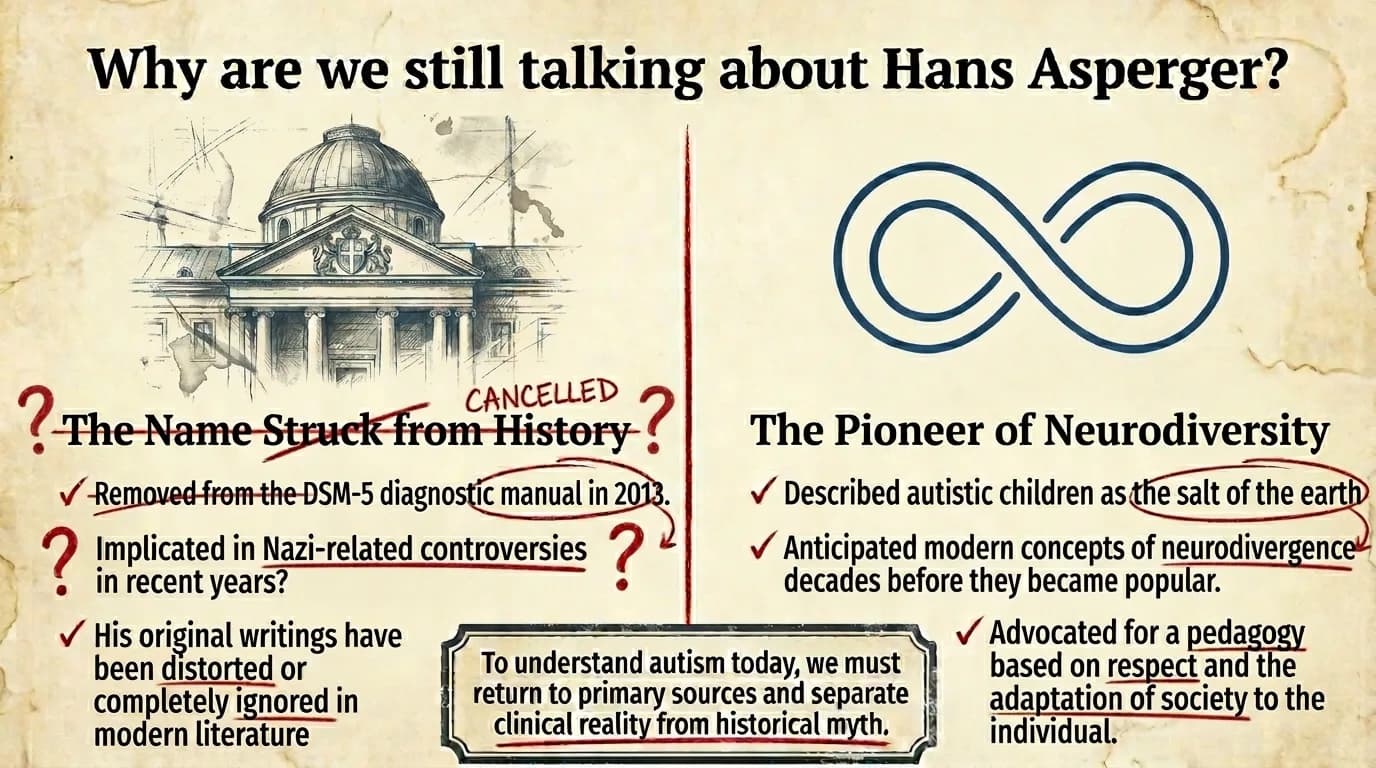
Few figures in the history of psychiatry have been so widely cited and so little read as Hans Asperger. His name came to designate a "syndrome" — a diagnostic category introduced belatedly in 1994 in DSM-IV, and removed just as swiftly in 2013, through its absorption into the broad autism spectrum disorder (ASD). The irony is profound: the man who described autistic children as "the salt of the earth" ended up reduced to a clinical label he would not have recognised.
What most people — including many mental health professionals — do not know is that Asperger's vision of autism was fundamentally different from what came to bear his name. And more importantly: between his 1944 habilitation thesis and his death in 1980, Asperger continued writing about autism. The 1944 thesis was translated into English by Uta Frith in 1991 (in an annotated version, in the volume Autism and Asperger Syndrome), making it accessible to the anglophone world. But Asperger's later texts — those reflecting his mature thinking, refined by three more decades of clinical practice — remained almost entirely unknown.
It was only in 2024 that researcher Kevin Rebecchi published the first complete English translation of Asperger's final text — a chapter entitled "Early Childhood Autism, Asperger Type" (Kindlicher Autismus Typ Asperger), published posthumously in 1982 in the volume Psychotherapie und Heilpadagogik bei Kindern, co-edited with his former student Franz Wurst. Unlike the 1944 thesis, this text represents the final synthesis of Asperger's thinking and reveals a vision that is strikingly modern, profoundly humanistic, and radically different from the "syndrome" that bears his name.
This article draws primarily on Rebecchi's translation and analysis, published in History of Psychiatry (SAGE Journals, 2024, Classic Text No. 139).
✦ ✦ ✦
Vienna Between the Wars: The Context of an Atypical Observer
Context and Trajectory
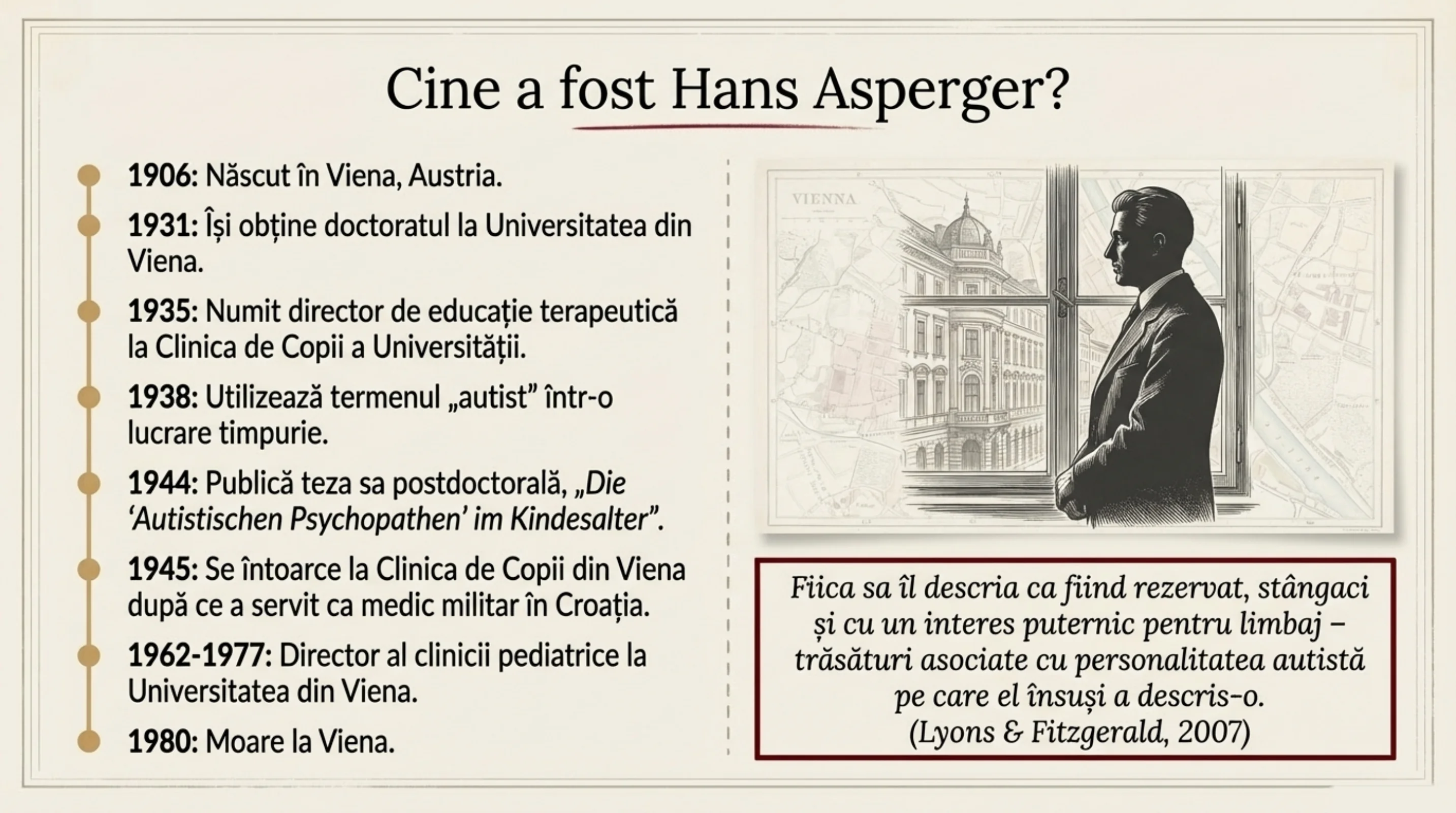
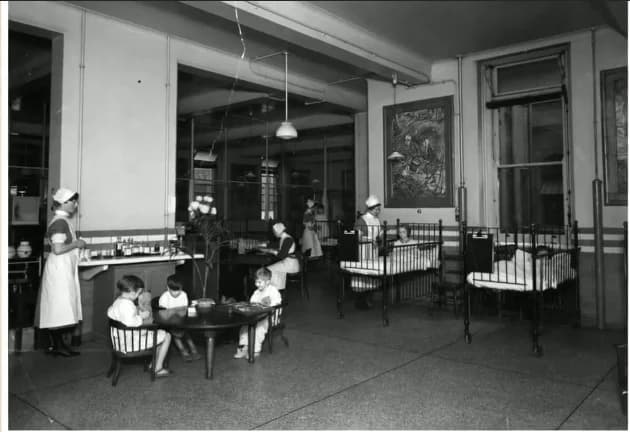
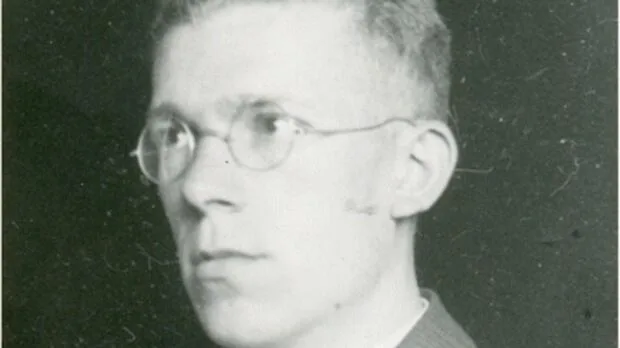
Hans Asperger was born on 18 February 1906, on a farm outside Vienna. Those who knew him described a man who was himself somewhat atypical: a talented linguist who had difficulty making friends and was considered "remote." His daughter, Dr Maria Asperger Felder, described him in similar terms — he "didn't need much social contact" and "was content with his own company." The Swedish autism researcher Christopher Gillberg, upon hearing this description, suggested that Asperger himself may have been affected by the condition he described. Asperger married in 1935 and had five children, including two daughters who themselves became doctors.
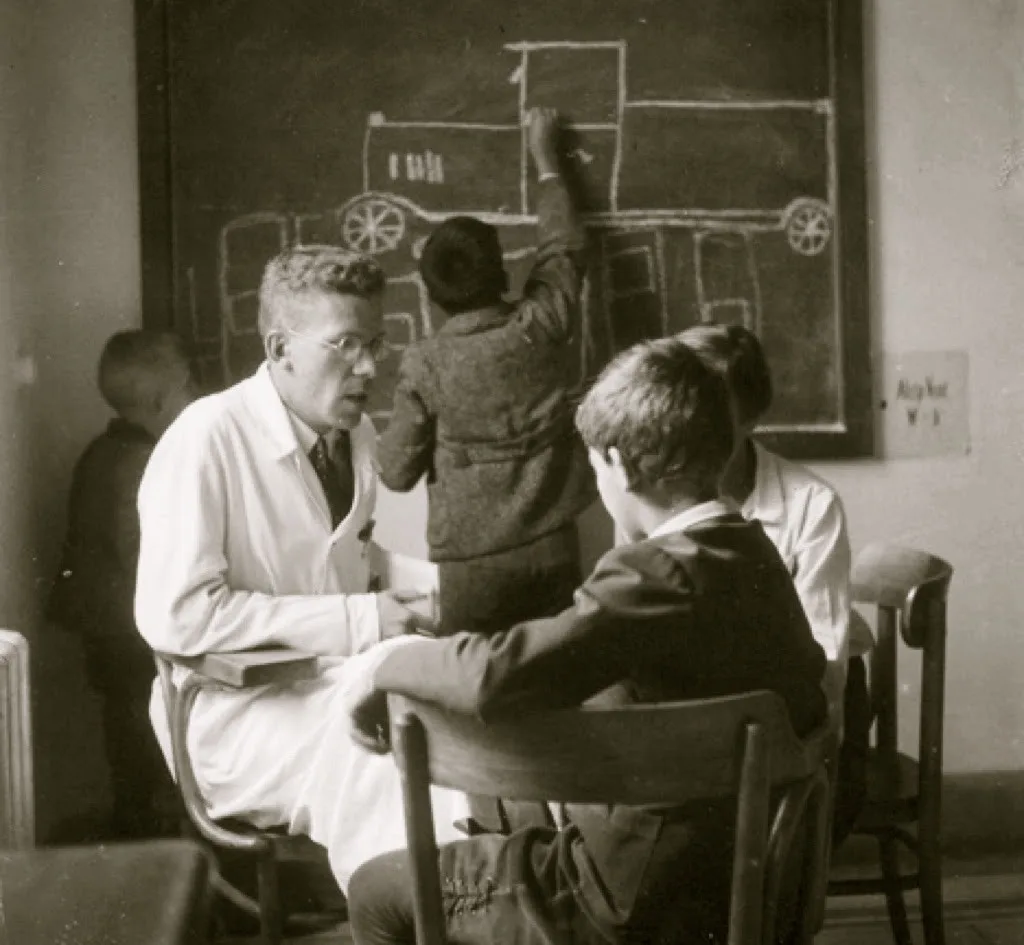
He studied medicine at the University of Vienna and began working at the Paediatric Clinic in 1930, initially under the direction of Erwin Lazar — a mentor who treated the child victims of the First World War and who transmitted to Asperger a profound humanistic sensibility. When Lazar died suddenly in 1932, he was replaced by Franz Hamburger, whose interest in affective disturbances at a biological level further shaped Asperger's thinking. Asperger's speciality was Heilpadagogik — a tradition of "curative pedagogy," introduced in Vienna by Clemens von Pirquet, that combined medicine, education and psychology in a holistic, child-centred approach. This pedagogical framework, distinct from classical psychiatry, profoundly influenced how Asperger viewed the children he studied: not as patients with pathologies to correct, but as individuals with distinctive traits to understand and support.
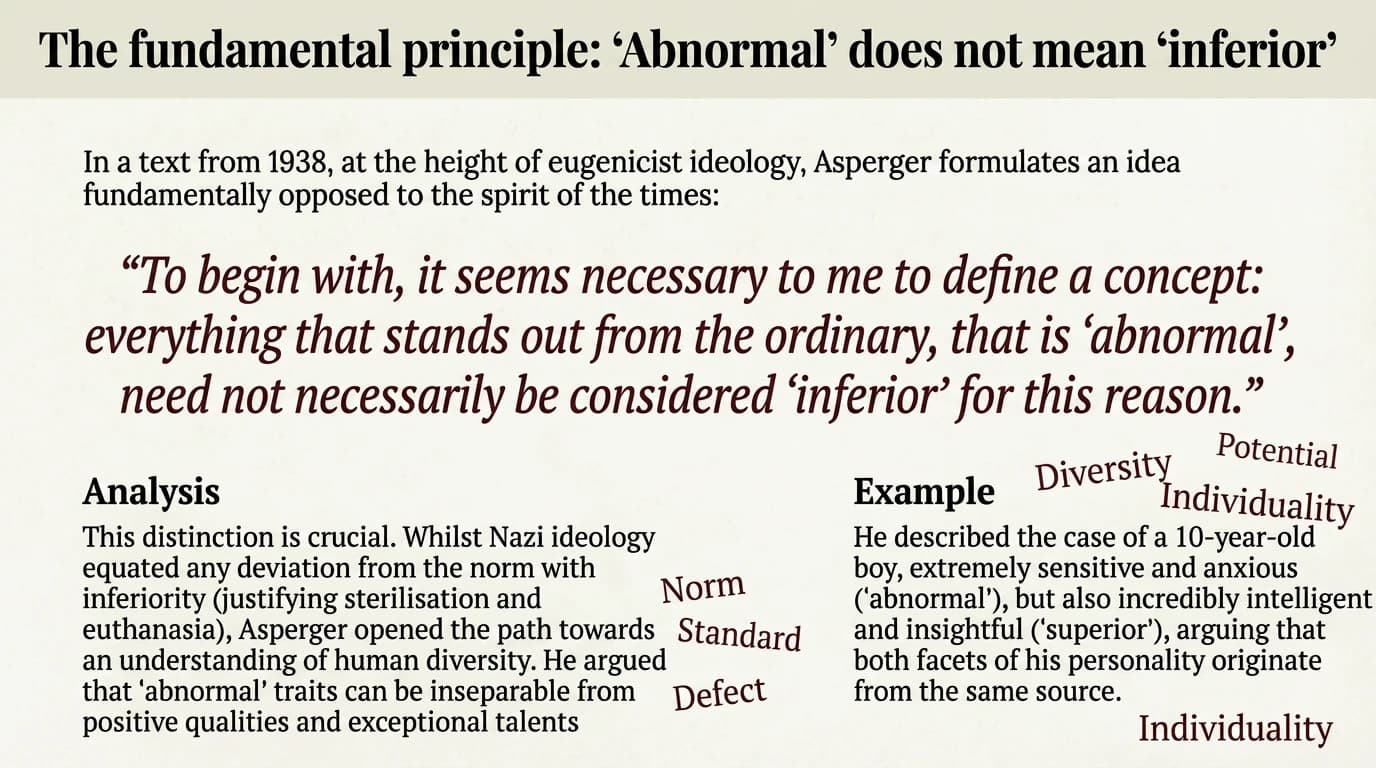
Remarkably, Asperger was using the term "autistic" far earlier than is commonly known. His daughter has cited a letter dated 14 April 1934, written during visits to Leipzig and Potsdam, in which he discusses diagnostic concepts and suggests that "autistic" might be a useful term. By October 1938 — five years before Leo Kanner's landmark paper — Asperger delivered a lecture at the Vienna University Hospital in which he was already speaking about children with "autistic psychopathy." This lecture was subsequently published under the title "Das psychisch abnorme Kind" in the Wiener Klinischen Wochenzeitschrift.
The context of interwar Vienna is essential. The city was an effervescent intellectual centre, but also a place of mounting political pressures. Asperger worked in an academic environment which, after the Anschluss of 1938, was penetrated by the Nazi ideology of "racial hygiene" — the concept that society must be "cleansed" of individuals deemed "unproductive" or "defective". In this perilous context, Asperger chose to describe the children he studied not as burdens, but as valuable minds.
✦ ✦ ✦
Where the Word "Autism" Comes From
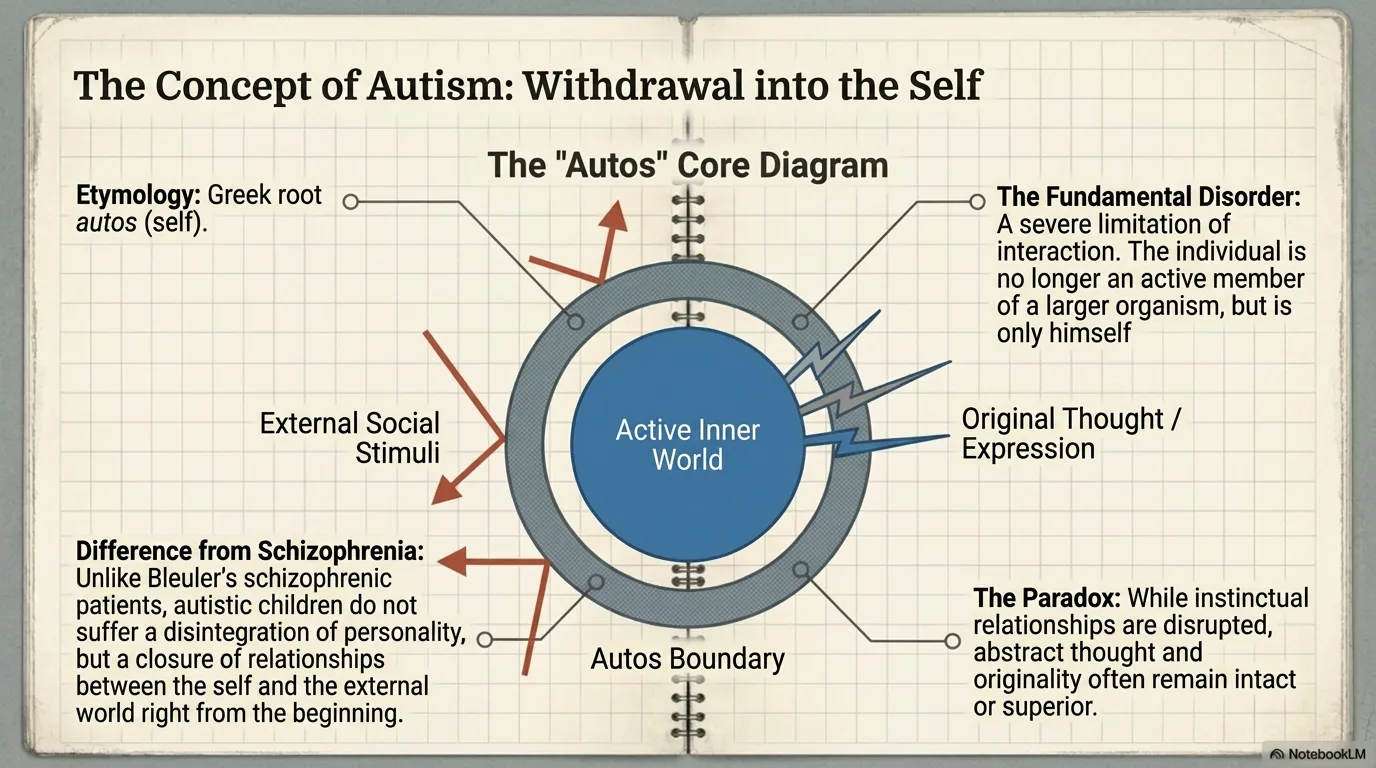
Before delving into Asperger's thesis, it is worth clarifying something few people know: the word "autism" was not coined by Asperger. It was created in 1911 by the Swiss psychiatrist Eugen Bleuler, to describe the withdrawal into the self of schizophrenic patients — what Bleuler called an "impenetrable wall" between the patient and reality.
Asperger adopted the term but radically changed its meaning. He explicitly stated that he was not using the word "autism" in Bleuler's sense — that is, he was not describing a psychotic break from reality. What he observed in his children was something else entirely: an "idiosyncrasy in their relationships with people" and a "self-centred" attitude. Not a collapse, but a different orientation. Not a wall, but a window facing another direction.
This distinction is fundamental and remains relevant today. The persistent confusion between "autism" and "psychotic withdrawal" still fuels clinical and social prejudice.
✦ ✦ ✦
The 1944 Thesis: Autistic Psychopathy
Autistic Psychopathy — 1944 Thesis
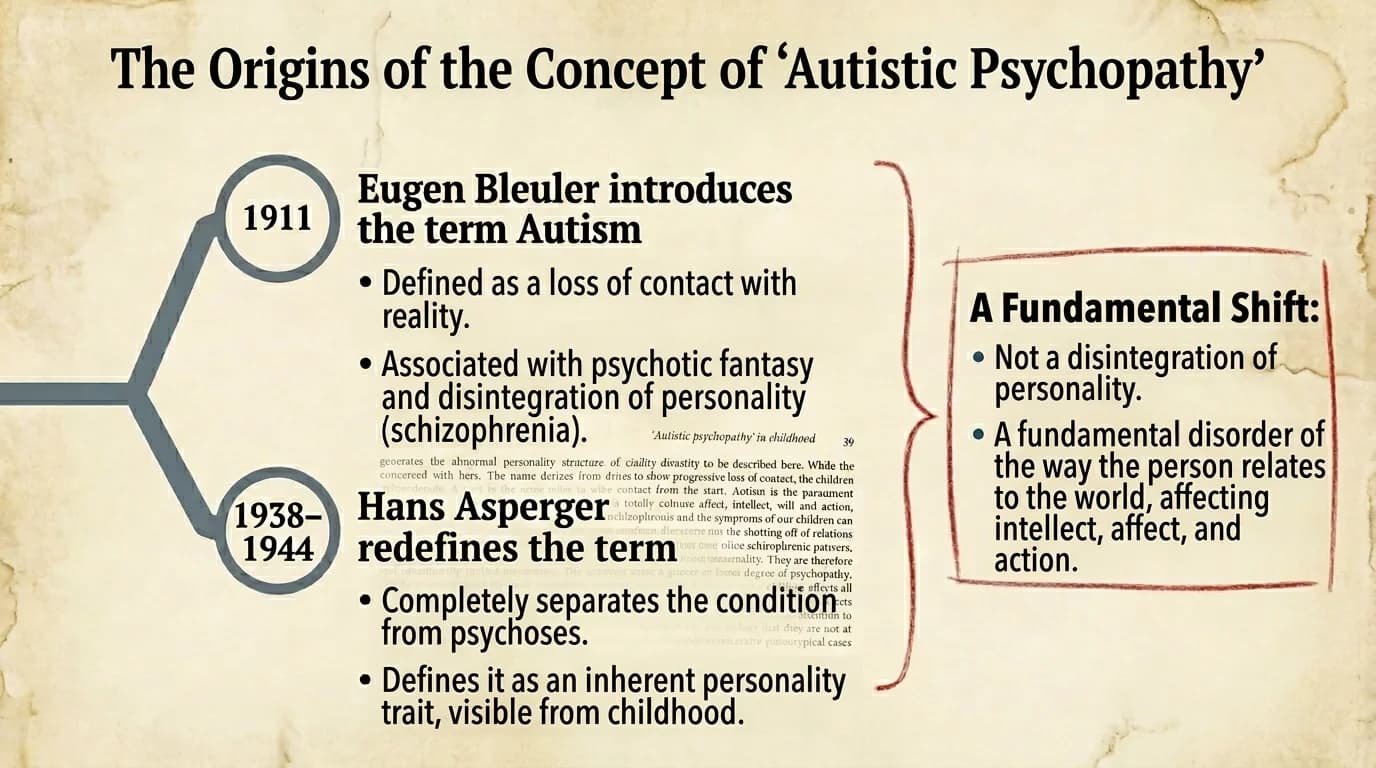
In 1944, Asperger published his habilitation thesis under the title "Die Autistischen Psychopathen" im Kindesalter — "Autistic Psychopaths in Childhood". The term "psychopathy" did not carry, in the Viennese medical context of the era, the negative connotation it has today. Derived from the Greek psyche (soul) and pathos (suffering), it designated a distinctive personality structure, not a degenerative disorder. Asperger used the term to describe a stable personality, not a progressive disease.
The implication is direct: for Asperger, autism was not a deficiency that worsens, but a way of being that remains relatively constant throughout life. He explicitly opposed the dominant psychiatric view that classified autism in terms of deterioration and incapacity. Furthermore, he argued — unlike his American contemporary Leo Kanner, who considered autism a rare condition — that "this psychopathic disorder, especially in a milder degree, is by no means rare, even in children."
The 1944 thesis described four cases of boys he had observed closely, with a level of observational detail rarely found in the medical literature of the era. Asperger noted not just symptoms, but temperament, humour, modes of thinking and each child's potential.
✦ ✦ ✦
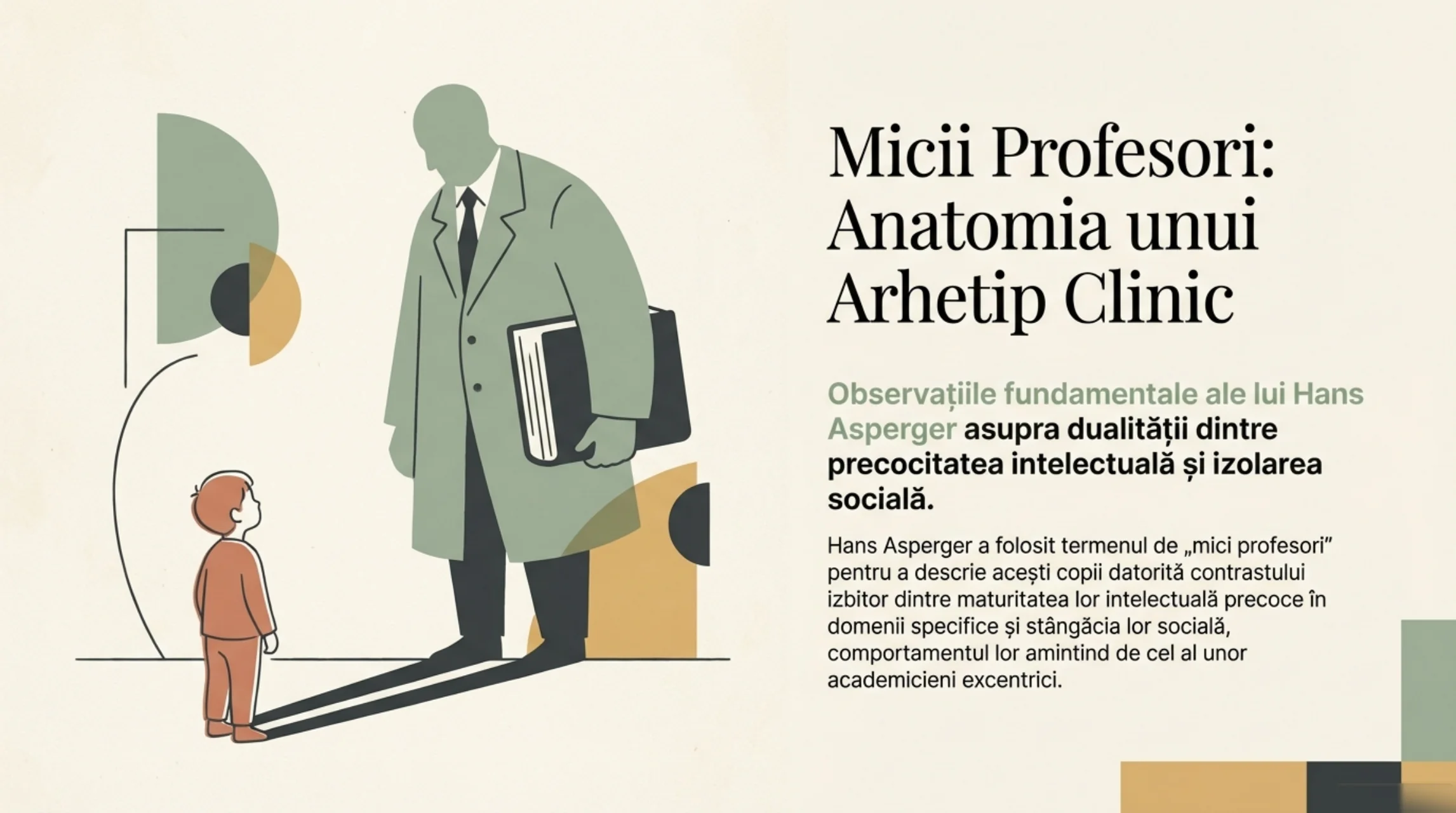
"Little Professors": The Portrait of the Autistic Child
The Little Professor Archetype
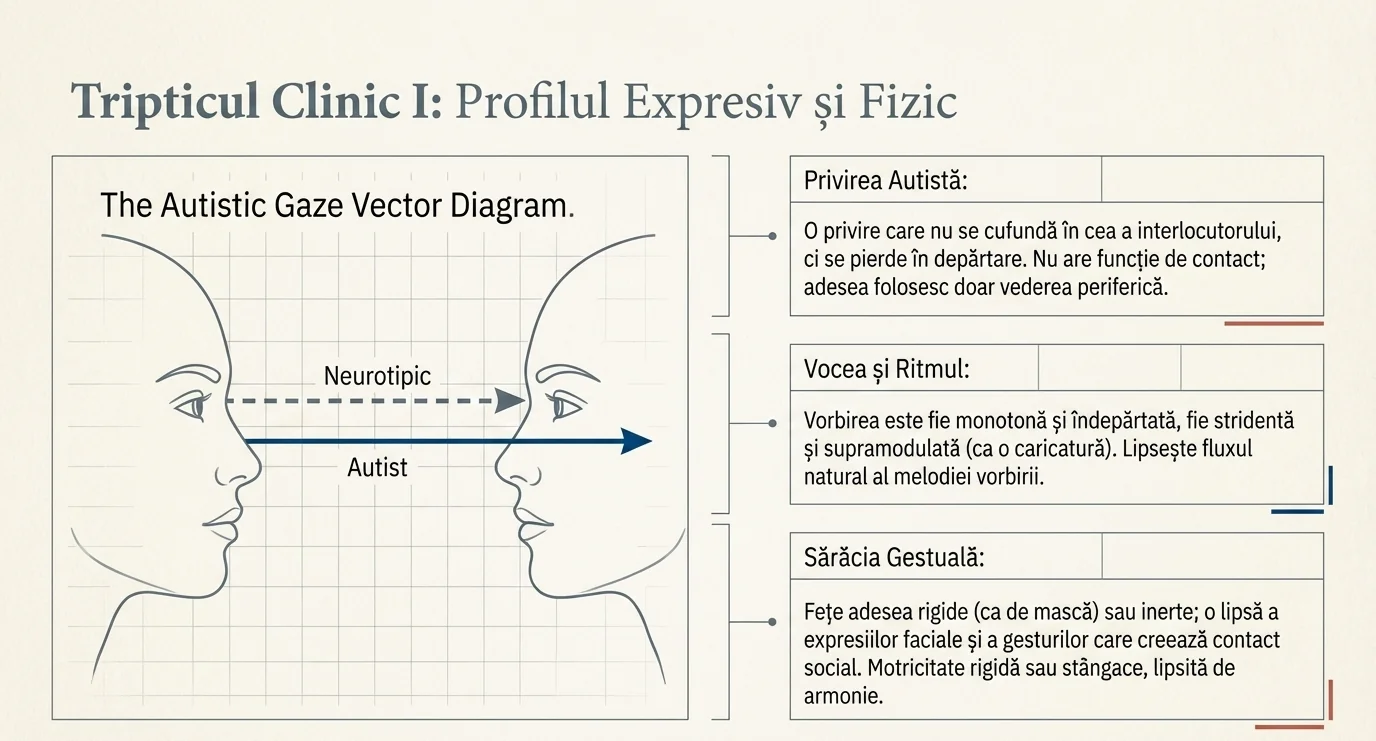
Clinical Triptych
Although the exact term "little professors" (kleine Professoren) was popularised later, the concept is elaborated at length in the 1982 posthumous text. Asperger describes children with remarkable intellectual abilities and behaviour that mimics, in a fascinating and sometimes comical way, the style of a specialist adult.
Gaze and Expressiveness
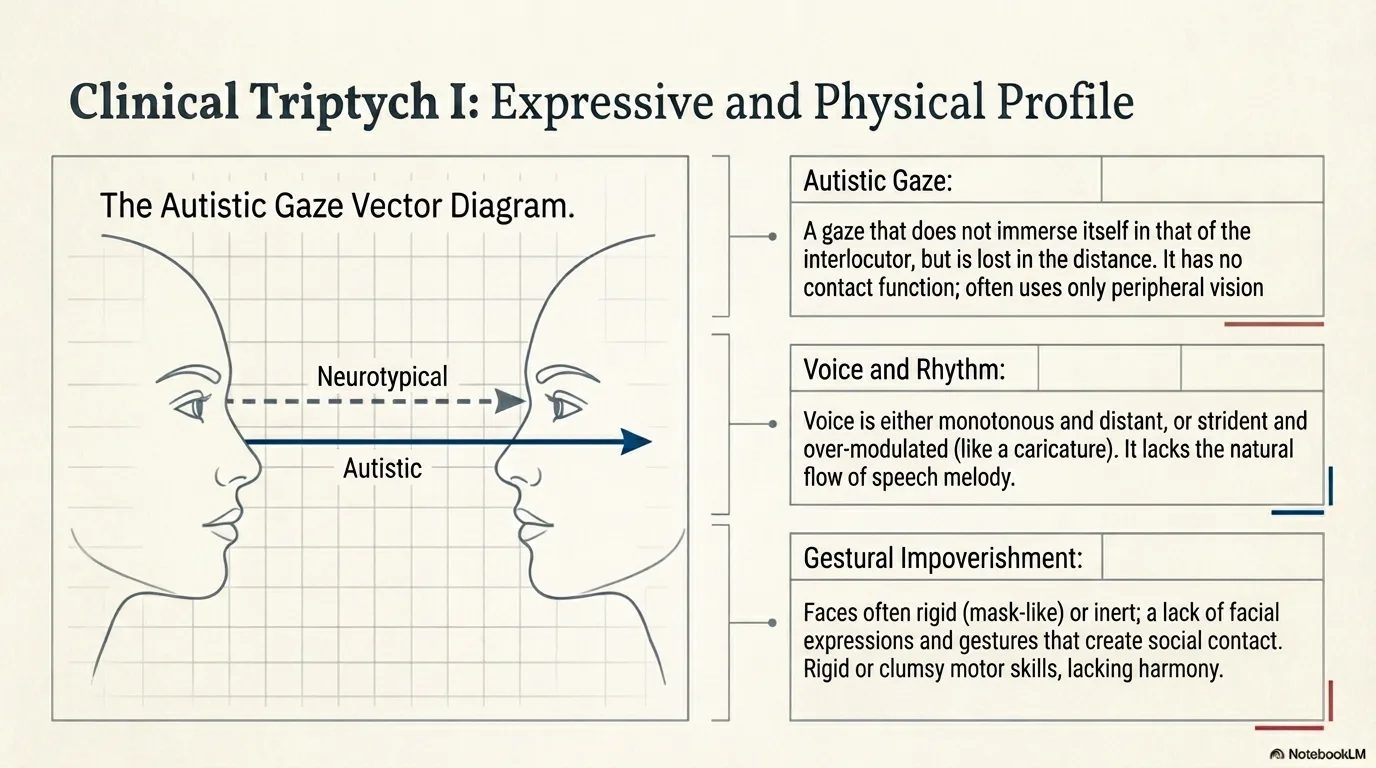
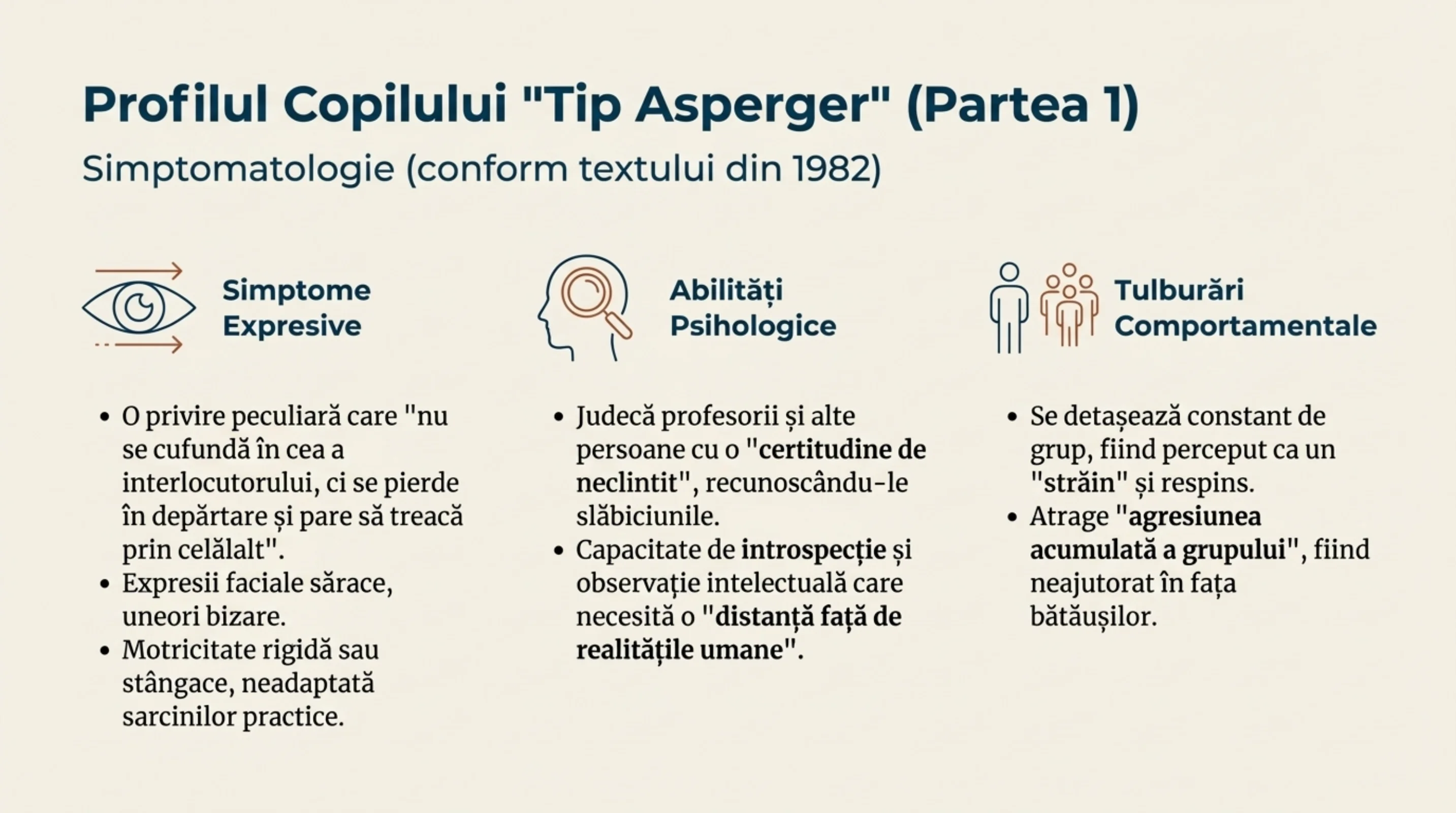
Asperger observed that these children have poor facial expression and an atypical gaze — not an absent one, but one oriented differently:
"Their gaze does not sink into the other's eyes but is lost in the distance and seems to pass through the other person; it does not respond to the listener's efforts to relate to them."
This observation, though clinical, is profoundly empathic. Asperger does not pathologise the absence of eye contact — he describes it as another way of being present in the world.
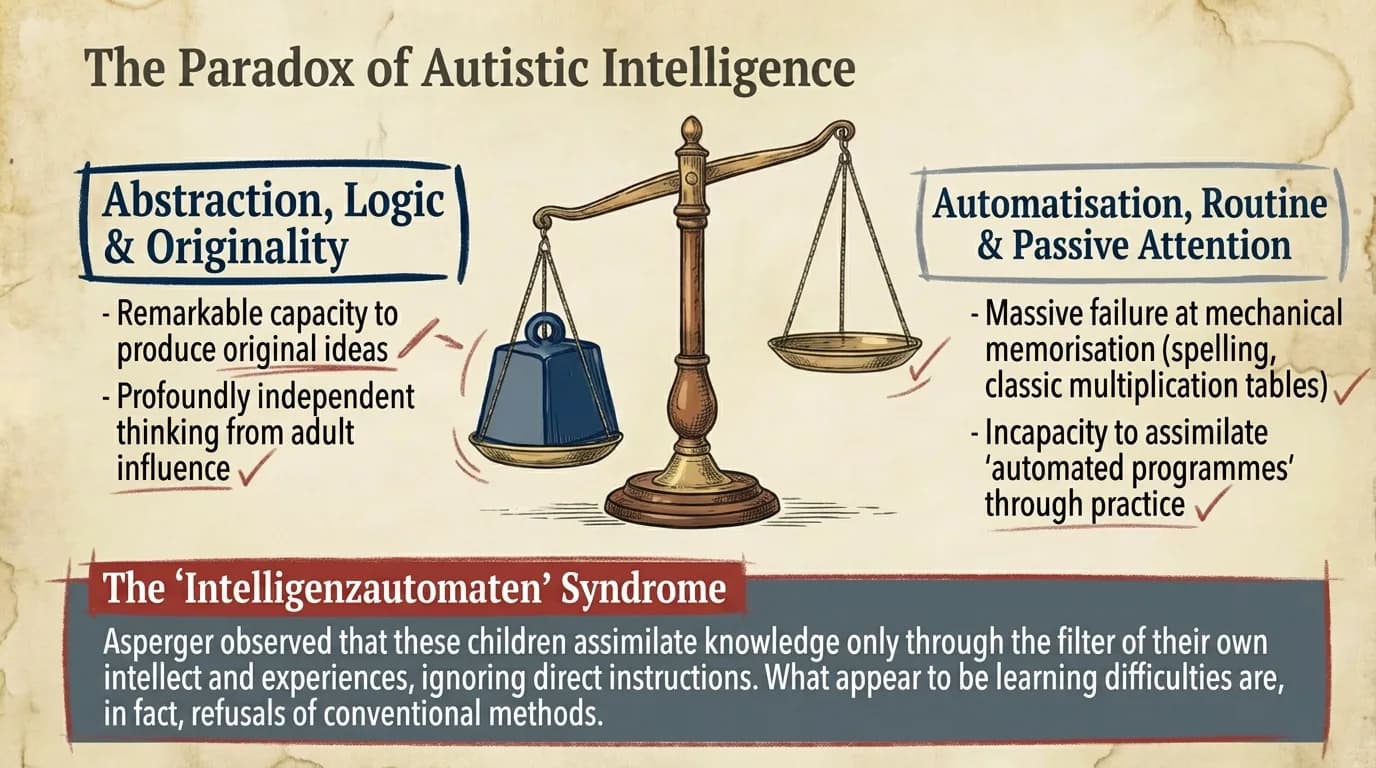
Intelligence and Language
The language of these children was one of the elements that fascinated Asperger most:
"They learn to speak earlier than they learn to walk, and very quickly develop a well-structured language with grammatically correct subordinate clauses that precisely formulate logical superordination and subordination."
Asperger notes that these children create neologisms — new words invented on the basis of the internal logic of language — and that this "can only delight us." It is not a communication deficit; it is a different relationship with language, one more abstract, more logical, more creative.
Social Judgement: The Merciless Observers
Although socially withdrawn, these children are anything but naive when it comes to perceiving others:
The children judge adults with an "unshakeable certainty", recognising their weaknesses which they can deliberately provoke.
Asperger observes a paradox: it is precisely their emotional distance that affords them a remarkable perceptual clarity. "The observation and intellectual understanding require a detachment from human realities" — a formulation that anticipates by decades the modern concept of the "analytical perspective" in autism.
Detachment from the Group
"In the most cheerful crowd, they stand apart, absorbed in a book, for example, apparently indifferent to the merry bustle around them."
Asperger does not describe an inability to socialise, but a structural preference. The children are not excluded — they choose a different way of being in the world. The difference is subtle, but enormous in its clinical and ethical implications.
The Clumsy Body, the Brilliant Hands
Asperger devotes significant space to motor skills — an aspect almost entirely missed by later interpretations. The children he describes have a paradoxical relationship with their own bodies:
"Motor skills are rigid or clumsy, not at all fluid, not well suited to carrying out practical tasks and sometimes display stereotypies."
This clumsiness manifests in mundane things: difficulties with dressing, tying knots, table manners. Asperger notes a revealing detail: the child "has problems with some globules of fat in the soup and forgets about everything else." Their bodies seem to refuse to cooperate with daily routine. In social space, this clumsiness makes them vulnerable — they are "helpless against skilled bullies, unable to hold their own in a fair fight."
But, just as with language, the clumsiness is not absolute. When motivation comes from within — from autos — everything changes:
"Nevertheless, when these children are motivated, they are capable, for a time, of astonishing feats of dexterity."
This is the same dissonance I see daily in practice: the client who cannot fill in an administrative form but writes flawless code for hours; the one who constantly forgets their keys but can recall the entire Tokyo underground map from memory. It is not laziness, not "lack of effort." It is a different motivational architecture — one where energy does not flow on external command, but on the internal fuel of interest.
The Hidden Emotion
Perhaps Asperger's most transformative observation concerns the emotional life of these children — a territory about which much has been written and much has been wrong. Schroder's psychiatric school had labelled them "devoid of empathy." Asperger directly contradicts this view.
He acknowledges that, on the surface, these children appear insensitive — they do not respond to parental tenderness, they do not "long for the educator's love" as typical children do. But then he adds:
"But again, we see that such a boy cares for an animal in a touching way, makes great efforts for this animal, but also shows, especially in secret, a deep emotional involvement."
Their emotions are not absent — they are idiosyncratic. They manifest indirectly, in secret, and are "permanently linked to persons who understand and respect them in their specificity." Affection exists, but does not travel through the channels we expect. Those who do not know where to look will not find it.
I recognise this description in my consulting room. My adult autistic clients are not devoid of emotion — they are overwhelmed by it. What appears as indifference from outside is often an emotional intensity so great that it cannot be translated into the facial expression we expect. And when they find a safe space — a therapeutic relationship where they do not have to perform — their tenderness surfaces with a force that contradicts every label of "zero empathy."
Complete Clinical Profile
✦ ✦ ✦
The Absent-Minded Professor: The Adult Archetype
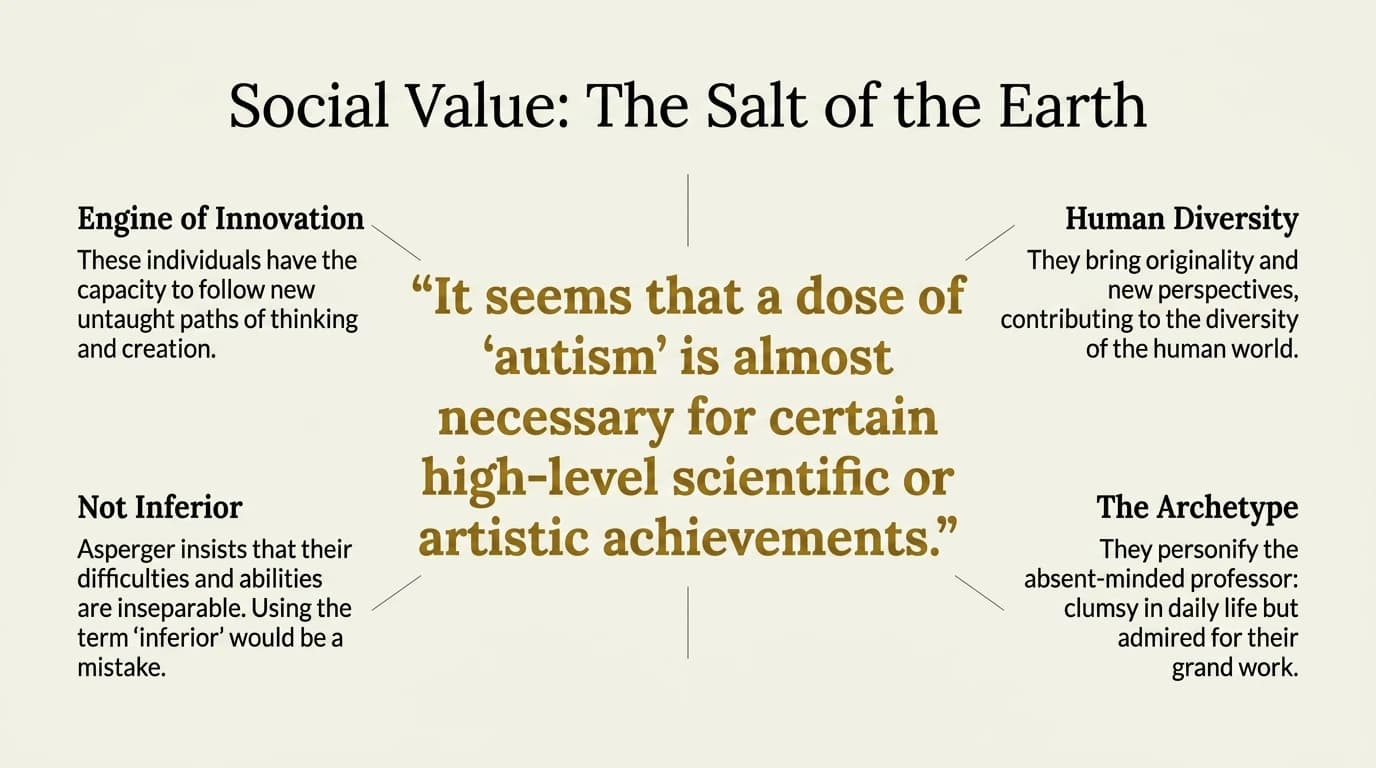
Perhaps Asperger's most memorable observation concerns the adult lives of these children. He identifies a familiar cultural archetype — the absent-minded professor — as being, in fact, the adult expression of autistic traits:
"Is this not the case of the 'absent-minded professor', an immortal figure of amusement, an autistic person, absent-minded and ridiculously clumsy only in the affairs of daily life, but often admired in their grandiose work?"
This formulation is remarkable from several perspectives. Asperger does not see autism as a childhood condition that must be "overcome" — but as a personality structure that manifests throughout life. The "absent-minded professor" is not a social failure; they are someone whose genius consists precisely in the capacity to withdraw from the banalities of daily life in order to concentrate on what truly matters.
✦ ✦ ✦
"The Salt of the Earth": The Social Value of Autism
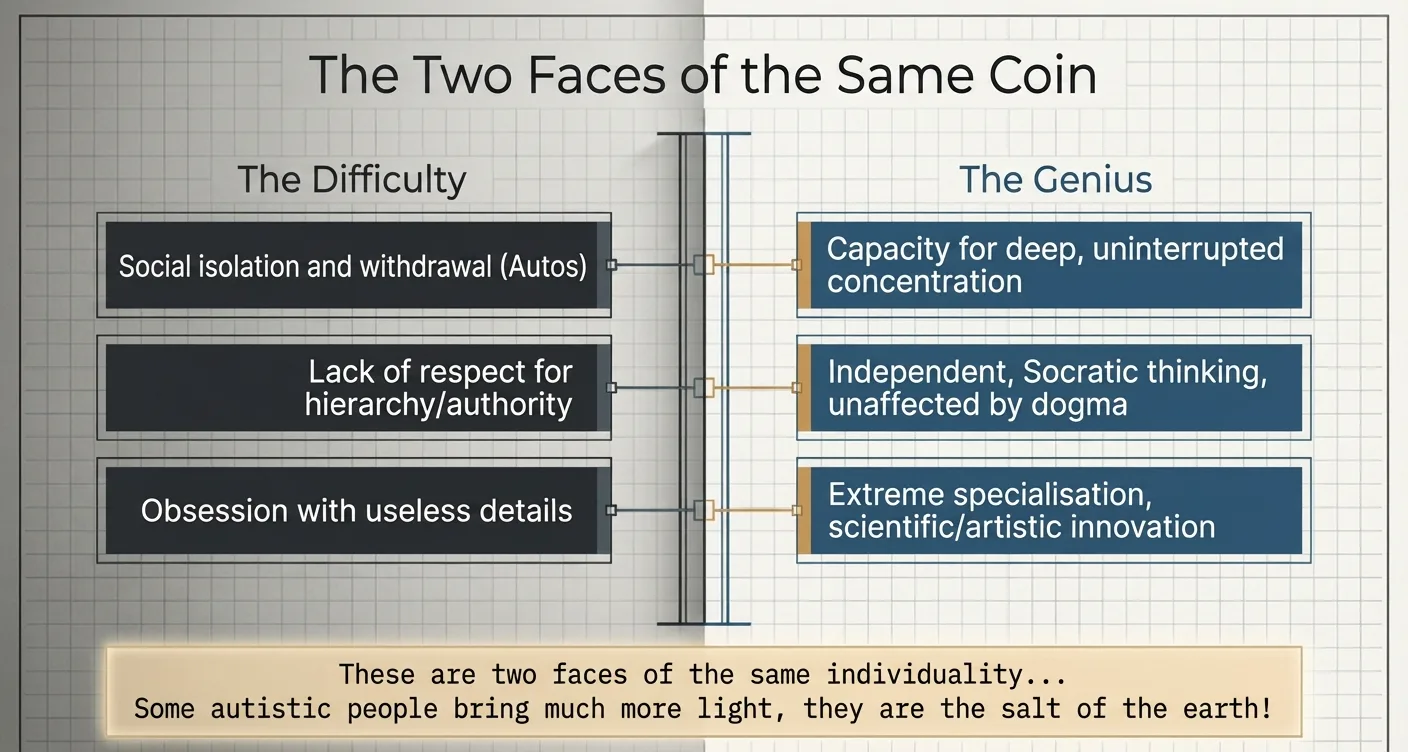
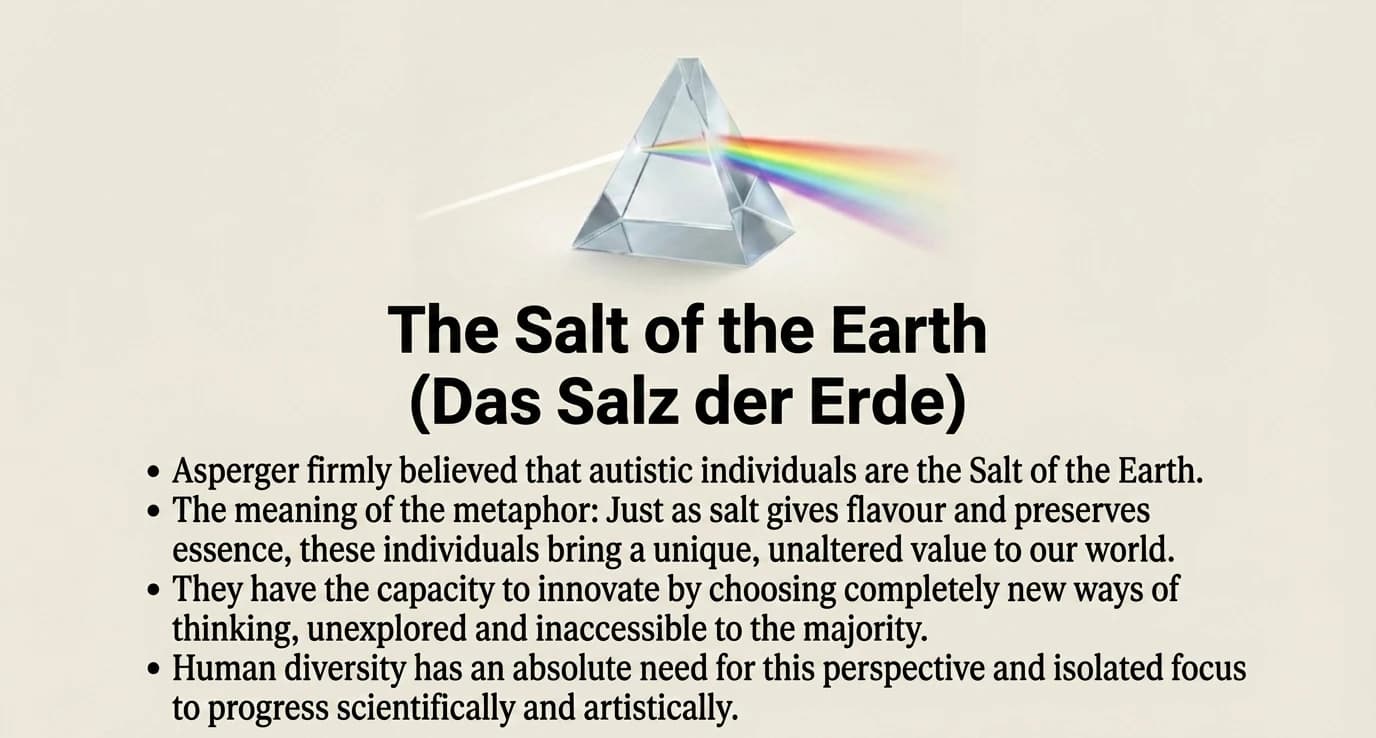
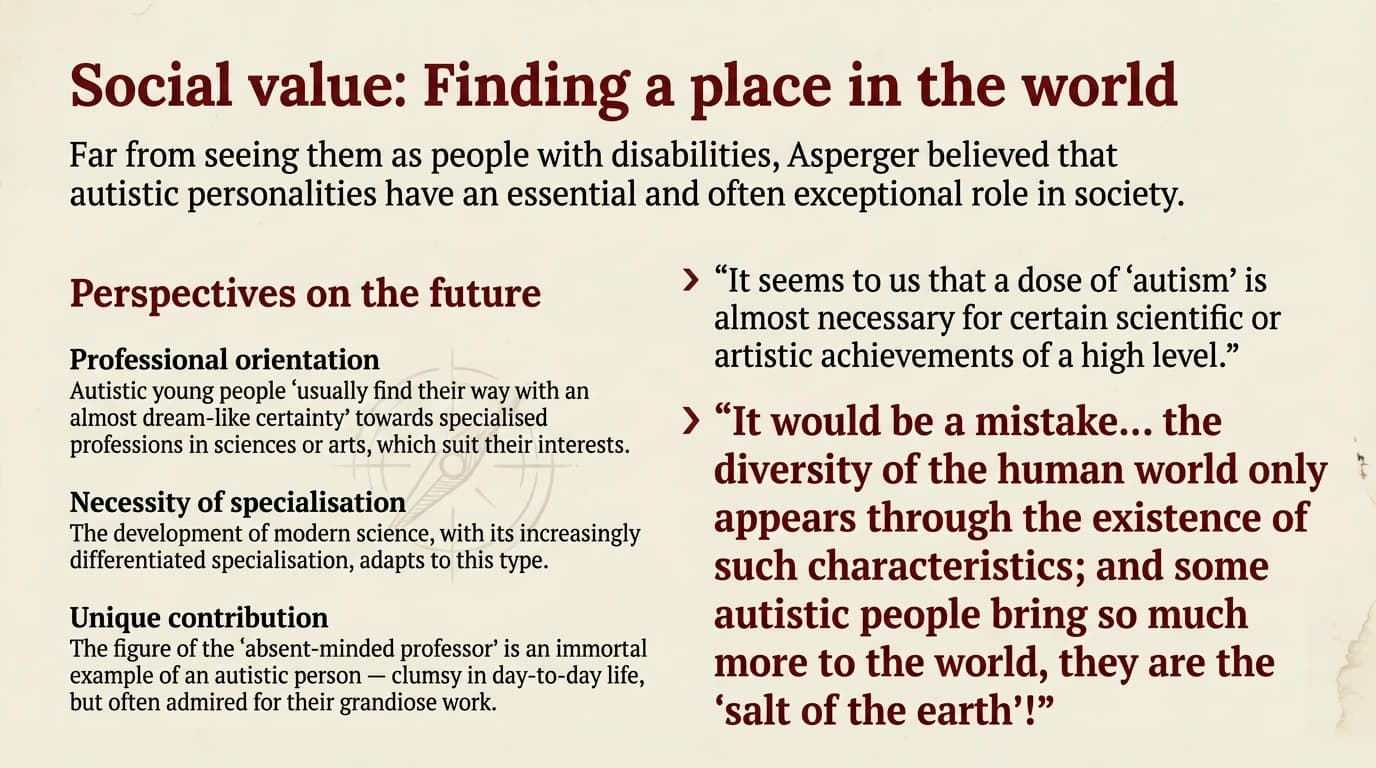
Asperger does not merely describe. He values. And he does so with a conviction that anticipates the modern neurodiversity movement by half a century. The full passage deserves to be quoted in its entirety, because every sentence matters:
"But this raises the important problem of the social value of difficult people who stand out from the norm. The example of autistic personalities, in particular, shows that it would be quite wrong to use the term 'inferior' in such a context: it would be a mistake — and would also block the path to curative education! In these cases, however, it can be clearly demonstrated that a child's difficulties and particular abilities are inseparable and, moreover, they are mutually dependent, two sides of the same individuality. Only through the existence of such characteristics does the diversity of the human world come into being; and some autistic people bring much more to the world, they are 'the salt of the earth'!"
The expression — taken from the Gospel of Matthew — suggests that autistic people are not a burden on society, but an essential ingredient of it. But what makes this passage truly radical is not the biblical metaphor, but the logical argument behind it: difficulties and abilities are inseparable. They are "two sides of the same individuality." You cannot "fix" social clumsiness without destroying genius. You cannot eliminate detachment without losing perspicacity. Whoever wants a "normal" child wants, in fact, a different child.
This observation — that autistic traits are not a deficit overlaid on a "normal" person, but an integrated architecture in which strengths and vulnerabilities spring from the same source — remains one of Asperger's most profound contributions to the understanding of autism. And one of the most ignored.
✦ ✦ ✦
Paradoxical Reactions: The Child Who Delights in Your Fury
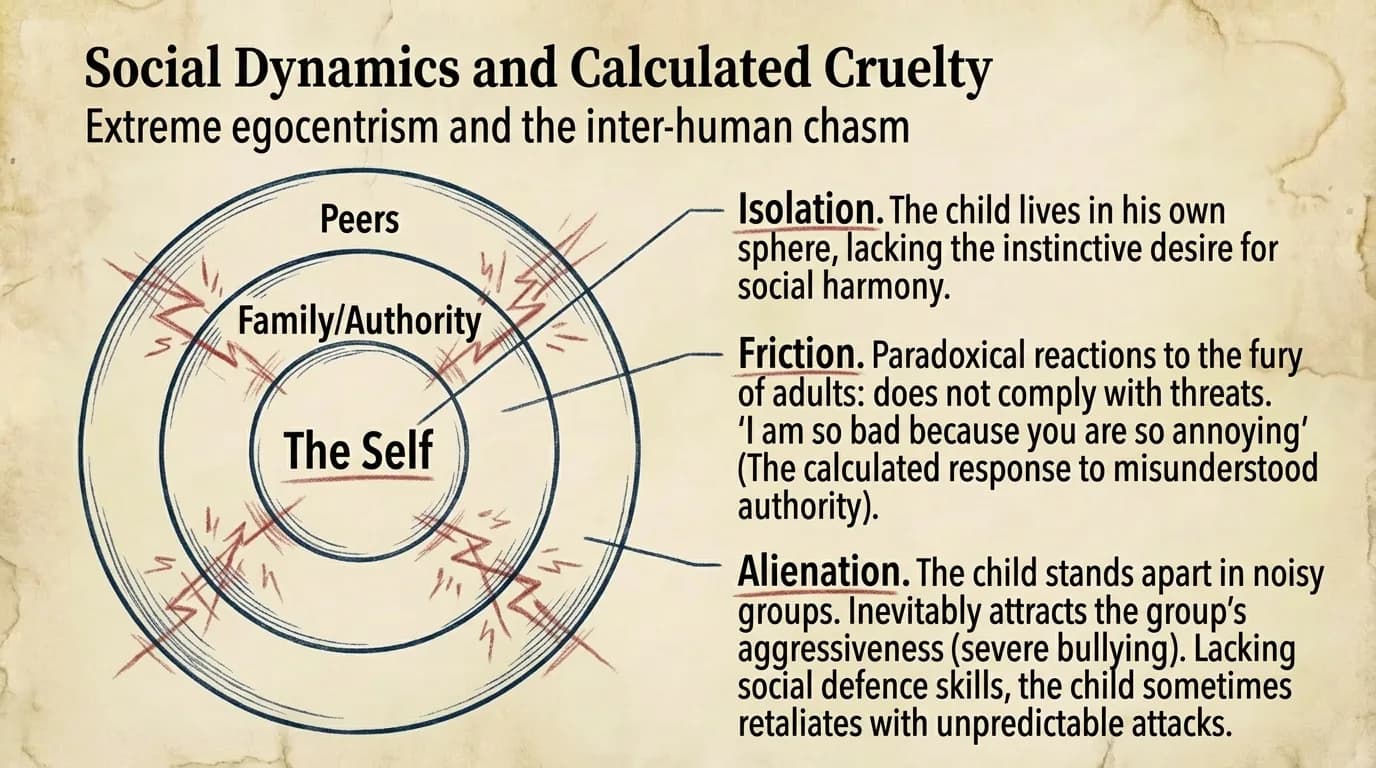
If "the salt of the earth" is the overarching vision, what follows is the detail that tests every adult — parent, teacher or therapist.
A neurotypical child craves the adult's approval and fears their disapproval. The autistic child described by Asperger operates on an entirely different logic — and this is one of his most challenging observations.
"One often gets the impression that the child deliberately provokes the educator's fury and that they are amused by it."
Asperger observed that these children are sometimes "grotesquely lacking in respect" — saying to the adult's face what others barely dare to think. And, far from being intimidated by consequences, "they delight that the other person is angry because of it." This is not defiance in the usual sense. It is a form of social testing that operates not on the emotional frequency, but on the intellectual one.
Asperger does not see this as a disciplinary problem, but as diagnostic information:
"Autistic children usually react paradoxically to their teacher's affect: they do not let themselves be brought to reason by strong anger, but rather delight in it and provoke it."
Understanding this mechanism completely changes the educational — and therapeutic — strategy. Punishment and raised voices function as positive reinforcement. The child has just demonstrated that they can control the adult's emotional state. Why would they stop?
I have seen this in therapy: the moment you give up emotional pressure and enter into intellectual dialogue, everything changes. The connection does not disappear — it shifts to a different channel. The autistic client who "won't cooperate" within an emotional exchange suddenly becomes eloquent, profound and connected when the conversation moves to the terrain of logic or a shared interest.
✦ ✦ ✦
Curative Pedagogy: How to Work with Autistic Children
Curative Pedagogy
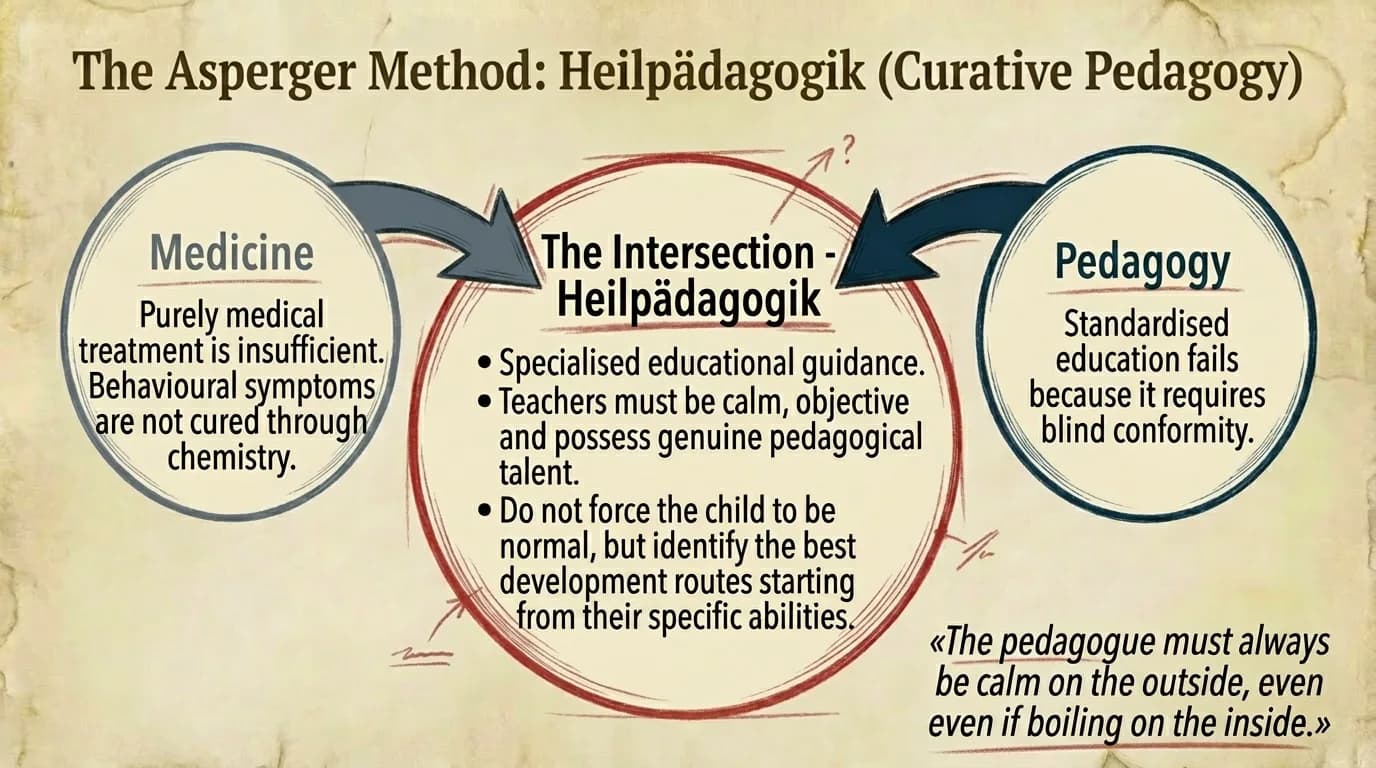
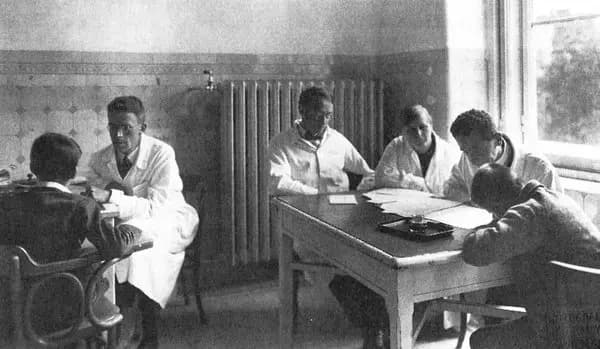
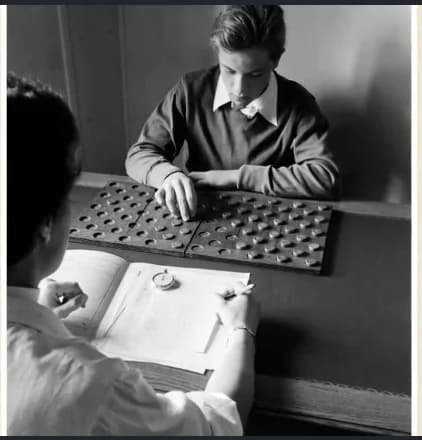
Asperger was not merely an observer — he was a pedagogue. And he was not alone. At the Vienna clinic, his remarkable nursing colleague, Sister Viktorine Zak, developed the first practical programmes for autistic children — pioneering the use of music, drama, play and speech therapy to teach social skills, decades before such approaches became mainstream. Zak's story has a tragic ending: she was killed during an Allied bombing raid on Vienna and was buried with the child she was clutching at the time. Her loss was a devastating blow to the clinic and to the children she had championed.
Asperger's practical approach, described in the 1982 text, flows directly from his observations on paradoxical reactions and from the therapeutic culture that Zak had helped to build.
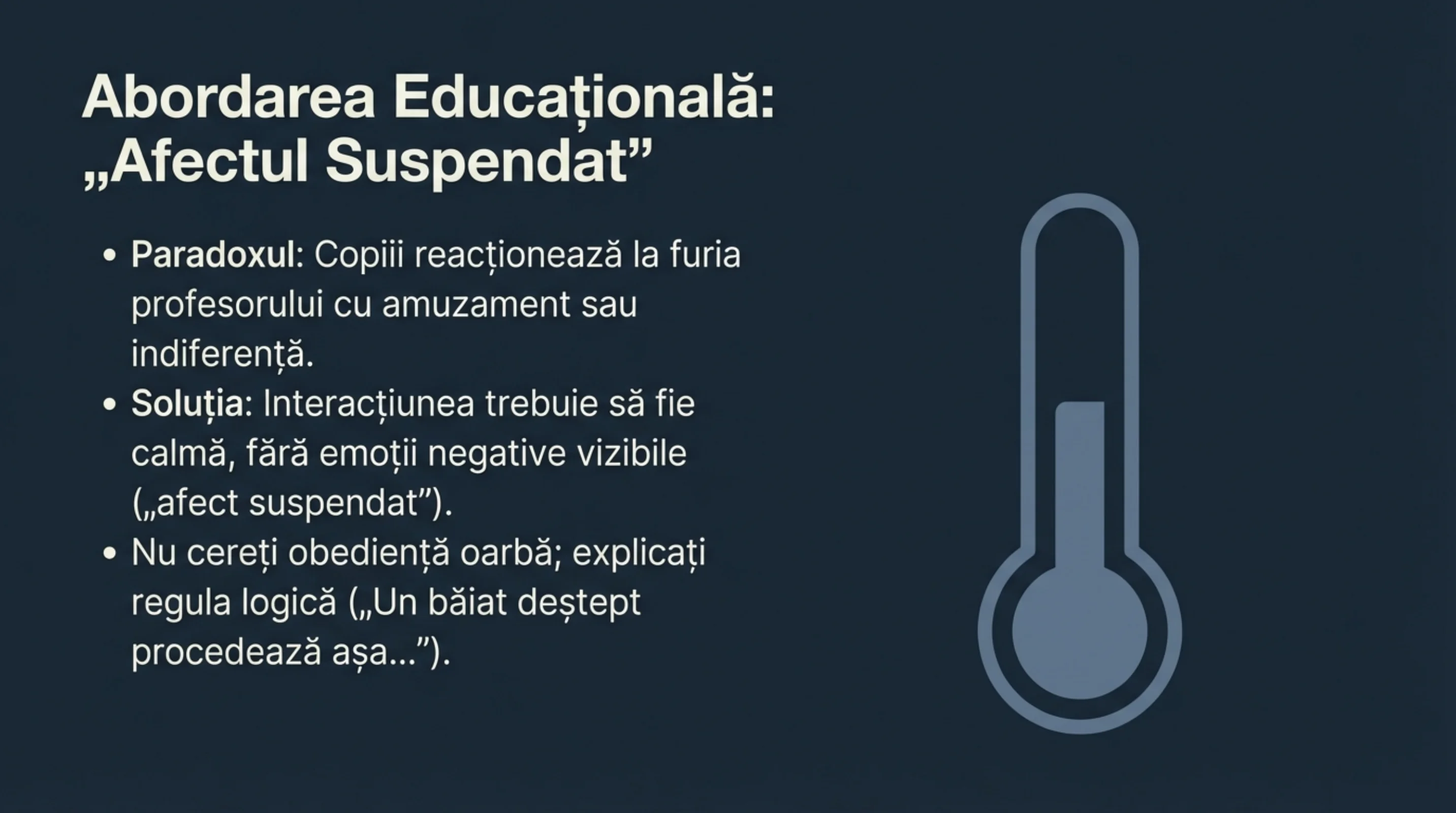
Suspending Affect
"One must meet autistic persons 'with suspended affect' and not lose one's temper... but rather confront them calmly, even with a cunning mind."
The solution is not more authority, but more intelligence in the relationship. The educator must step out of the emotional game and enter the child's territory: that of logic.
The Intellectual Approach
Rules should not be imposed emotionally, but logically — in the form of general laws: "An intelligent boy does it this way..." The autistic child does not respond to social pressure, but they respond to logical coherence. Teachers must "play the game", acknowledging the child's abilities, building relationships founded on mutual intellectual respect — the only viable channel for a lasting emotional connection.
Respect for Individuality
Asperger insisted that the educator must engage with the child "on the same level" intellectually and respect their area of expertise. This is not a concession — it is a necessary condition for any genuine progress. And purely medical therapy is, in his view, ineffective.
A detail from his clinical practice illustrates this philosophy. According to colleagues who worked with him in the 1960s and 70s, one of the first questions Asperger asked every child was: "Do you know what your name means?" — a question designed not to test knowledge, but to open a space of personal significance, to signal that the child was being seen as an individual, not a case. His colleague Dr Maria Theresia Schubert recalled that Asperger "appreciated the children enormously" and liked to joke that "it helped to be a little autistic if you wanted to do things well" — meaning, specifically, that focus and single-mindedness were assets, not deficits.
✦ ✦ ✦
Puberty: The Point of Crisis
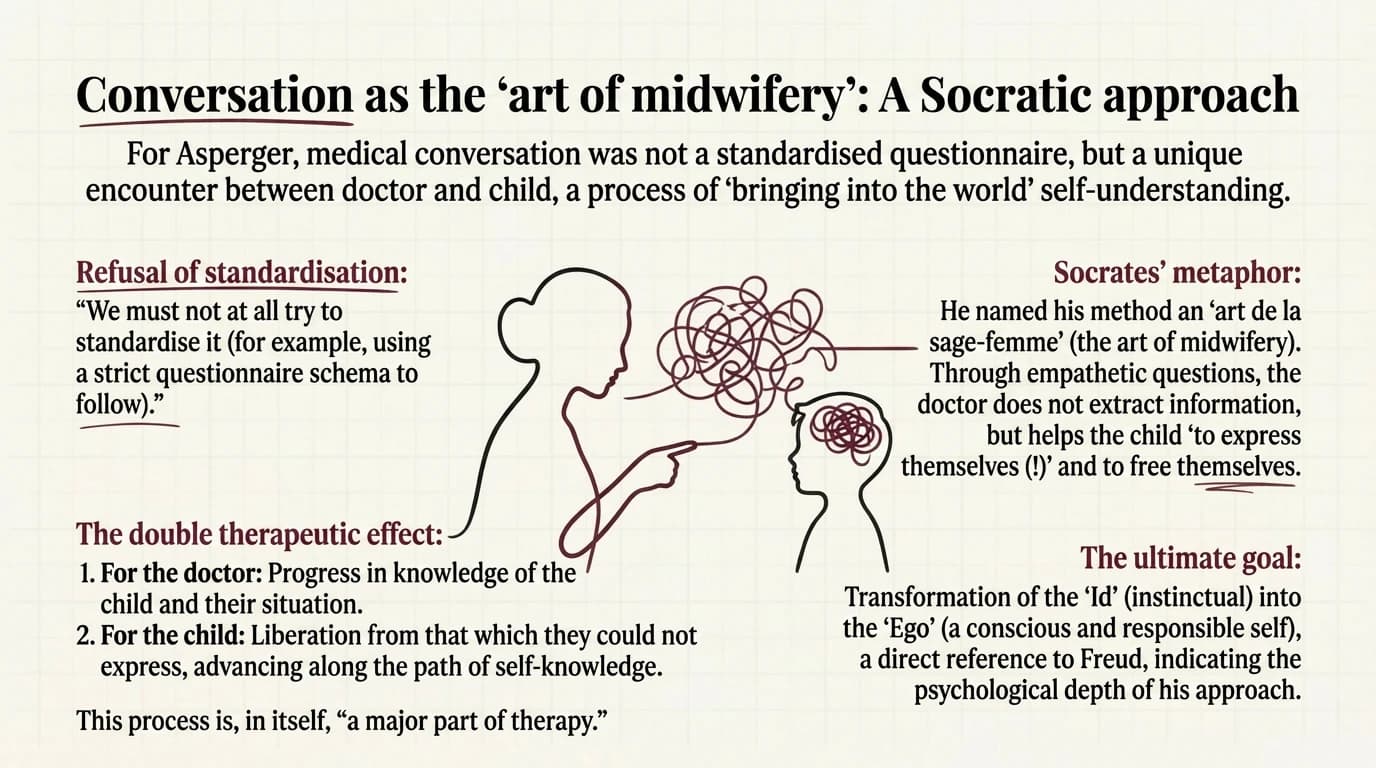
Asperger did not idealise these children's trajectories. Puberty, in particular, is described as a moment of extreme vulnerability:
"At puberty, most of these children are extremely disturbed in their behaviour. They change schools several times because some of the other children can no longer bear them."
This period is not simply an intensification of existing traits. It is a crisis of self-discovery in which "their own self now comes powerfully to the surface", generating serious conflicts with the environment. Asperger insisted that these young people need protection — an "understanding school doctor" who acts as an advocate — to survive the years of secondary school. Without this support, the risk of failure is real and lasting.
Many of my adult clients describe the secondary school years as the most difficult period of their lives — not because their autism "worsened", but because social demands exploded whilst support vanished. The cycle of masking, exhaustion and collapse that I see in the consulting room at 30 or 40 almost invariably has its roots in those years of early adolescence when nobody was their "advocate."
✦ ✦ ✦
The Dreamlike Certainty: Choosing a Profession
But if they make it through puberty — and especially if they have had the good fortune of adults who understood them — these young people reach a remarkable moment: the choice of profession. And here Asperger observes something unique:
"They find their way with an almost dreamlike certainty into the profession that seems predetermined for them according to their interests, sometimes even from a very early age."
Interests and Development
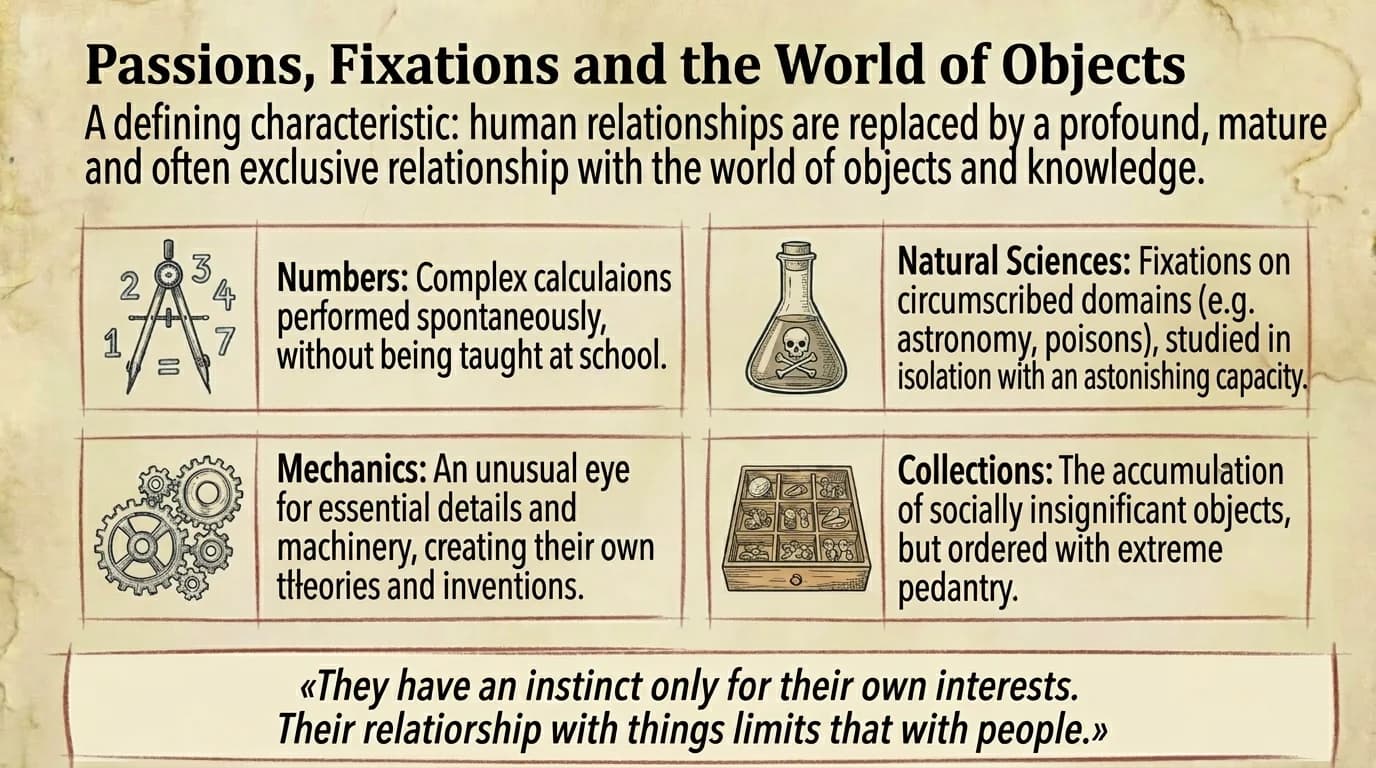
Their performance springs from an internal source: "they draw the greatest part of their energy from their own self, from autos." They choose "highly specialised, sometimes even remote professions — in the sciences, sometimes also in the arts — and their achievements sometimes border on genius."
But Asperger adds an important nuance: not all succeed. If their interests are "too remote from real possibilities", some become individuals who earn only the bare minimum, or even vagabonds ignored by society. Others become "faithful servants who do above-average work, with an unshakeable commitment." The spectrum of outcomes is as broad as the spectrum of traits.
✦ ✦ ✦
The Deep Person, Not the Symptom
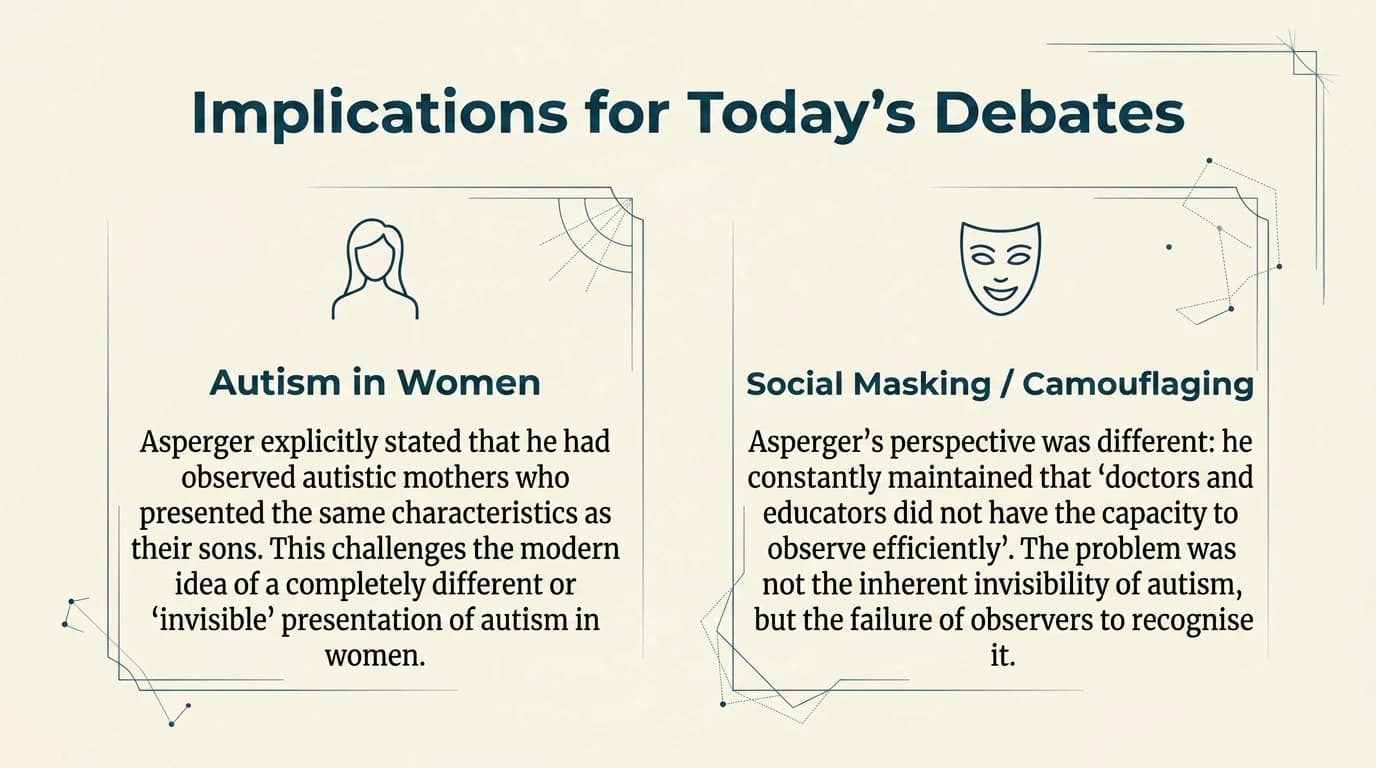
Contrary to authors who considered autism a mere cognitive or perceptual defect, Asperger affirms that the root of the condition lies much deeper — in the "deep person, in the 'thymic', emotional part of the personality."
The higher intellectual functions — understanding abstractions, complex language — are intact or even superior. What functions differently is not intelligence, but implicit processing: instinctive motor skills, automatic emotional resonance, natural social imitation. The same architecture that produces genius produces clumsiness. The two cannot be separated.
✦ ✦ ✦
Heredity and Autism as a Universal Phenomenon
Asperger championed the fundamental role of heredity, observing that in the ancestry of the children he studied one finds "almost without exception" similar characters — parents or grandparents with autistic traits, often unrecognised as such. This observation, though lacking modern genetic tools, is confirmed today by genomic research showing a strong hereditary component in autism.
But Asperger goes further. He observes that "people generally have the possibility of behaving in an autistic way" — in the defiant phases of childhood, in severe suffering, but above all during periods of creative mental activity, when one "must protect oneself... must withdraw into oneself." Autism, for Asperger, is not an isolated pathology, but an "extreme variant" of human individuality — a continuum on which all human beings are situated, at varying intensities.
✦ ✦ ✦
Conclusion: A Vision Buried
Vision and Legacy
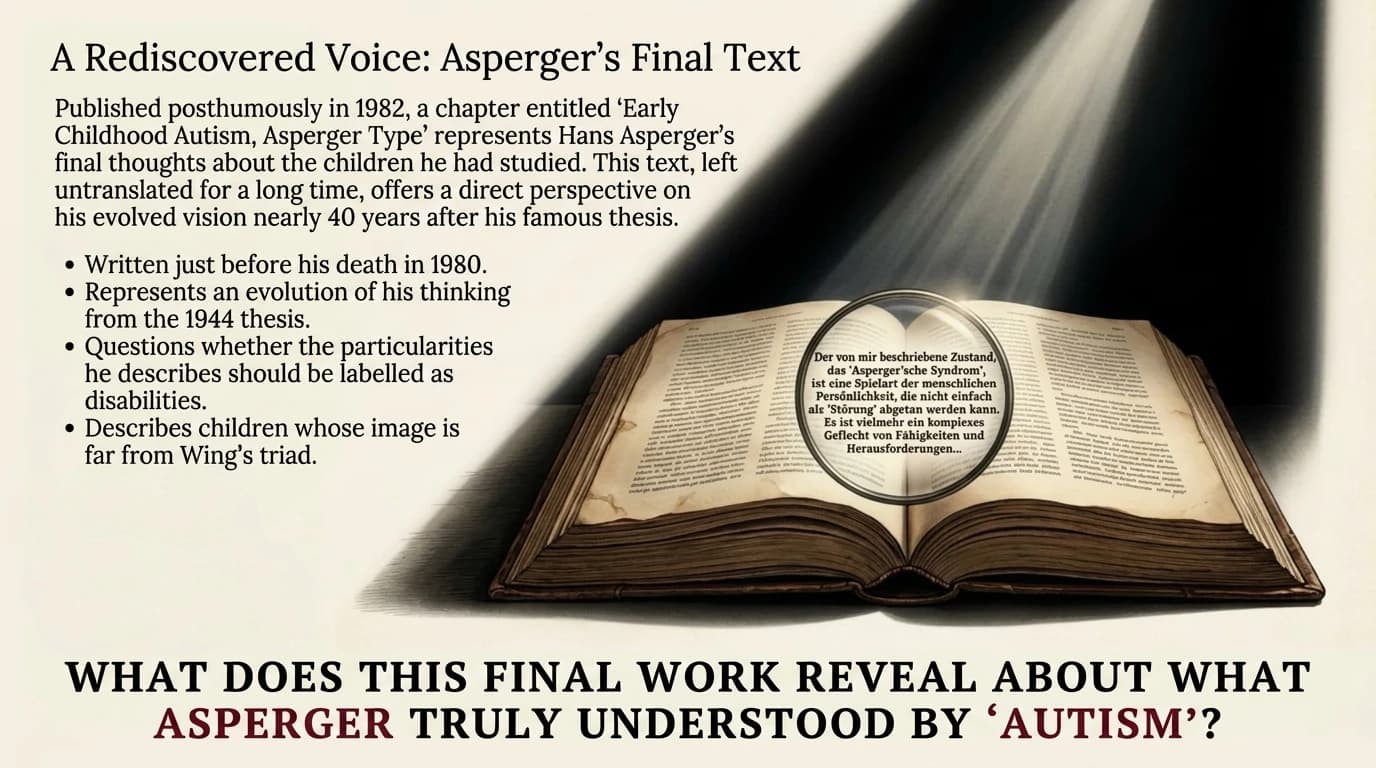
Evolution and Legacy
During the later part of the Second World War, Asperger served as a military doctor in Croatia, where he witnessed firsthand the horrors of conflict. His daughter recalled: "He saw many wounded and dead and told us about his experiences years later. He was a nature- and people-loving person, not a soldier." After the war, he was appointed director of the children's clinic in Vienna in 1946, became professor at the University of Innsbruck in 1957, and returned to Vienna in 1962.
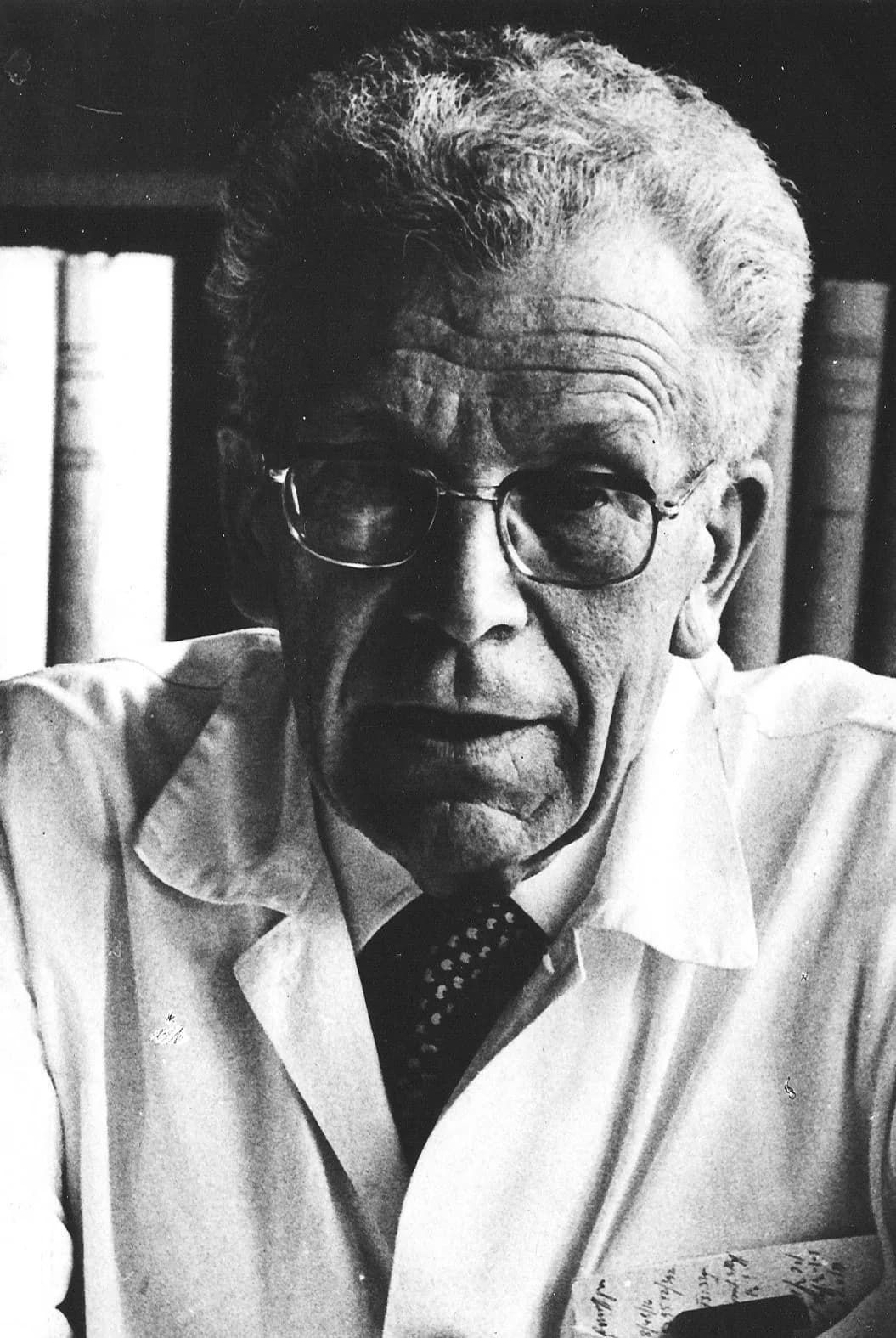
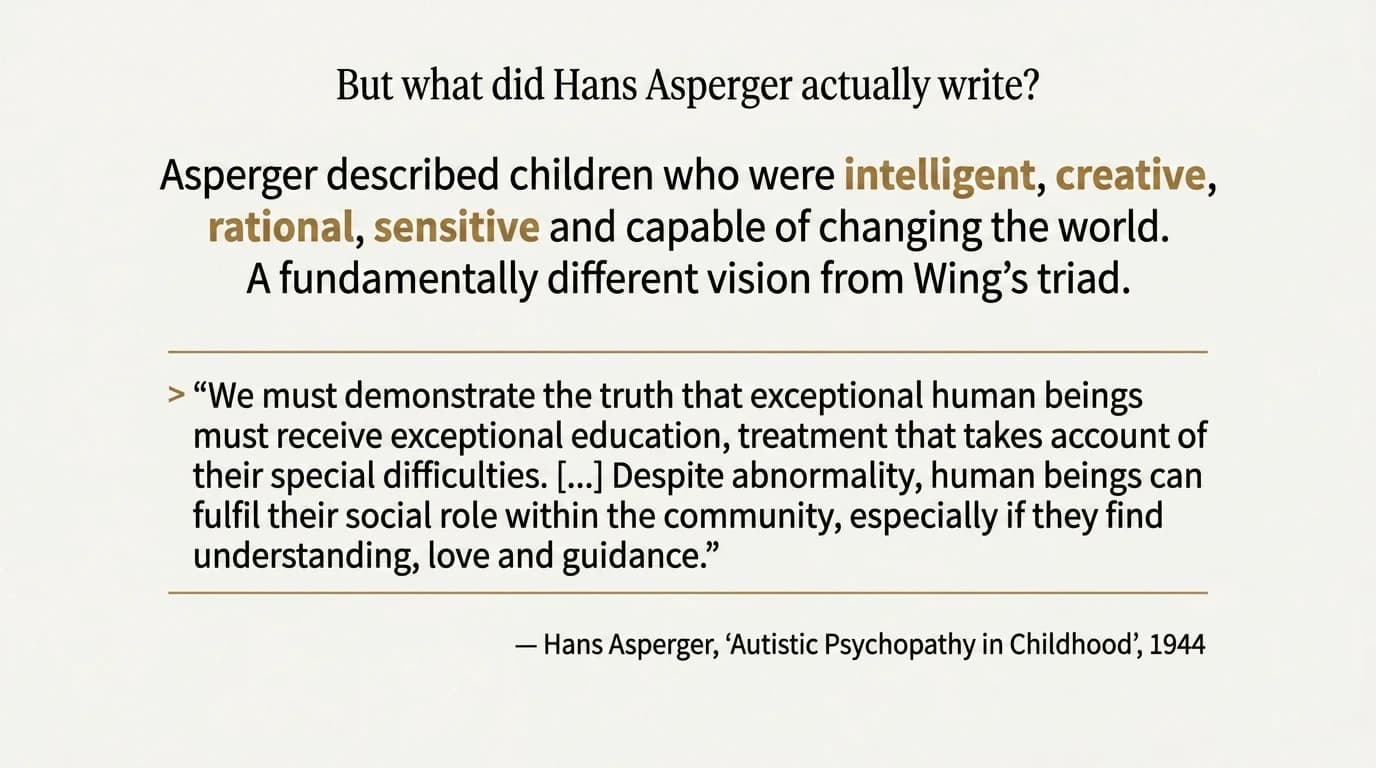
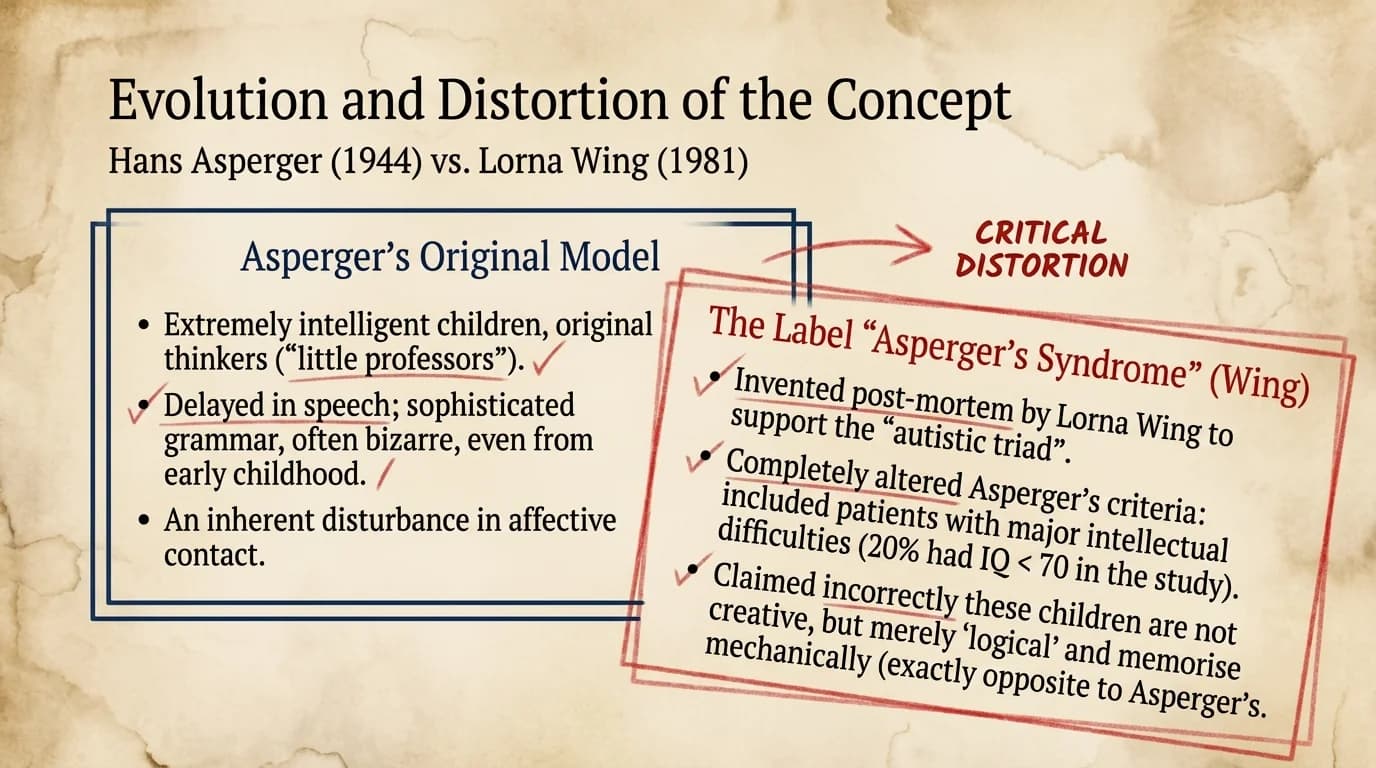
Hans Asperger died in 1980, two years before his final text was published — and one year before Lorna Wing introduced the term "Asperger's Syndrome" into the English-language literature. The tragic irony is this: Wing based her studies on children with severe intellectual disabilities (97% having an IQ below 70), whilst Asperger had described children who were "intelligent, creative, rational, sensitive and capable of changing the world."
What came to bear Asperger's name in the diagnostic manuals is, in fact, a fundamental distortion of his original vision. Rebecchi's translation corrects this historical error, giving us direct access to a way of thinking that was, in many respects, more nuanced and more humane than what followed.
In Part 2 we shall explore how Asperger's ideas influenced — and were distorted by — the modern concept of the spectrum, and we shall critically examine the accusations of collaboration with the Nazi regime, with the evidence and nuances that a serious discussion deserves.
✦ ✦ ✦
References
- Asperger, H. (1938). Das psychisch abnorme Kind. Wiener Klinischen Wochenzeitschrift, 51.
- Asperger, H. (1944). Die "Autistischen Psychopathen" im Kindesalter. Archiv fur Psychiatrie und Nervenkrankheiten.
- Asperger, H. (1982). Kindlicher Autismus Typ Asperger. In: Psychotherapie und Heilpadagogik bei Kindern (ed. Asperger & Wurst).
- Bleuler, E. (1911). Dementia Praecox oder Gruppe der Schizophrenien. Leipzig: Deuticke.
- Feinstein, A. (2010). A History of Autism: Conversations with the Pioneers. Wiley-Blackwell.
- Frith, U. (Ed.) (1991). Autism and Asperger Syndrome. Cambridge University Press.
- Kanner, L. (1943). Autistic disturbances of affective contact. Nervous Child, 2, 217-250.
- Rebecchi, K. (2023). Autism — Foundation Writings of Hans Asperger. ISBN: 9798851713736.
- Rebecchi, K. (2024). "Early Childhood Autism, Asperger Type" by H. Asperger (Classic Text No. 139). History of Psychiatry, SAGE Journals. DOI: 10.1177/0957154X241248261.
- Wing, L. (1981). Asperger's syndrome: a clinical account. Psychological Medicine, 11(1), 115-129.
New articles, directly to your inbox
Neuro-affirming content on ADHD, autism, AuDHD and PDA
— no spam, no aggressive frequency.

More in this series
Next Steps
If this resonated, here are practical ways to go deeper.