ASPERGER & BARON-COHEN · PART 2
From "The Salt of the Earth" to "Syndrome" — What We Lost When We Turned Autism into Deficit
How Asperger's ideas were distorted, the impact on the concept of the spectrum, and challenging the accusations of Nazism — with evidence and nuance. From vision to controversy.
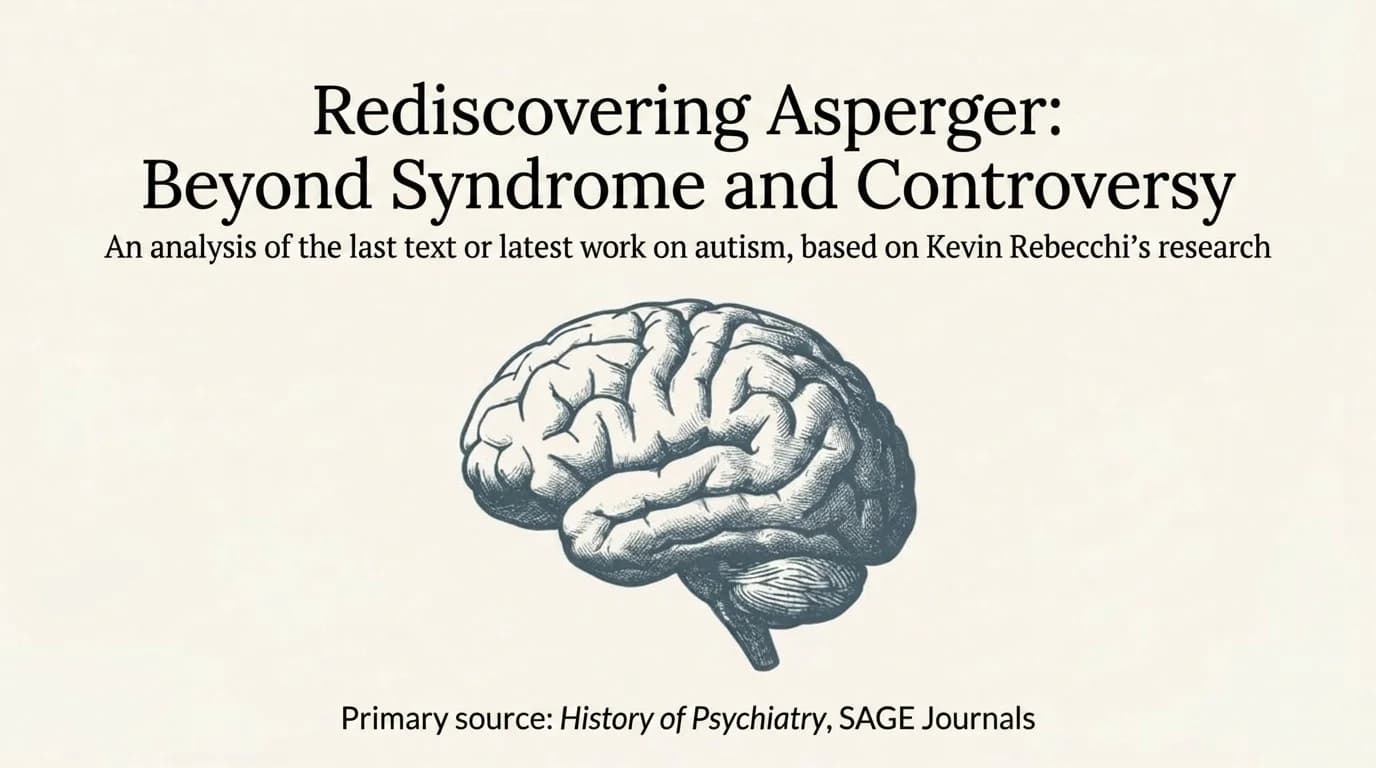
This is Part 2 of the "Rediscovering Asperger" series. In Part 1 we explored Hans Asperger's original vision — the children he called "the salt of the earth", the "absent-minded professor" concept and his curative pedagogy. Now we examine how his ideas were distorted, the impact on the concept of the spectrum, and above all, we challenge the simplistic accusations of Nazism and "abominable deeds", using the available sources — in particular Kevin Rebecchi's translation (2024).
✦ ✦ ✦
How the Original Vision Was Lost
Kanner and Asperger: Two Pioneers, Two Visions
Before discussing Lorna Wing, we must understand the other founding figure: Leo Kanner, the Austrian-born psychiatrist who emigrated to the United States and who, in 1943 — one year before Asperger — published his own description of "early infantile autism." The conventional narrative holds that Asperger and Kanner worked independently and did not know of each other's work. But recent scholarship, particularly Steve Silberman's investigation in NeuroTribes (2015), has complicated this picture.
Silberman discovered a crucial connection: Georg Frankl, the chief diagnostician in Asperger's clinic in Vienna, emigrated to the United States in 1938 and joined Kanner's clinic at Johns Hopkins. Scientific ideas could thus flow from one laboratory to another through a doctor working in both. Specifically, Silberman argues that Kanner heard about the special children in Vienna through Frankl, found similar ones in Baltimore, and presented them as his own discovery — without ever citing Asperger. This allegation of intellectual suppression remains debated, but the Frankl connection is now a documented fact.
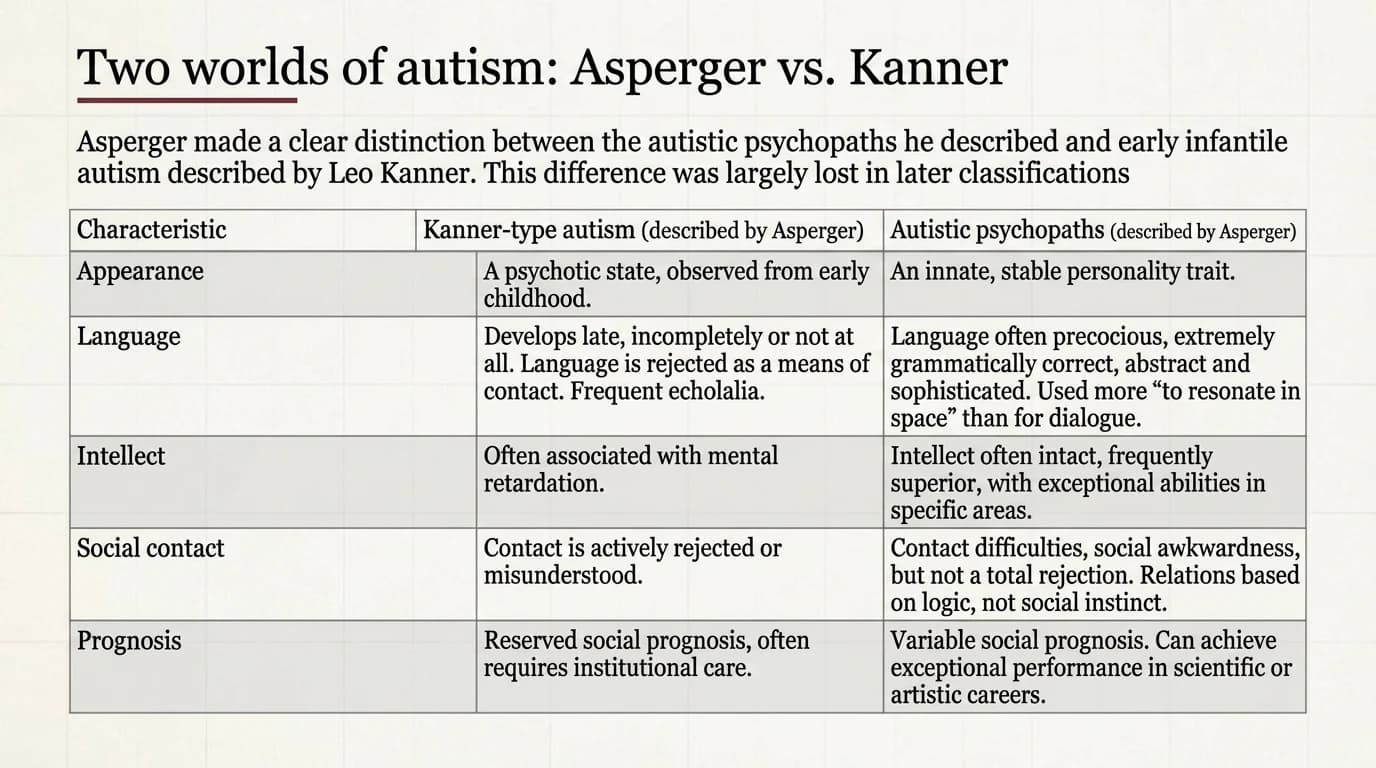
Despite these links, the differences between Asperger and Kanner are decisive. Kanner believed that autism was a rare condition — giving rise to the myth that prevalence was four in 10,000. Asperger, from 1938 onwards, argued precisely the opposite: "this psychopathic disorder, especially in a milder degree, is by no means rare, even in children." Kanner insisted autism was a condition of infancy; Asperger described it across the lifespan. Kanner treated it as a narrow, well-delineated category; Asperger saw it as a broad continuum. In short: Asperger made none of these mistakes.
Furthermore, Kanner promoted the damaging idea of "refrigerator parents" — cold, unemotional mothers who supposedly caused their child's autism. Although he inserted the word "inborn" in his 1943 paper, he actively encouraged the psychogenic theory that led to decades of parent-blaming. Asperger, by contrast, consistently emphasised heredity and neurology, never blaming families.
History has proved Asperger right: autism has turned out to be far more common than Kanner believed. But, ironically, Wing's vision — the one who named the "syndrome" after Asperger — drew more heavily on Kanner's deficit model than on Asperger's observations.
Lorna Wing and the Fundamental Inversion
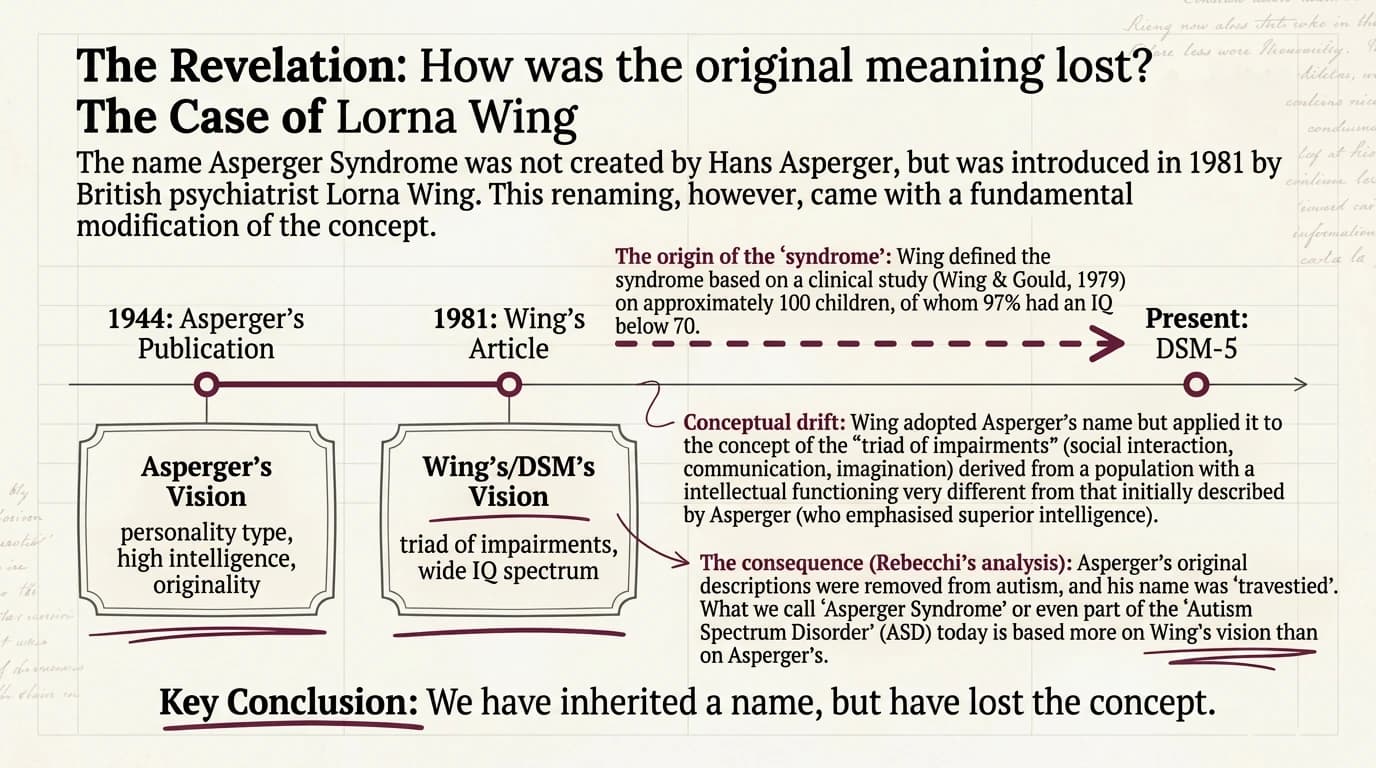
In 1981, the British psychiatrist Lorna Wing published a paper introducing the term "Asperger's Syndrome" into the English-language literature. Wing had actually met Asperger in person in London in the late 1970s, not long before his death. She later recalled: "We sat in the Maudsley canteen over cups of tea and argued about whether his syndrome was a type of autism. Asperger firmly believed his was a separate syndrome, unrelated to Kanner's, although it had a lot of features in common. I argued for an autistic spectrum. We argued very happily and politely."
Wing's aim was noble: to draw attention to a group of children who did not fit the classical diagnosis of infantile autism as described by Kanner. But the result was, from a historical perspective, a profound distortion.
Wing based her research on a sample of children with severe intellectual disabilities — 97% of them had an IQ below 70. Asperger, by contrast, had described children with normal or superior intelligence, capable of "achievements that border on genius" in specific domains. The distance between the two populations studied is enormous, and yet the "syndrome" bearing Asperger's name was defined, in fact, through the lens of Wing's sample.
Kevin Rebecchi argues that this inversion is not a mere academic accident. By including Asperger-type autism within Wing's "autistic triad" — the triad that defined autism through deficits in socialisation, communication and imagination, frequently associated with intellectual disability — a serious classificatory error was produced. The children described by Asperger did not have deficits of imagination — they had a different, intense, sometimes excessive imagination. They did not have communication deficits — they had abstract, precise, unconventional language. They were not incapable of relationships — they had a different way of relating, one that required understanding, not correction.
The Fundamental Distortion
The Clinical Consequence
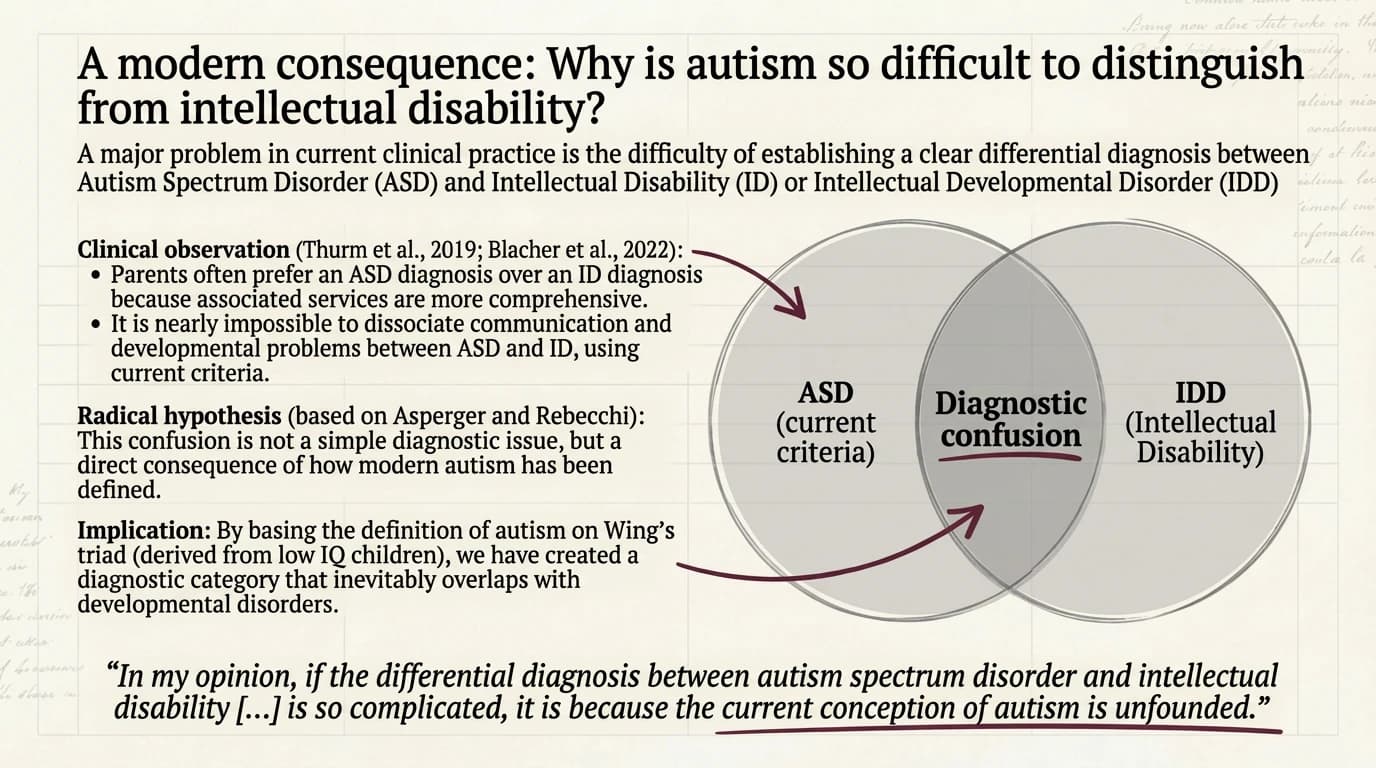
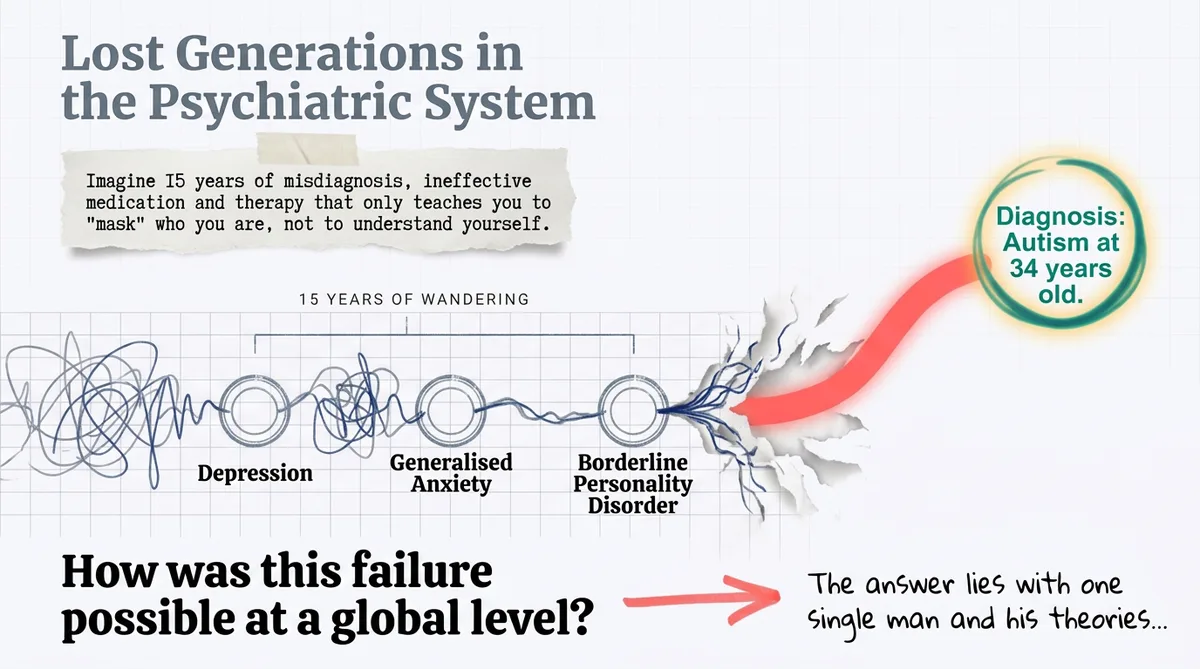
This diagnostic confusion had real consequences. Generations of intelligent autistic people were either undiagnosed (because they did not match the image of a "person with disability") or diagnosed and then treated as deficient (because the diagnosis, as it was formulated, presupposed deficit). The paradox is painful: the very capacities that Asperger admired — intelligence, creativity, perspicacity — became, through the distorted lens of late classification, invisible or irrelevant.
I see the consequences of this inversion every week. Clients who came to me at 35 or 45, after decades of missed diagnosis or therapy that tried to "correct" the very traits that make them unique. The moment they understand that they are not "broken" — that what they have been told all their lives is a problem is, in fact, a different architecture — is one of the most transformative moments in therapy.
✦ ✦ ✦
The Impact on the Concept of the Spectrum
From Category to Continuum
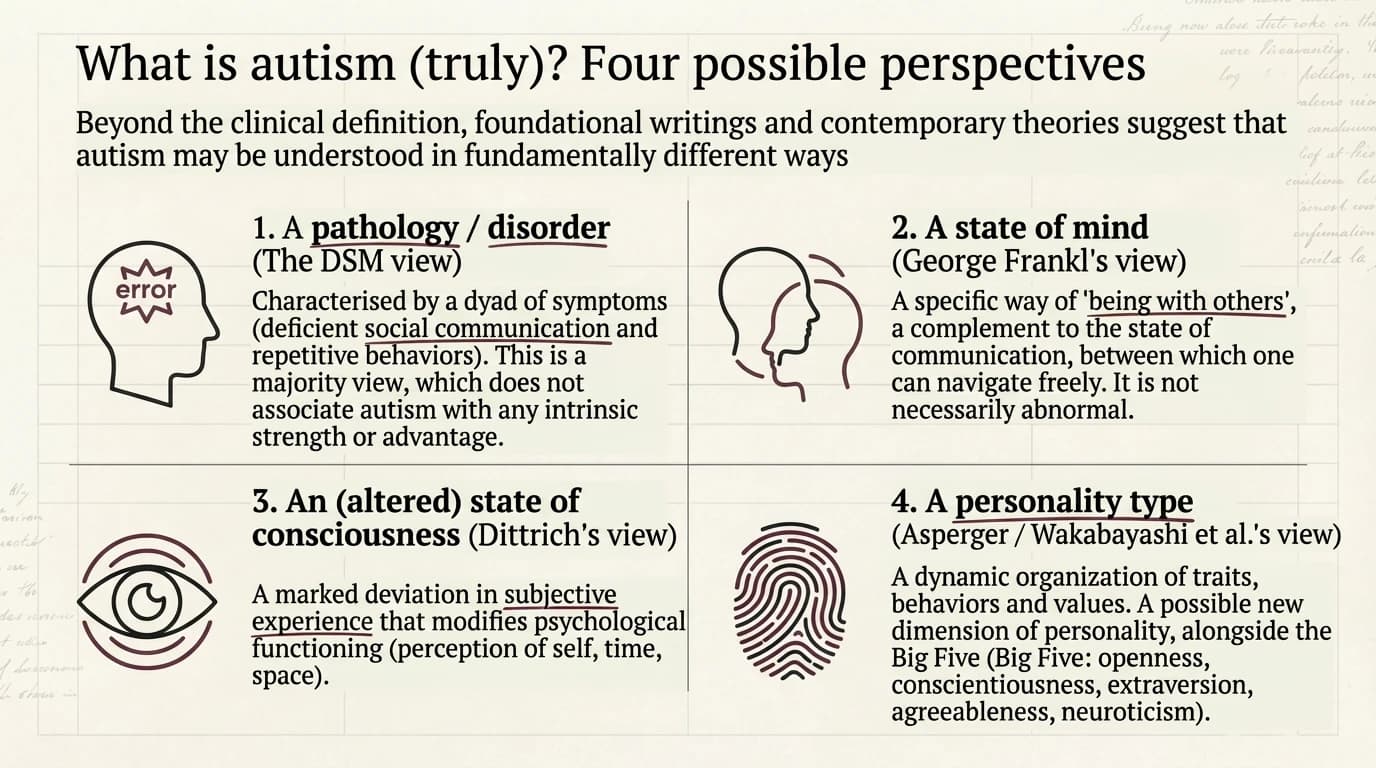
As we saw in Part 1, Asperger viewed autism not as a binary condition, but as a continuum on which all human beings are situated — an "extreme variant" of individuality. This perspective is now widely accepted in neuroscience. Recent research confirms that autistic traits vary along a spectrum, and the boundary between "autistic" and "non-autistic" is, to a great extent, an arbitrary one established by clinical convention.
But Asperger added something that the modern spectrum tends to lose: value. He was not simply saying that autism is a continuum — he was saying that the autistic extreme of this continuum is valuable, that difficulties and abilities are "inseparable, mutually dependent, two sides of the same individuality." The modern spectrum measures severity. Asperger also measured potential.
Neurodiversity Before Neurodiversity
The concept of neurodiversity — explicitly formulated only in the 1990s by the sociologist Judy Singer — finds its direct roots in Asperger's writings. The autistic deviation from common ways of thinking was, in his view, "almost necessary for certain high-level scientific or artistic achievements." This statement is not a romanticisation — it is an observation grounded in decades of clinical practice. Asperger saw in autistic traits not an error of nature, but an alternative design, a different mode of processing reality which, when supported rather than suppressed, produces unique contributions.
The difference from the modern neurodiversity movement is subtle but important: Asperger did not deny suffering. He was not saying "autism is a superpower." He was saying: the suffering comes from the environment, not from the structure — and the structure contains a potential that the environment, more often than not, fails to recognise.
This distinction matters enormously in therapy. When an autistic client arrives with burnout, with depression, with chronic anxiety, the question is not "what's wrong with you?" but "what's wrong with the world you're functioning in?" Asperger, without using these terms, was already practising what we now call an affirmative approach: you do not fix the person — you fix the mismatch.
✦ ✦ ✦
Gender Prejudices: The Limitation of the Era
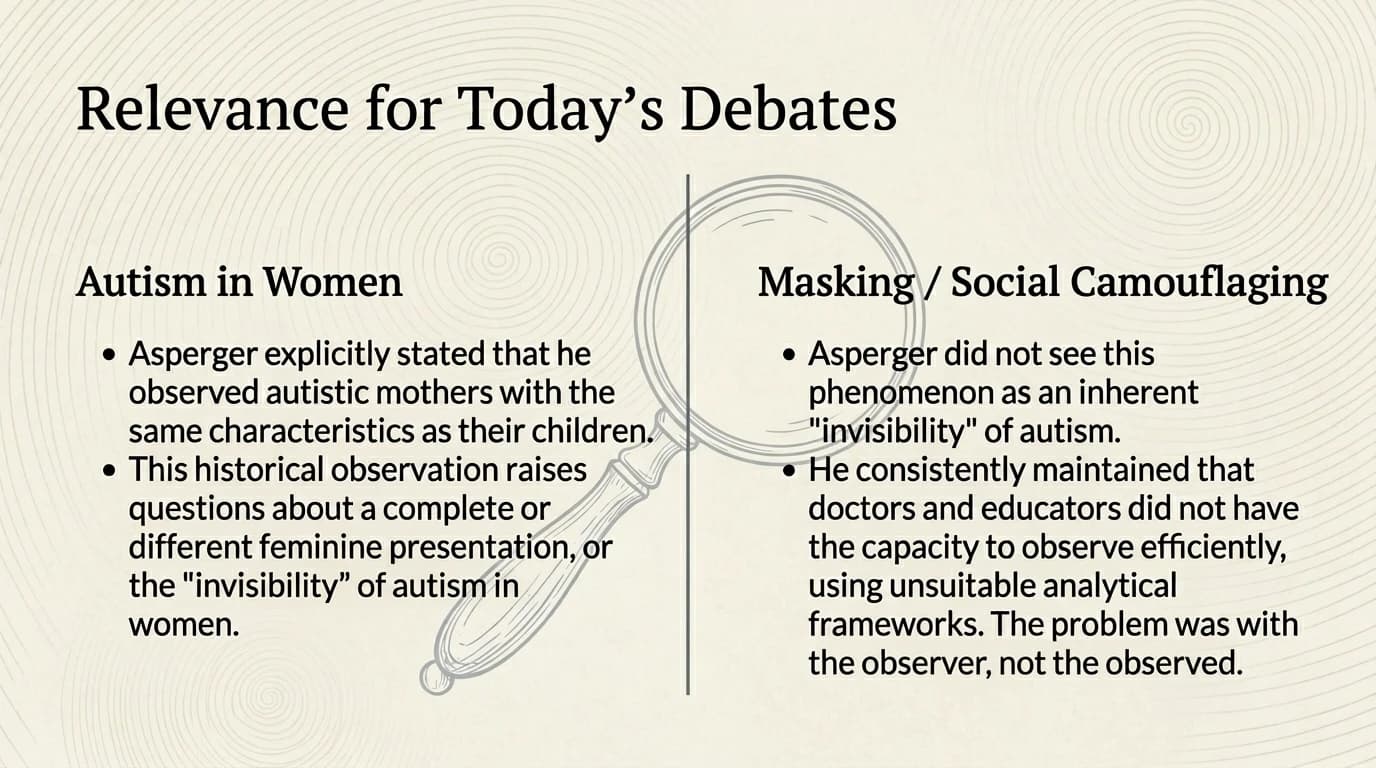
One of Asperger's most significant limitations is his perspective on gender. He stated that the subjects in his Austrian sample had been "recruited exclusively from boys" — although he acknowledged having seen autistic girls in the United States. He theorised, reflecting the prejudices of his era, that autism would represent a "caricature of the masculine", grounded in exaggerated abstraction and detachment from instinct.
Modern research categorically rejects this perspective. We now know that autistic women mask ("social camouflage") far more effectively than men, leading to chronic underdiagnosis. Studies show that the male-to-female ratio in autism drops significantly as diagnostic criteria become more inclusive — from 4:1 to approximately 3:1 or even less. Autism is not a masculine condition; it is a condition that presents differently according to gender, and assessment instruments have historically been calibrated on masculine expression.
Asperger deserves credit for honesty — he acknowledged the limitation and noted the contrary observation — but the limitation remains real and must be named as such.
✦ ✦ ✦
The Nazi Controversy: Facts, Accusations and Nuance
The Contested Legacy: A Timeline
Before examining the accusations and the defence, it helps to have the full chronological framework — from Asperger's post-war career to the academic debates that erupted almost four decades after his death.
- 1945--1949 — Post-war career: no public reckoning. Asperger resumes work at the destroyed Heilpadagogik ward. His teaching authorisation is confirmed on 9 February 1946, as he was not an NSDAP member. He serves as deputy director of the Vienna paediatric clinic from 1946 to 1949.
- 1962--1977 — Chair of Paediatrics, University of Vienna. Appointed chair on 26 June 1962, Asperger holds the position until his official retirement in 1977. He is widely regarded as a pioneer in child psychiatry.
- 1974 — The interview. In a recorded interview, Asperger describes his Wehrmacht service in Croatia with appreciation, explaining that he had volunteered for military duty in order to escape Gestapo persecution at home — a detail that complicates the narrative of complicity.
- 1980 — Death. Hans Asperger dies on 21 October 1980 in Vienna. He leaves behind over 300 publications. His diagnostic work remains largely unknown to English-speaking researchers.
- 1981 — Lorna Wing introduces "Asperger's Syndrome." British psychiatrist Lorna Wing publishes "Asperger's syndrome: a clinical account" in Psychological Medicine, introducing the term to Anglophone psychiatry — one year after Asperger's death.
- 1991 — Uta Frith's English translation. Frith translates Asperger's 1944 paper and publishes it in Autism and Asperger Syndrome (Cambridge University Press), giving the original text global reach for the first time.
- April 2018 — Czech publishes in Molecular Autism: the turning point. Herwig Czech publishes "Hans Asperger, National Socialism, and race hygiene in Nazi-era Vienna" — an open-access paper that triggers worldwide reassessment of Asperger's legacy.
- 2019--2020 — Academic debate: Falk vs Czech. Dean Falk (Florida State University) publishes "Non-compliant: Revisiting Hans Asperger's Career in Nazi-era Vienna" in Journal of Autism and Developmental Disorders, directly challenging Czech's conclusions and presenting archival evidence of Asperger's resistance.
With this timeline in view, the key question becomes: what do the sources actually say?
What Has Been Said
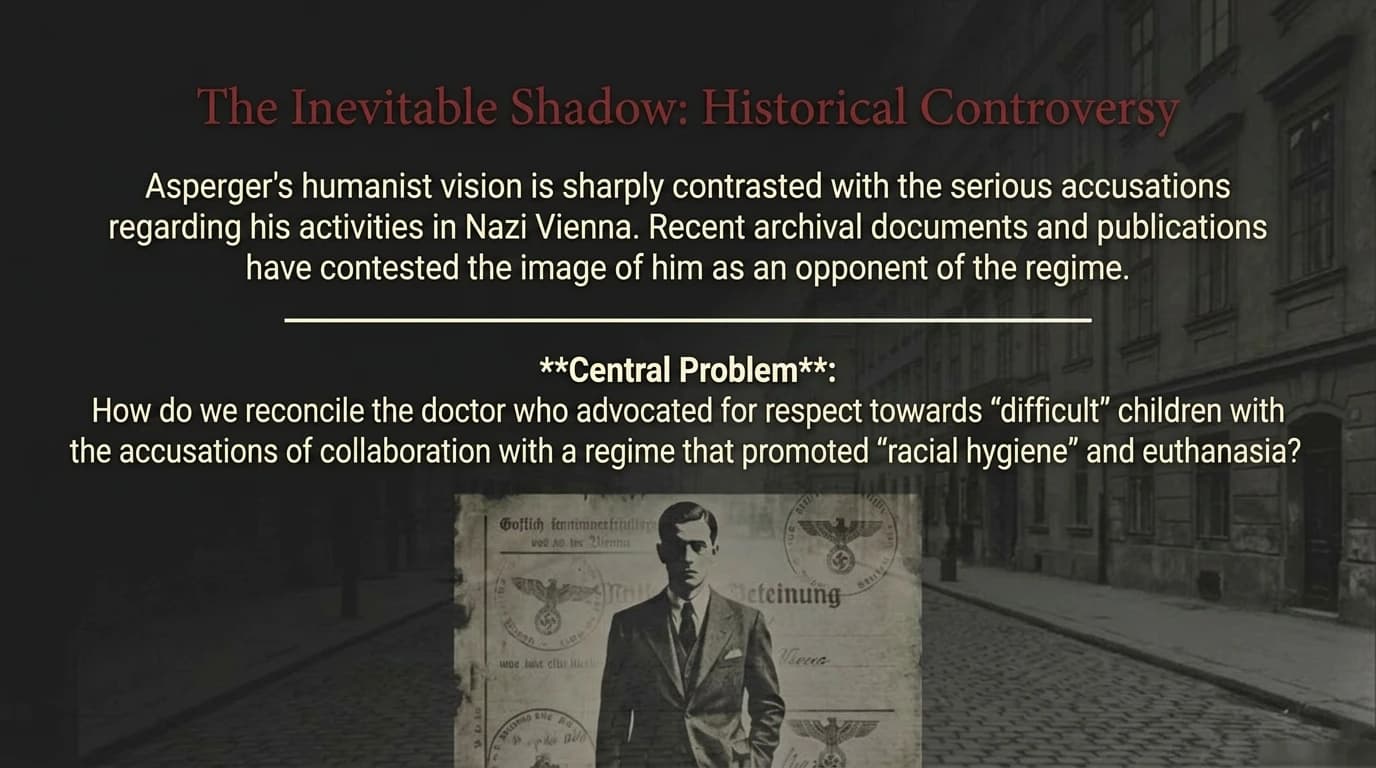
In 2018, two publications shook the world of psychiatry. Edith Sheffer, in her book Asperger's Children, and the medical historian Herwig Czech, in a paper in Molecular Autism, formulated grave accusations: Asperger had allegedly collaborated with the racial hygiene policies of the Third Reich, sending children to the Am Spiegelgrund clinic — a Nazi euthanasia centre where hundreds of children deemed "without value to society" were killed.
The accusations had an enormous impact. The autistic community was divided. Some called for the complete abandonment of the name "Asperger" from the clinical vocabulary — which DSM-5 had already done in 2013, though for classificatory reasons, not historical ones. Others called for caution and contextual analysis.
What the Evidence Shows: A More Complicated History
Evidence and Defence
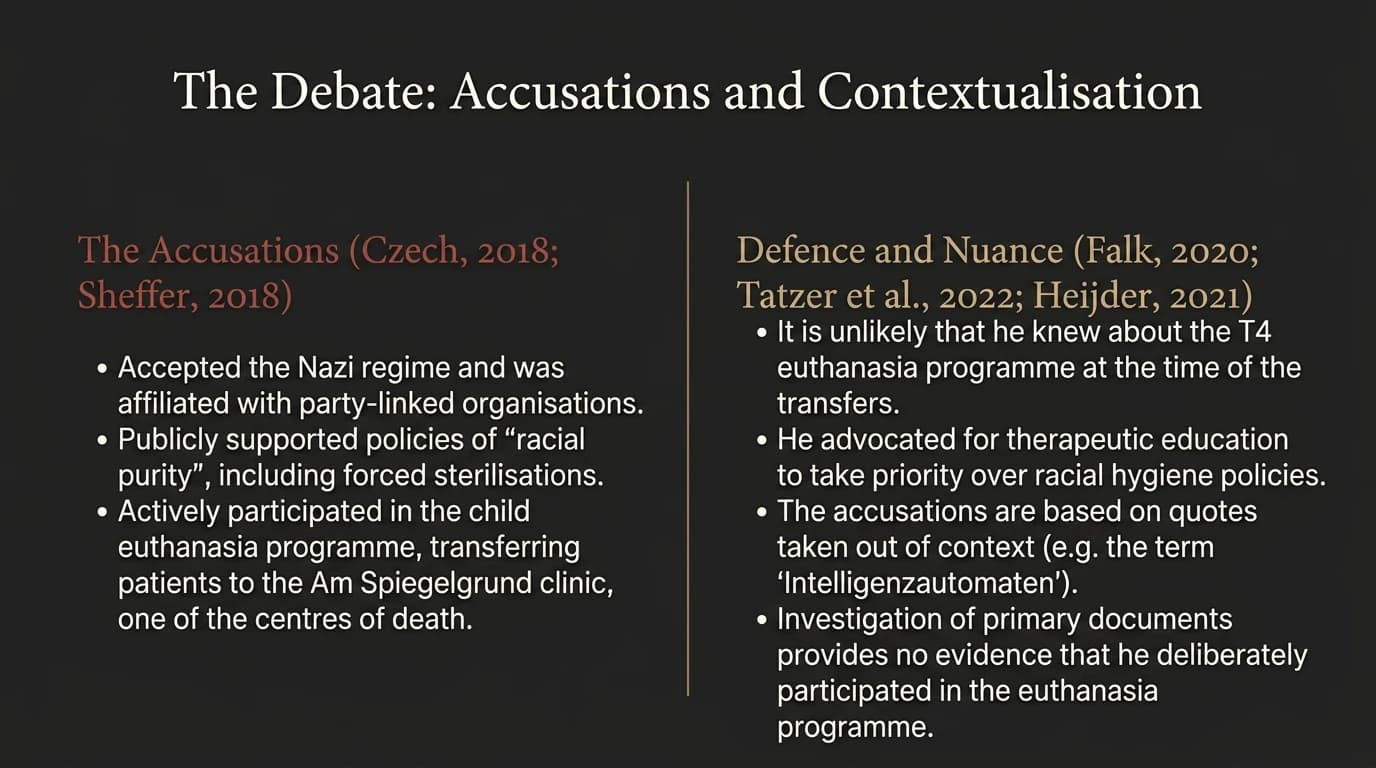
Rebecchi's translation and analysis, together with subsequent research, offer a more nuanced picture than the simplistic narrative of "complicity."
1. Asperger was not a member of the Nazi Party.
This is a documented fact. Unlike many academic colleagues who joined the NSDAP voluntarily or opportunistically, Asperger did not take this step. In an era when party membership was virtually a condition of professional survival, this absence is significant.
2. Asperger was himself targeted by the Gestapo.
Researchers such as Falk and Tatzer document that Asperger was investigated by the Gestapo for his lack of adherence to the regime's ideology. We are not speaking of an enthusiastic collaborator, but of a man navigating a totalitarian regime in which open opposition could be fatal.
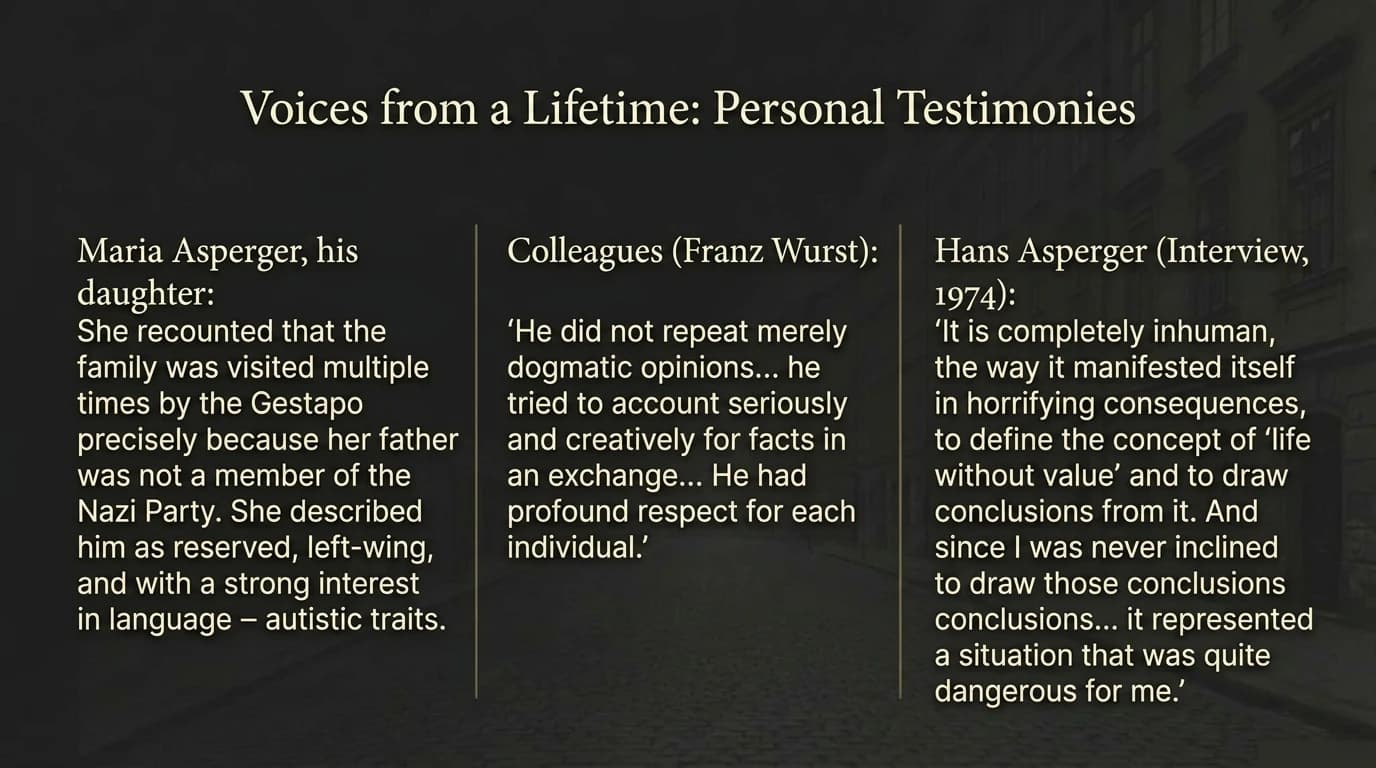
3. The 1974 Interview: Explicit Condemnation
In a 1974 interview, Asperger made a direct statement about his positions:
"It is utterly inhumane... to define the concept of 'life without value' and to draw conclusions from it. And since I was never inclined to draw those conclusions... it put me in a rather dangerous situation."
This statement, made six years before his death, is consistent with a man who opposed the principle of euthanasia, not with a collaborator in it.
4. Researchers Who Contest the Sheffer-Czech Narrative
Voices from the Past
Falk, Tatzer, Heijder and Fangerau have argued, on the basis of archival documents, that Asperger's recommendations for transfer to institutions (including Am Spiegelgrund) did not imply active knowledge of the secret T4 programme — the euthanasia programme that operated covertly, without the knowledge of many physicians within the system. The difference between "sending a child to an institution you do not know is an extermination centre" and "knowingly sending a child to their death" is enormous from both a moral and legal standpoint.
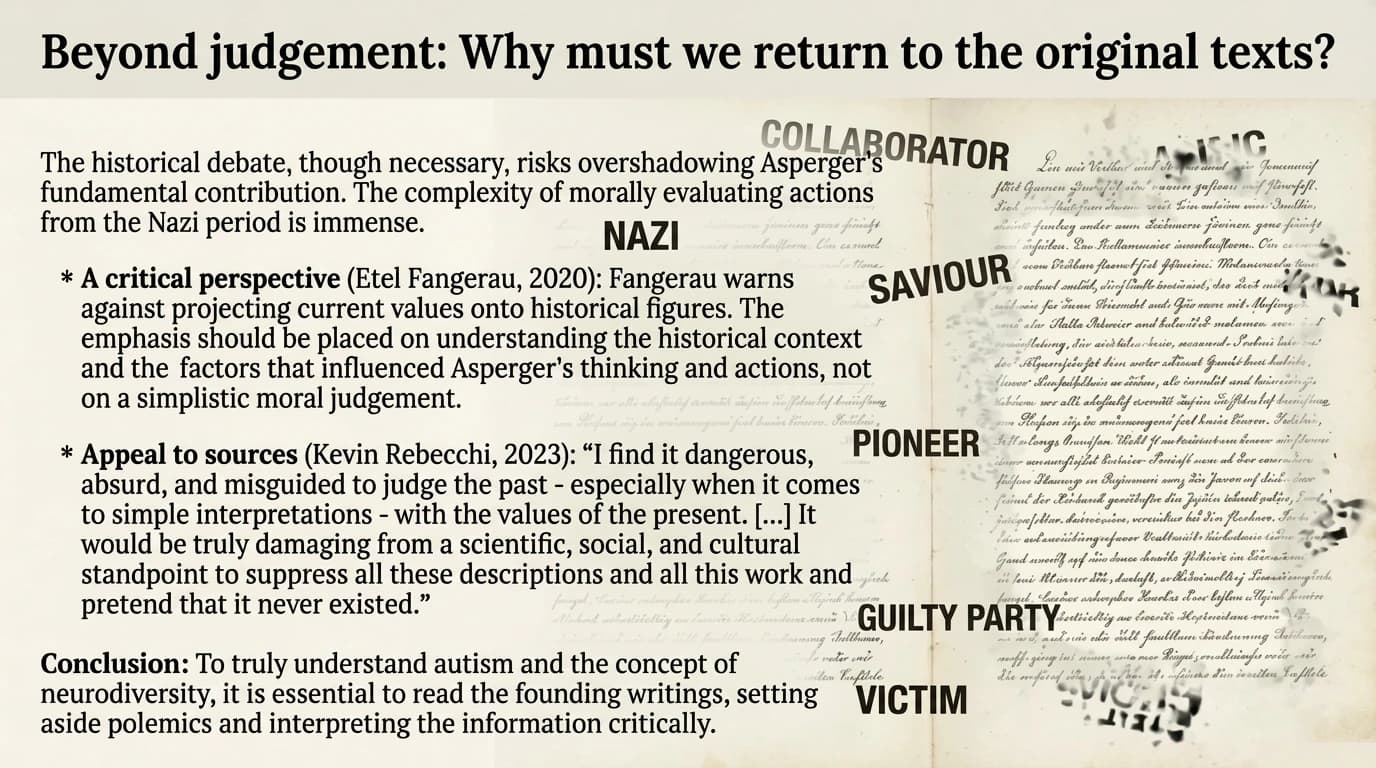
This does not mean that Asperger is absolved of all responsibility. The system in which he operated was criminal. But to reduce a complex existence, lived under a totalitarian regime, to a label of "Nazi collaborator" is a simplification that serves neither historical truth nor the autistic community.
What This Controversy Teaches Us
History does not work in black and white. Asperger lived in a system where moral choices were warped by terror, where the absence of explicit opposition was not equivalent to active complicity, and where many people navigated grey zones that are easy to judge from the comfort of hindsight.
What we can say with certainty is this: Asperger's texts — including those published posthumously — are a document of admiration for autistic children, not of contempt. A man who writes "the salt of the earth" about children whom others considered "without value" cannot be reduced to a single act (alleged or proven) of institutional complicity.
✦ ✦ ✦
What This Means for People Today
There are people who identified for years with the label "Asperger" — who found in it a language for experiences they could not otherwise name. The removal of the term from DSM-5 in 2013, and then the historical controversies of 2018, created a real identity crisis. Many felt dispossessed of a word that belonged to them.
From a clinical perspective, abandoning the diagnostic term is justified — "Asperger's Syndrome" did not describe what Asperger had described, and the artificial separation of autism into subtypes created more confusion than clarity. But from a human perspective, the loss of an identity word is not trivial, and it should not be treated with superiority.
In practice, I frequently encounter people who say "I am Asperger" with a profound sense of identity. They found in this word a language for experiences they could not otherwise name — and that matters. I do not ask them to give it up. Instead, I offer them access to the original vision behind it — which is richer, more human and more affirming than the diagnostic label.
What Rebecchi's translation proposes is precisely this: not the restoration of a diagnosis, but the recovery of a vision. The vision in which autism is not a list of deficits to correct, but a personality architecture in which difficulties and abilities are "two sides of the same individuality." This idea does not depend on a name — it works regardless of what we call the condition.
✦ ✦ ✦
Lessons for the Present
1. Read Primary Sources
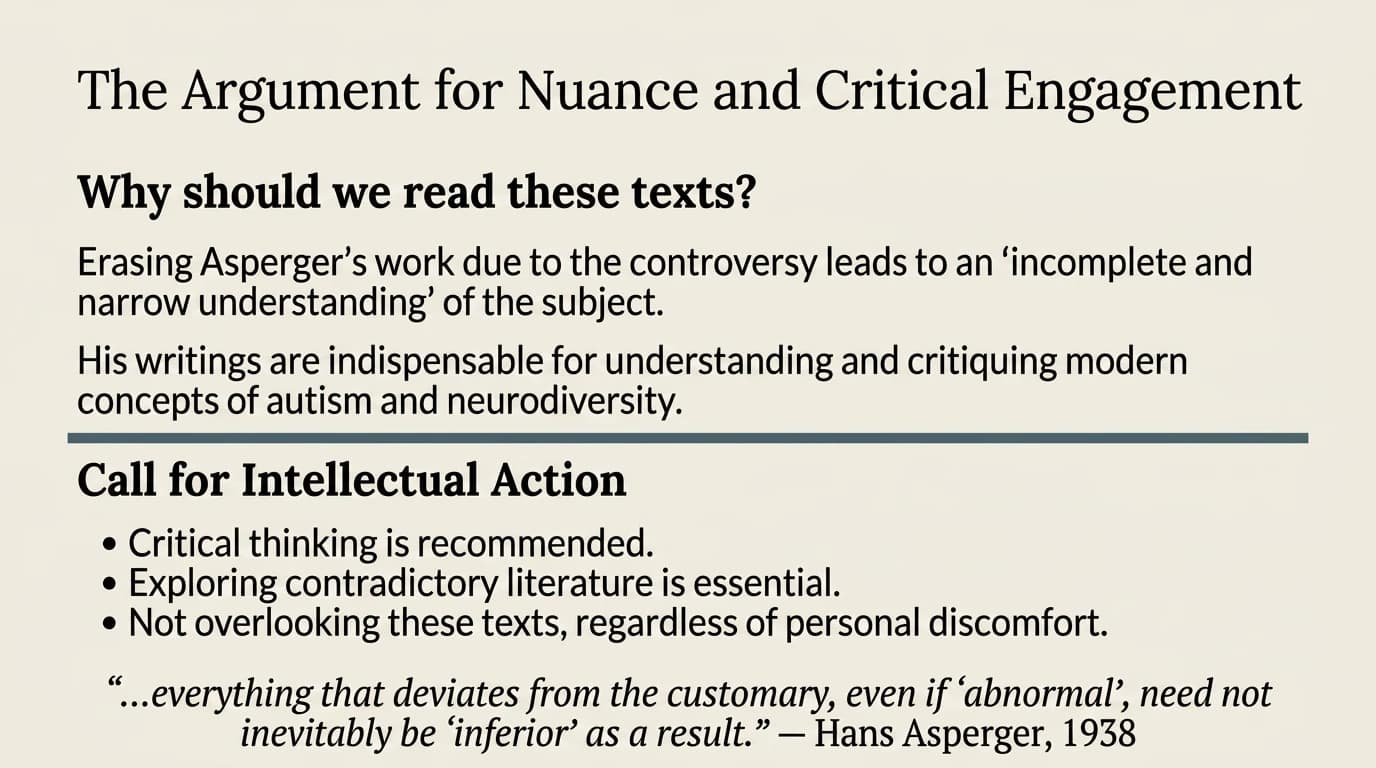
Most opinions about Asperger — for or against — are based on secondary or tertiary sources. Frith's translation (1991) made the 1944 thesis accessible, but Rebecchi's translation offers the English-speaking community, for the first time, direct access to Asperger's mature thinking — that of his final decades of practice. Critical reading is not an academic luxury — it is an ethical obligation when we are discussing real people and real consequences.
2. Separate the Man from the Label
"Asperger's Syndrome" is not Asperger's vision. The two are almost opposites. Abandoning the name "Asperger" from the clinical vocabulary (which DSM-5 has already done) is a reasonable decision. But abandoning his ideas — about value, about potential, about "the salt of the earth" — would be a loss that the autistic community cannot afford.
3. Context Is Not an Excuse, but It Is Necessary
Understanding the context of Nazi Vienna does not mean excusing. It means avoiding the moral simplification that turns complex persons into convenient caricatures. Asperger lived in a criminal system. He survived. He continued to write about autistic children with admiration and respect. These are facts. Their interpretation must be as nuanced as the facts themselves.
✦ ✦ ✦
Conclusions: Beyond Syndrome and Controversy
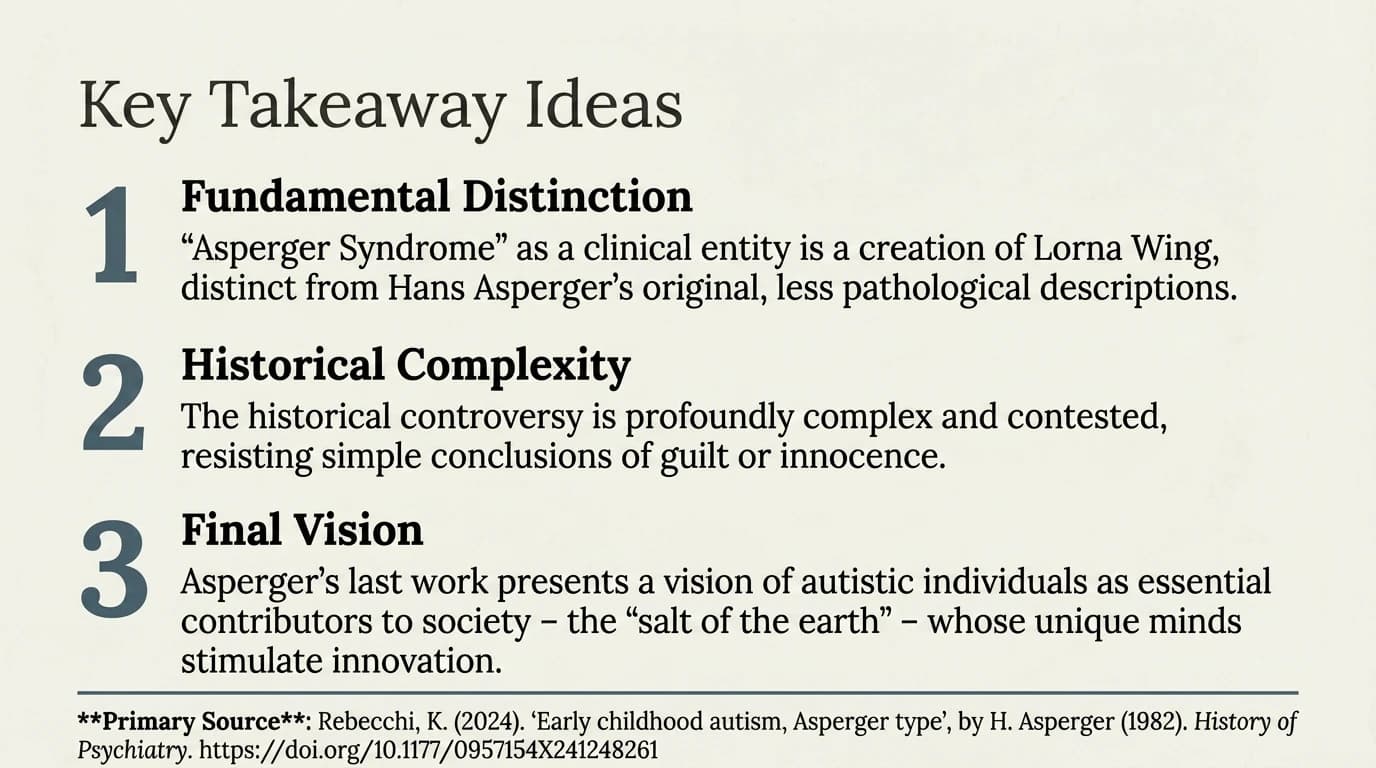
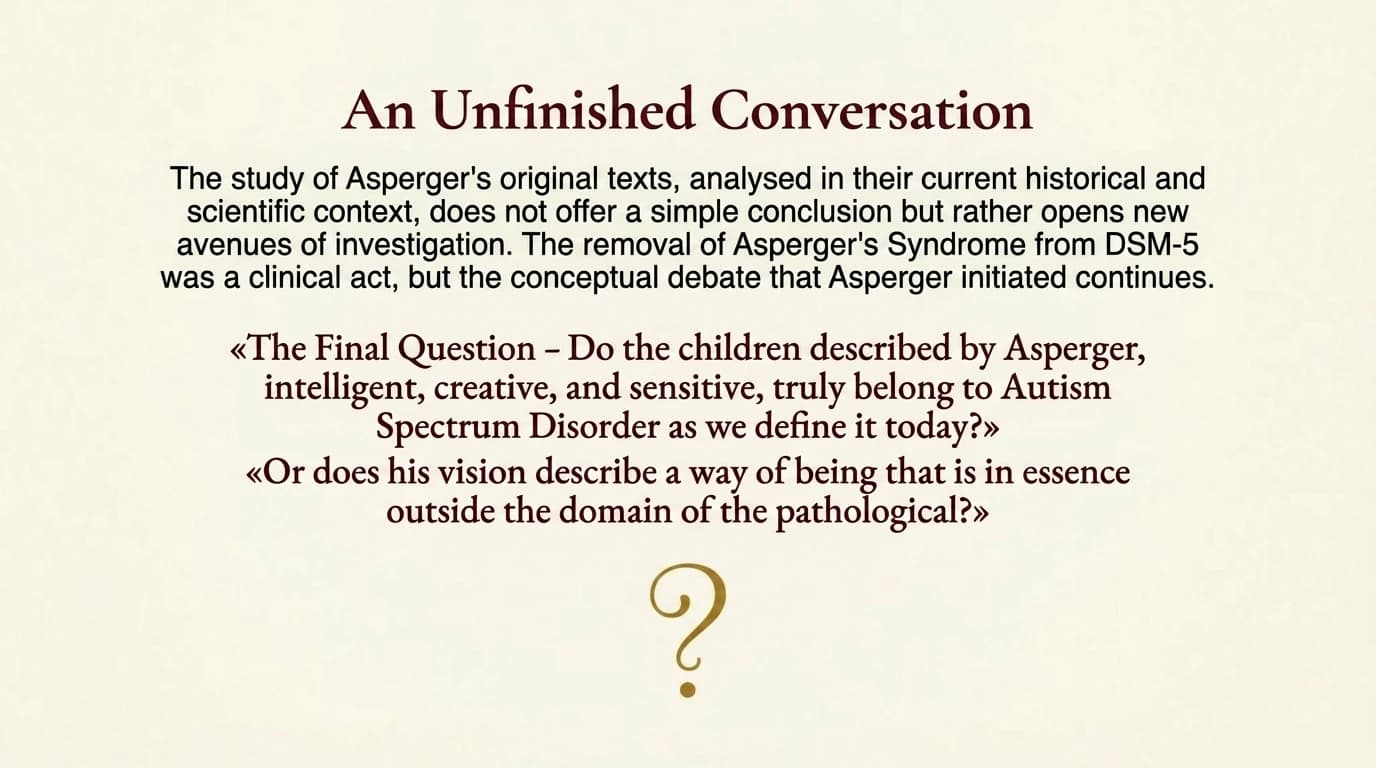
Hans Asperger was a man of his time — with the limitations, prejudices and constraints of that time. But he was also a man who chose to see value where others saw "lives without value." Who wrote about "the salt of the earth" in an era when "the salt" was being sent to Spiegelgrund. Who insisted that the educator must engage with the autistic child "on the same level" — in a culture that did not grant children any level.
His vision of autism — not the "syndrome" that was later attributed to him, but his original vision — remains one of the most humane and most anticipatory in the history of psychiatry. And Rebecchi's translation gives us, at last, the opportunity to read these words directly, without the distorting filter of late classifications.
Autistic people are not "syndromes." They are not "spectrum disorders." They are people. And if Asperger was right about one thing, it was this: some of them are, truly, the salt of the earth.
✦ ✦ ✦
References
- Asperger, H. (1944). Die "Autistischen Psychopathen" im Kindesalter. Archiv fur Psychiatrie und Nervenkrankheiten.
- Asperger, H. (1982). Kindlicher Autismus Typ Asperger. In: Psychotherapie und Heilpadagogik bei Kindern (ed. Asperger & Wurst).
- Bleuler, E. (1911). Dementia Praecox oder Gruppe der Schizophrenien. Leipzig: Deuticke.
- Czech, H. (2018). Hans Asperger, National Socialism, and "race hygiene" in Nazi-era Vienna. Molecular Autism, 9, 29.
- Falk, D. (2019). Non-compliant: Revisiting Hans Asperger's career in Nazi-era Vienna. Journal of Autism and Developmental Disorders.
- Feinstein, A. (2010). A History of Autism: Conversations with the Pioneers. Wiley-Blackwell.
- Frith, U. (Ed.) (1991). Autism and Asperger Syndrome. Cambridge University Press.
- Kanner, L. (1943). Autistic disturbances of affective contact. Nervous Child, 2, 217-250.
- Rebecchi, K. (2023). Autism — Foundation Writings of Hans Asperger. ISBN: 9798851713736.
- Rebecchi, K. (2024). "Early Childhood Autism, Asperger Type" by H. Asperger (Classic Text No. 139). History of Psychiatry, SAGE Journals. DOI: 10.1177/0957154X241248261.
- Sheffer, E. (2018). Asperger's Children: The Origins of Autism in Nazi Vienna. W.W. Norton.
- Silberman, S. (2015). NeuroTribes: The Legacy of Autism and How to Think Smarter about People Who Think Differently. Allen & Unwin.
- Wing, L. (1981). Asperger's syndrome: a clinical account. Psychological Medicine, 11(1), 115-129.
New articles, directly to your inbox
Neuro-affirming content on ADHD, autism, AuDHD and PDA
— no spam, no aggressive frequency.

More in this series
Next Steps
If this resonated, here are practical ways to go deeper.