Justice vs Abuse — Part 3: Implications & The Future
What the victory means in practice: international law, the patient guide and the urgency of Victoria Law. Part III of the series.
07 DIICOT Press Release & Discrimination
DIICOT & Discrimination
How DIICOT reacted after the first victory — and what they omit
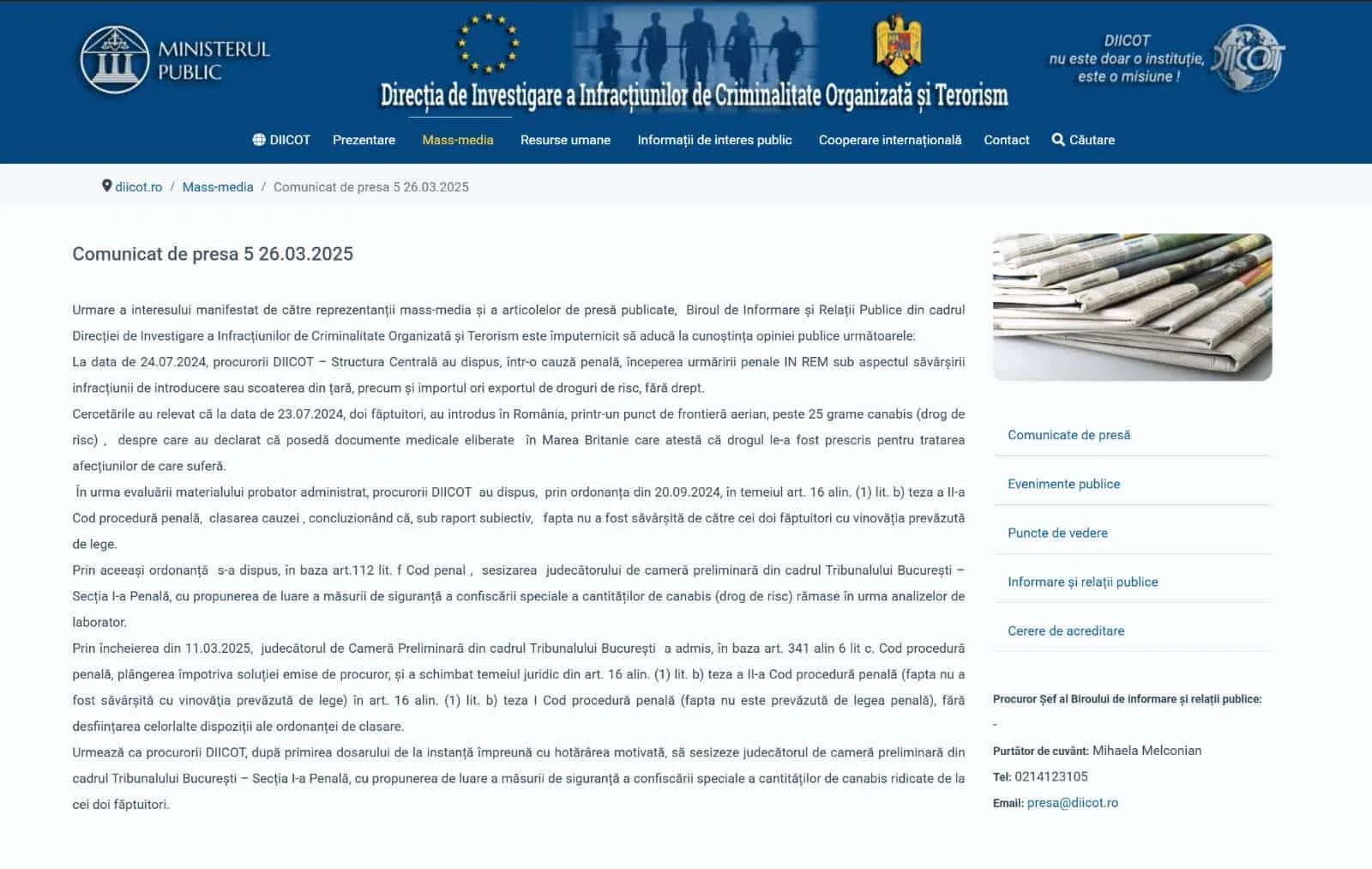
On 26 March 2025, a few days after the first favourable court ruling, DIICOT published a press release. The press release implicitly acknowledges the failure of the prosecution — but completely omits the human context of the case. DIICOT's press release states that prosecutors ordered the closure of the case, concluding that"the act was not committed with the guilt required by law." In other words — I had committed no criminal offence. Yet the press release does not mention that we are patients with incurable chronic diseases. It does not mention the legal medical prescriptions. It does not mention the humiliation we were subjected to. It does not mention our minor daughter, a witness to everything. But most gravely: despite clearly losing the first ruling at the Bucharest Tribunal, DIICOT prosecutors issued a SPECIAL CONFISCATION order for our cannabis-based medication — without solid legal grounds, in open defiance of the court's decision. A state that confiscates a patient's treatment after the judiciary ruled that no crime was committed is not applying the law — it is applying punishment.
Discrimination Proved
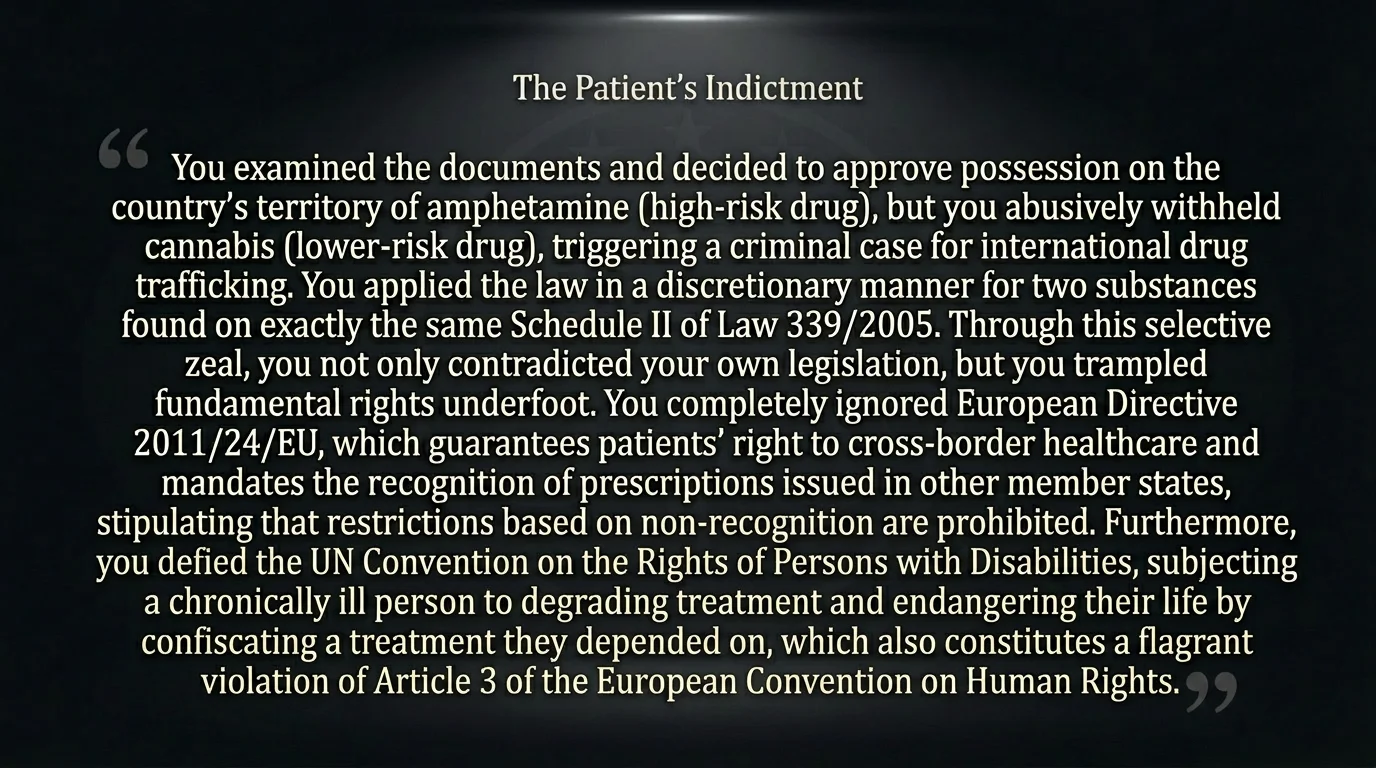
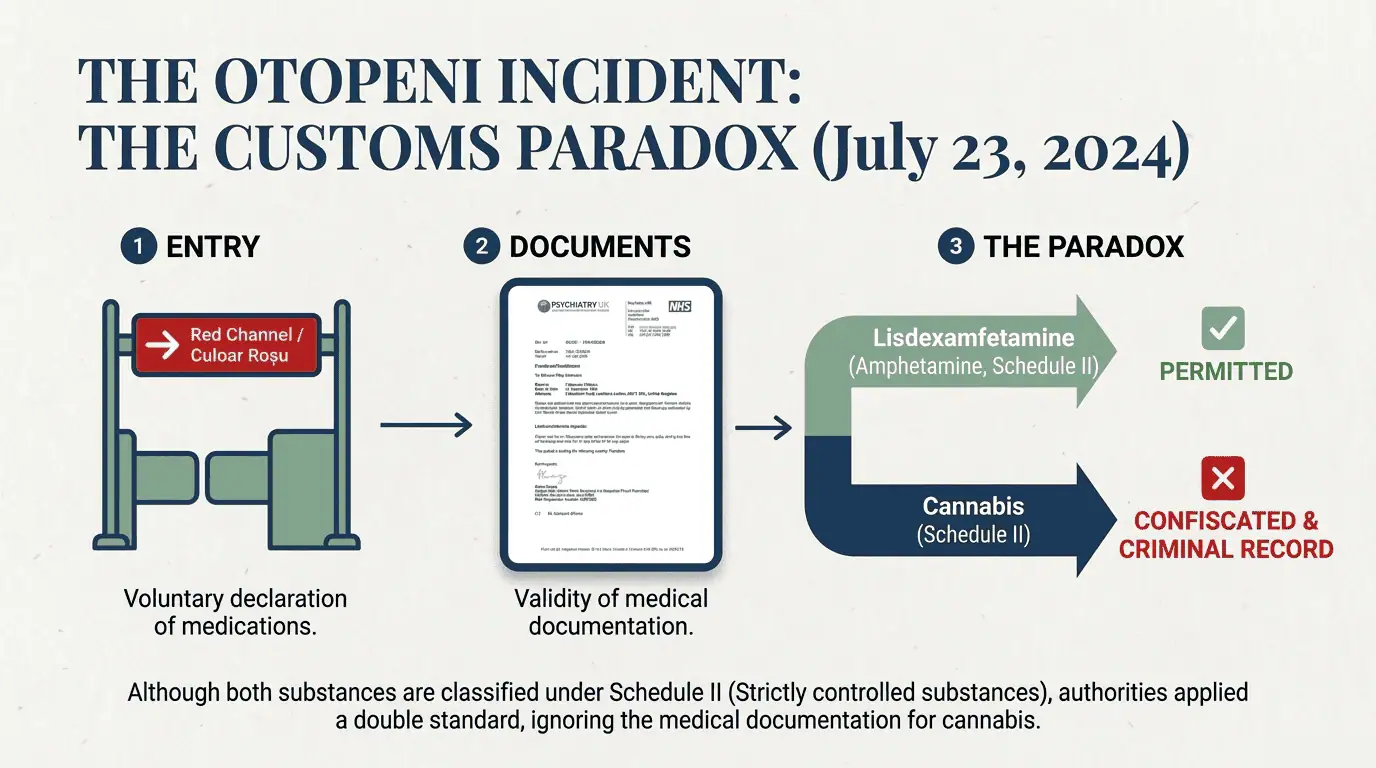
At the July 2024 customs check, the DIICOT prosecutor ordered the confiscation of both treatments: the medical cannabis and the lisdexamfetamine (the ADHD treatment), both legally prescribed in the United Kingdom (UK Schedule 2, specialist prescribing permitted). In Romania, however, under Law 143/2000, the two substances are not equal: lisdexamfetamine sits in Table II (high-risk drug with recognised medical use), while cannabis sits in Table III (risk drug — a lower category). Lisdexamfetamine crossed the border without incident; medical cannabis, with the less severe classification, was confiscated. The legal reasoning — step by step
The judge built the acquittal on three pillars. First: the offence under art. 3(1) of Law 143/2000 only exists when committed "without right". We had a right — established by Art. 49 of HG 1915/2006, which requires passengers to present a prescription and a transport certificate, with quantities not exceeding travel needs. We complied precisely. Second: the distinction between "drug" and "medicine" that DIICOT kept invoking was categorised by the court as "an artificial one that holds no legal interest" — the absence of cannabis from the national medicine registry is a consequence of state policy, not a criminal law argument. Third: the court highlighted the absurdity of the proposed sentence — had I obtained the same substances with a forged prescription, I would have faced 1–3 years; because I had a genuine, legal one, DIICOT sought 5–15 years. The judge found this to be "contrary to the rationale of criminal law."
The European foundation — CJEU, ECtHR, and Directive 2001/83/EC
The acquittal does not rest on domestic law alone. Behind it stands a European architecture that DIICOT did not challenge frontally, only ignored — and that the Romanian courts applied, even without expressly invoking it, through the interplay between HG 1915/2006 and Directive 2001/83/EC (Community Code on Medicinal Products for Human Use), transposed into Romanian law through Law 95/2006 — Title XVIII.
— CJEU — Court of Justice of the European Union (2020), C-663/18 B.S. & C.A. v Procureur de la République (Kanavape case), judgment of 19 November 2020The CJEU held that a member state may not prohibit the marketing of CBD legally produced in another member state unless the prohibition is necessary and proportionate for the protection of public health — and that a state cannot invoke the 1961 UN Single Convention to justify a prohibition, since CBD does not fall within its scope. The ruling enshrines the principle of free movement of cannabinoid-based medicines and establishes that the mere origin of the plant is not sufficient grounds for a generalised prohibition. Although the Cristea case concerns medical cannabis (Table III of Law 143/2000, Table II of Law 339/2005) — not CBD — the logic of "proportionality + free movement + primacy of EU law over UN instruments" applies directly.
— ECtHR — European Court of Human Rights (2012), Hristozov and Others v. Bulgaria, applications no. 47039/11 and 358/12, judgment of 13 November 2012The ECtHR examined the case of terminally-ill patients whom the Bulgarian state had refused access to an experimental treatment, invoking Art. 2 (right to life), Art. 3 (prohibition of inhuman or degrading treatment) and Art. 8 (private life) of the Convention. The Court confirmed that the refusal of access to medical treatment can constitute an interference with the right to private life (Art. 8) which requires a clear legal basis, necessity, and proportionality. In the Cristea case, the confiscation of a treatment legally prescribed in another EU member state passes the same test — and the Romanian state failed to demonstrate any of the three elements (clarity, necessity, proportionality). See also Durisotto v. Italy (no. 62804/13, 6 May 2014) on the same line.
Directive 2001/83/EC + Directive 2011/24/EU — the European skeleton binding on the Romanian state
- Directive 2001/83/EC (Community Code on Medicinal Products for Human Use), as amended by Directive 2004/27/EC: defines the medicinal product as any substance or combination administered "with a view to restoring, correcting or modifying physiological functions" — a definition fully applicable to cannabis with a valid medical prescription. Transposed into Romanian law through Law 95/2006 — Title XVIII.
- Directive 2011/24/EU on patients' rights in cross-border healthcare: requires member states to mutually recognise medical prescriptions issued in another EU state (Art. 11), subject to strictly enumerated exceptions. Cannabis legally prescribed in the UK (up to Brexit — and thereafter under the subsequent recognition agreement) falls under this obligation.
- Commission Regulation (EU) 2012/52/EC: sets the format for cross-border recognised prescriptions. The prescription in the Cristea file — issued by Dr. Daniel Haroon, Mamedica Limited, no. 6147599 — complies with this format.
- Article 148 of the Constitution (accession clause): EU rules "of a binding nature" take precedence over contrary provisions of domestic law. Including over Law 143/2000 interpreted extensively, as DIICOT did.
All four tiers — the Medicines Code, cross-border recognition, the regulated format, and the primacy of EU law — were ignored simultaneously by DIICOT in drafting the indictment. The courts, implicitly or explicitly, restored them.
The case received extensive media coverage: BihorJust: Historic ruling — Tribunal confirms patients' right and Ziare.com: Premiere for Romanian justice documented the 3-0 precedent from January 2026.
After two hours of negotiations, the prosecutor agreed to return the lisdexamfetamine — but maintained the confiscation of the medical cannabis. In doing so, the prosecutor clearly demonstrated that discrimination, not the law, was the basis of their action.
Three axes of discrimination, not just one
The lisdexamfetamine vs cannabis contrast is only the surface. The discrimination in July 2024 operates simultaneously on three cumulative axes — each separately recognised and sanctioned in international and European law:
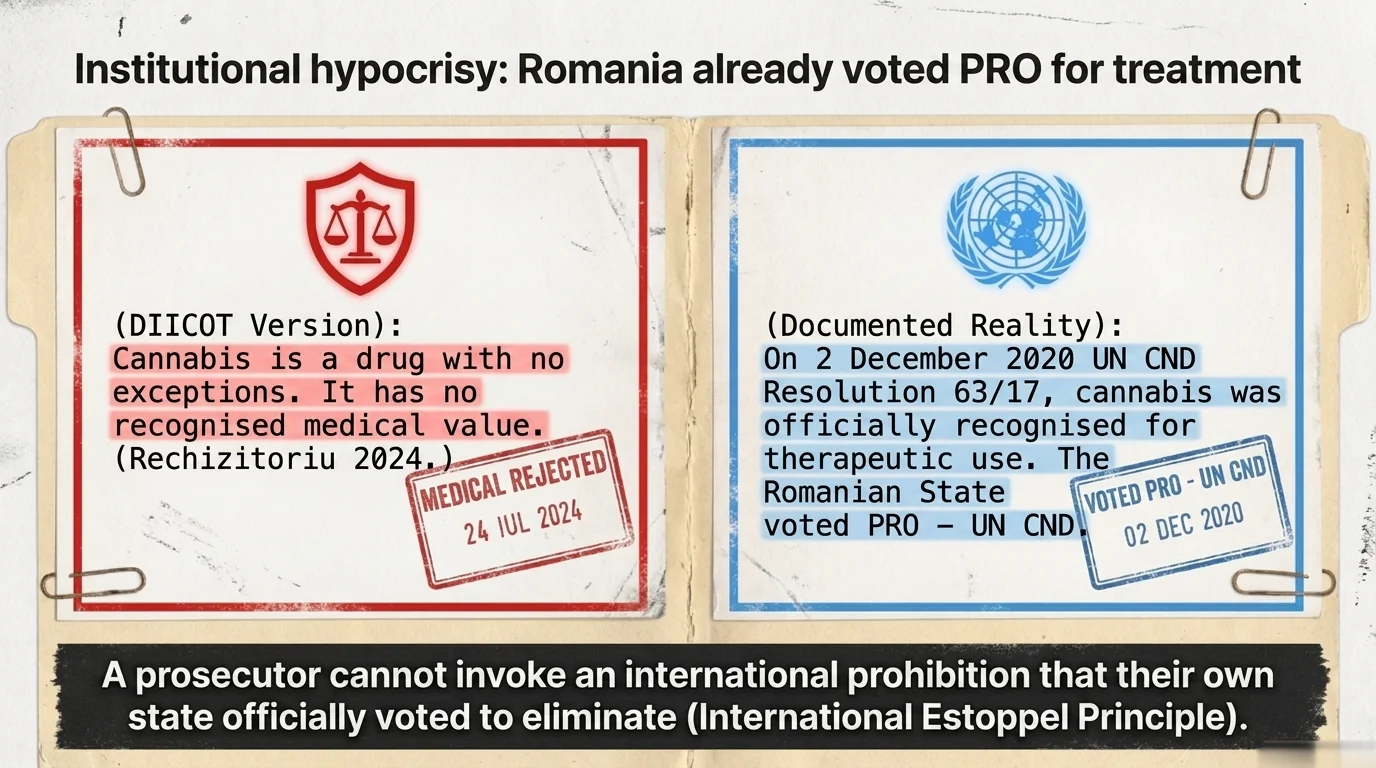
(a) The historical stigma of the substance. Cannabis was listed in Schedule IV of the 1961 UN Single Convention on Narcotic Drugs — the category of most dangerous substances, with no recognised medical value — for nearly 60 years. This classification was removed by the UN Commission on Narcotic Drugs (CND) vote 63/17 on 2 December 2020, which explicitly recognised the therapeutic value of cannabis and removed it from Schedule IV. Romania voted IN FAVOUR of reclassification — a striking paradox when set against the 2024 DIICOT action, which treated the substance as a narcotic with no medical use, precisely what Romania's own state had officially acknowledged, four years earlier, was no longer the case.
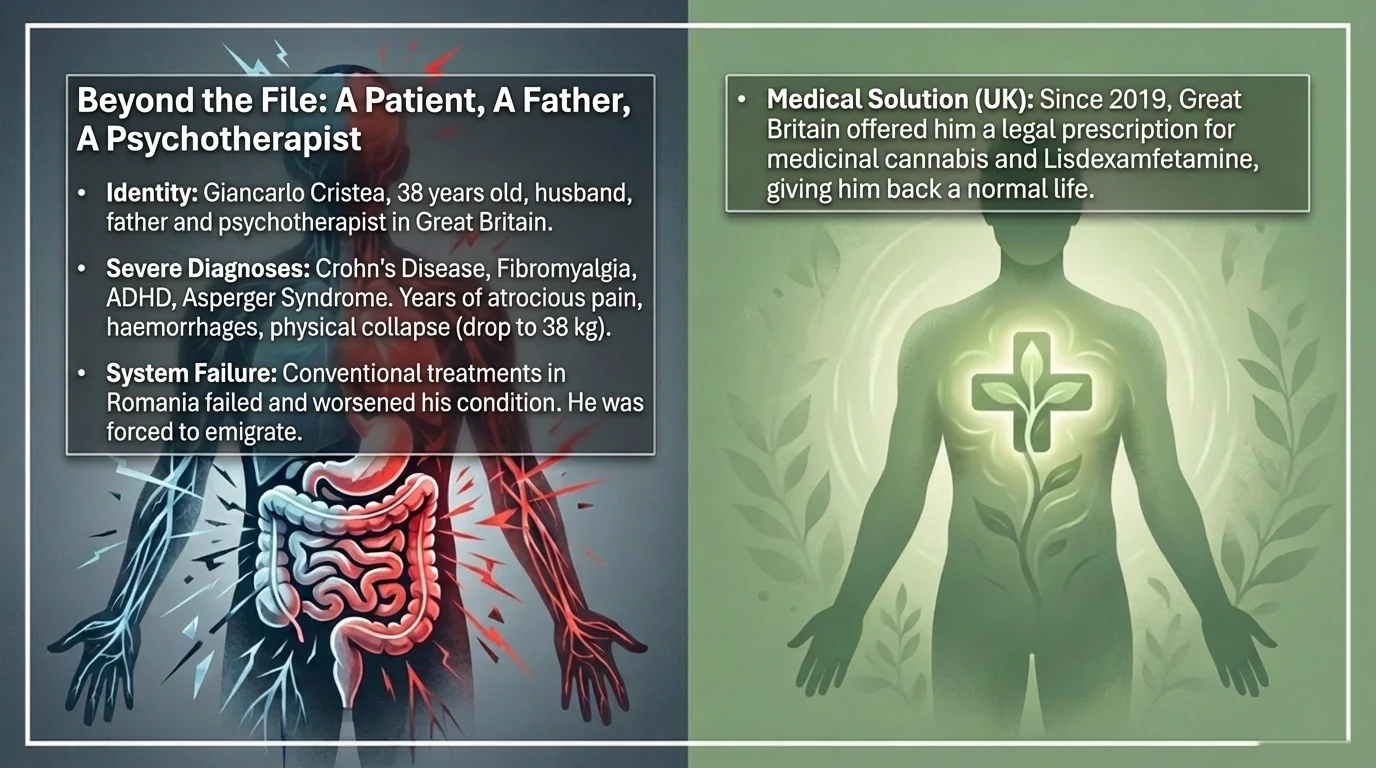
(b) Status as a patient with incurable chronic conditions. Crohn's disease and fibromyalgia are confirmed diagnoses, with a legal medical prescription issued under a strict regime in the United Kingdom (Mamedica Limited, Dr. Daniel Haroon). The confiscation of a chronic patient's medication is not a matter of "drug control" — it is an interference with treatment that activates Article 8 ECHR (private life and health) under the Hristozov v. Bulgaria and Durisotto v. Italy case law.
(c) Status as a person with disabilities. Romania ratified the UN Convention on the Rights of Persons with Disabilities (CRPD) through Law 221/2010 — an instrument with legal force superior to domestic statutes (Art. 20 of the Constitution). For a person with disabilities, the seizure of legally prescribed medication simultaneously engages: CRPD Art. 5 (non-discrimination on grounds of disability — the state's obligation to ensure substantive, not merely formal, equality); CRPD Art. 25 (equal access to healthcare, with an explicit obligation not to discriminate in the provision of prescribed medicines); EU Charter of Fundamental Rights — Art. 21 (non-discrimination) and Art. 26 (integration of persons with disabilities); ECHR Art. 14 in conjunction with Art. 8 (prohibition of discrimination in the exercise of Convention rights, including health and private life).
Each axis, taken in isolation, constitutes an abuse. Combined, the three axes constitute documented systemic discrimination — exactly the kind of treatment that the CRPD, the EU Charter, and the ECHR expressly prohibit. DIICOT did not act against a trafficker; it acted against a chronic patient, with a disability, using a substance that Romania itself had declared, through its CND vote, as possessing therapeutic value.
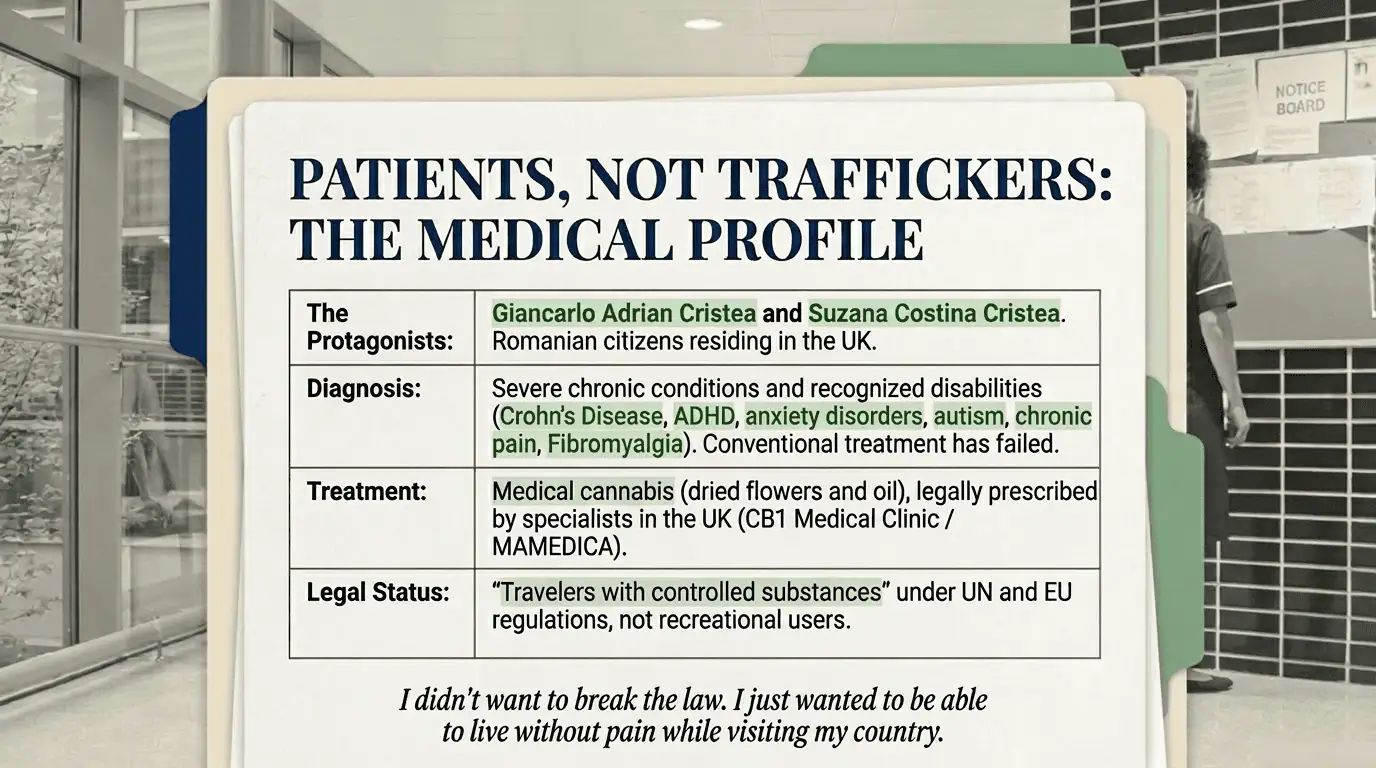
08 The Three Victories
The Three Victories
Bucharest Tribunal (×2) → Bucharest Court of Appeal → Final Ruling: 3–0 · National Precedent
Video — DIICOT Forced to Return the Medication · 2025
Media report: DIICOT forced to return the medication based on the court's decision. Direct result of the first judicial victory.
Video — PROTV: The Tribunal Decided · October 2025
PROTV report: The Tribunal ruled that DIICOT prosecutors must return the confiscated medications.
Video — Euronews România: Tribunal Orders DIICOT to Return Cannabis · October 2025
Euronews România report: The Tribunal orders DIICOT to return the prescription cannabis taken from an HR couple. Media coverage of Victory #2, October 2025 — Case II, Bucharest Tribunal.
International media coverage (February 2025)
Video — Euronews România: "Medical cannabis stands no chance in the new Parliament — 5 years lost" · February 2025
Euronews România report ("Bună seara, România" show, February 2025): five years of legislative deadlock on medical cannabis and the outlook for the new Parliament. International context for the Health Committee debate that preceded the 2025 series of court victories. Audio in Romanian.
VICTORY #1 Bucharest Tribunal 11 March 2025 · Case 45878/3/2024 Case 45878/3/2024 — Bucharest Tribunal, March 2025. Lawyers Raul Bud and Sebastian Gabriel Nagy proved legality under GD 1915/2006, art. 49. Dismissal: "the act was not committed with the culpability required by law." First official recognition that transporting medical cannabis with prescription is not a criminal offence.
Case I Dismissed VICTORY #2 Bucharest Tribunal 17 October 2025 · Case 24750/3/2025 Case 24750/3/2025 — Bucharest Tribunal, October 2025. After losing the first trial, DIICOT issued an abusive Special Confiscation order for the medications. The Tribunal overturned the order as unfounded: "The plants brought into the country constitute medicines... not drugs in Romania."
Special Confiscation Overturned VICTORY #3 — FINAL Bucharest Court of Appeal — Final 28 January 2026 · Case 4362/2025 Case 4362/2025 — Bucharest Court of Appeal, January 28, 2026. DIICOT appealed the overturning of the Special Confiscation order. A panel of 3 judges rejected the appeal as INADMISSIBLE — final and irrevocable ruling, score 3-0. "Orders the return of treatment confiscated by DIICOT in July 2024." National precedent.
Court of Appeal — Definitive 3-0
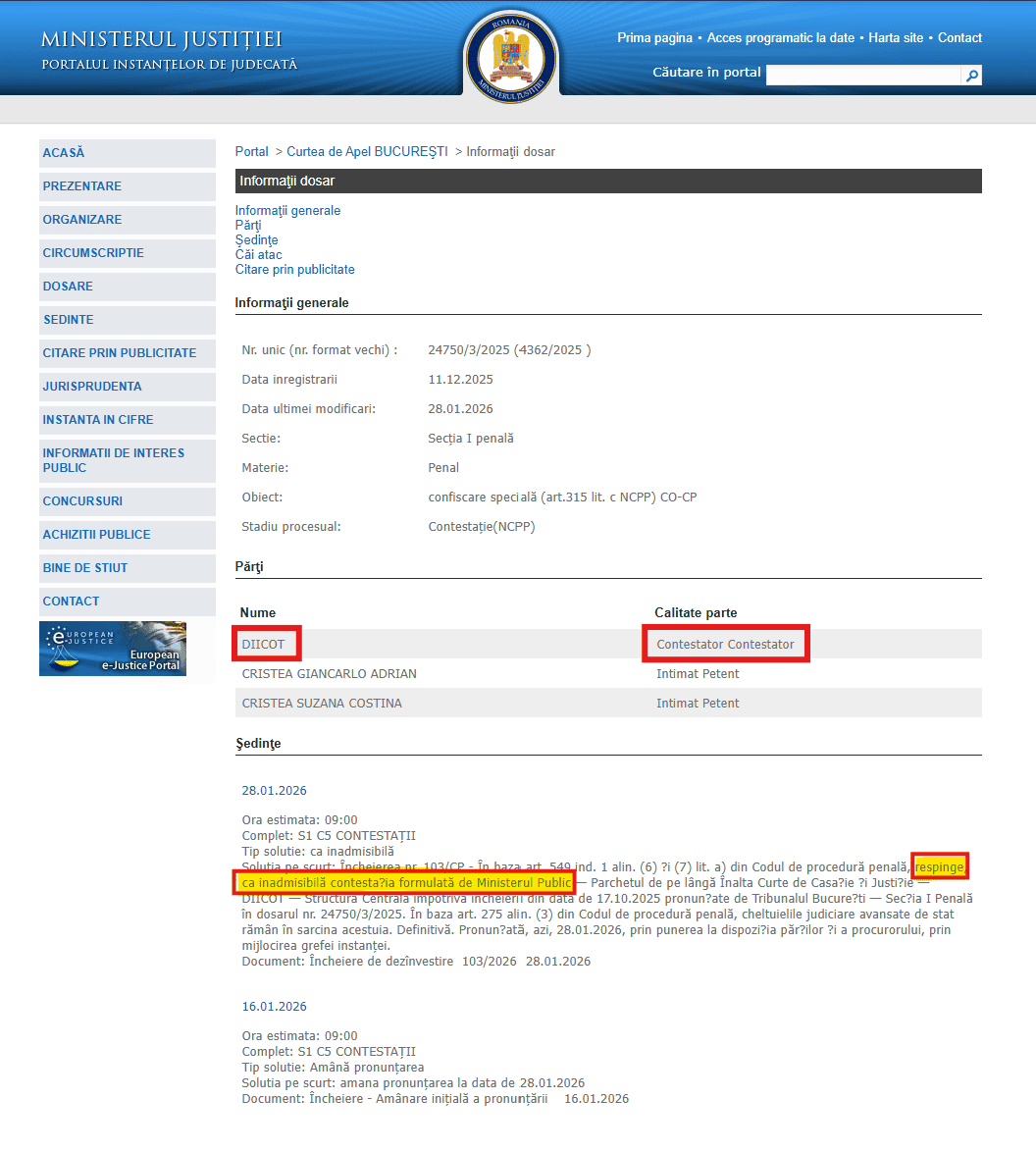
28 January 2026 · Definitive Victory Screenshot from portal.just.ro: the definitive and irrevocable ruling. DIICOT’s appeal — dismissed as inadmissible. Final score: 3–0.
Legal Analysis · TVR · 2025
Lawyer Raul Nicolae Bud on Romanian Television
A televised interview on TVR Cluj (Romanian National Television) in which lawyer Raul Nicolae Bud — one of the two defence attorneys in the Cristea vs. DIICOT case, alongside Gabriel Sebastian Nagy — discusses the first court victory (March 2025) and its significance for the legal framework of medical cannabis in Romania.
Interview filmed right after the first court victory (March 2025). Lawyer Raul Nicolae Bud explains the legal arguments based on Romanian Government Decision 1915/2006, art. 49 and patients' constitutional right to continuity of medical treatment legally prescribed within the EU. · TVR Cluj · Case Lawyer · Legal Precedent · Medical Cannabis
The full defence strategy — the GD 1915/2006 arguments, the reductio ad absurdum, and the procedural timeline — is detailed in Part II. Gallery: Score 3-0 · Three Victories in Detail ▾ Series: The Cristea Precedent — Three Victories ▾ Full documentation: The Three Victories → Press conference at the Romanian Parliament — March 2023 Victory timeline: 18 months, 3 courts
Bucharest Tribunal Ruling — 17.10.2025 · Case 24750/3/2025
"The plants introduced into the country of origin constitute medicines and, therefore, do not constitute drugs in Romania [...] The concrete conduct of the petitioners, who fully comply with the legal regime, does not in any way affect the legal object of the offence of international drug trafficking."
— Ruling of 17.10.2025, Bucharest Tribunal. Court costs: at the state's expense.
Additional context: For complete details on international jurisprudence and the right to treatment, see the Media sources & legal references page.
The argument that demolished DIICOT's position
Lawyers Raul Bud and Sebastian Gabriel Nagy built an impeccable legal defence. One of their most devastating arguments was a reductio ad absurdum: Situation Legal penalty Legal basis With forged prescription 1–3 years Art. 6(3), Law 143/2000 With real prescription (DIICOT interpretation) 5–15 years Art. 3+4, Law 143/2000 Actual trafficker — no prescription, caught at customs 5–15 years Art. 3, Law 143/2000 Under DIICOT's interpretation, a patient with a valid prescription would face the same penalty as an actual drug trafficker — more than a forger. A total legal absurdity.
09 What This Decision Means
What This Decision Means
The 6 legal principles established by the courts — a precedent for all patients
Full Series: The Cristea Precedent ▾ On 11 March 2025, Preliminary Chamber Judge Bogdan Liviu Pănoiu issued the ruling in case 45878/3/2024 at the Bucharest Tribunal. The key legal reasoning: Art. 45 of GD 1915/2006 states that quantities transported for personal medical use "shall not be considered export or import" — and Art. 49 explicitly permits entry into Romania with controlled medicines accompanied by a valid prescription. The act charged under Law 143/2000 was therefore not committed with the culpability required by law. On 17 October 2025 (case 24750/3/2025), the Bucharest Tribunal dismissed DIICOT's Special Confiscation order as unfounded and ordered the full return of the medications — ruling that "the plants introduced into the country constitute medicines and, therefore, do not constitute drugs in Romania." DIICOT filed a further challenge. The procedural detail that sealed the appeal's fate: DIICOT filed the appeal on 25 November 2025, but submitted the written grounds only on 13 January 2026 — 49 days beyond the mandatory 3-day deadline stipulated by art. 549¹(6) of the Code of Criminal Procedure. The Court of Appeal had no choice: the appeal was inadmissible on procedural grounds alone. The three-judge panel confirmed unanimously.
DIICOT submitted its grounds on 13–14 January 2026. Under Art. 549¹ para. (6) of the Code of Criminal Procedure, the court had a 3-day deadline to rule. Ruling no. 103/CP of 28 January 2026 — a panel of three judges at the Bucharest Court of Appeal unanimously dismissed DIICOT's challenge as inadmissible. Final score: 3–0. Definitive and irrevocable. The three consecutive victories are not just a personal win. They establish 6 fundamental legal principles that will protect any Romanian patient travelling with controlled medications. For the first time in the history of Romanian justice, the courts explicitly clarified the rights of patients with medical cannabis legally prescribed in another state. PRINCIPLE #1 Medical Cannabis Is NOT Automatically Prohibited The courts established that controlled substances in the tables of Law 143/2000 (medical cannabis — Table III; lisdexamfetamine — Table II) are not automatically prohibited when a valid prescription exists. The medical context matters — a valid prescription transforms a controlled substance from a "drug" into a "medicine".
PRINCIPLE #2 Medical Prescription Creates the Legal Right A valid medical prescription, issued by an authorised physician, creates the "right" mentioned in Law 143/2000. The act is not provided for by criminal law when a prescription exists.
PRINCIPLE #3 Foreign Prescriptions Are Valid Prescriptions issued in other EU/Schengen member states are valid on Romanian territory under GD 1915/2006, art. 49, and European regulations on free movement.
PRINCIPLE #4 Confiscation Without Legal Basis Is Illegal The state cannot confiscate legally prescribed medications from a patient. The Tribunal ordered DIICOT to return everything in full: 9.67g + 14.68g medical cannabis.
PRINCIPLE #5 The International Context Matters Over 20 countries already authorise medical cannabis. Romanian courts recognised that Romania cannot ignore the international medical reality and the right of patients to treatment.
PRINCIPLE #6 Abusive Special Confiscation — Definitively Overturned After winning the first trial (March 2025), DIICOT issued an abusive Special Confiscation order for the medications — an order challenged and overturned in the second trial. DIICOT then appealed, and the Bucharest Court of Appeal rejected the appeal as inadmissible (Art. 6 ECHR, Art. 50 EU Charter), securing the definitive ruling ordering the return of the confiscated treatment.
The central conflict: Law 143/2000 (criminal) vs. Law 339/2005 (medical). The precedent forces reconciliation. The Tribunal (11 March 2025): medical prescription creates the 'right'. The act is not anticipated by criminal law. The three court victories were not accidental — they were grounded in a clear legal framework that Romania itself adopted when it joined the Schengen area. The following section explains the European legislation that protects patients travelling with controlled medicines, and why the Romanian authorities' actions contradicted the country's own transposed directives. Understanding this legal foundation is essential for any patient who might face a similar situation. 10 International Law & Schengen
International Law
Why GD 1915/2006 and Schengen regulations protect patients
The legal basis of the victory rests on Article 49 of Government Decision 1915/2006, which transposes into Romanian law the European Directive on the transport of controlled substances for medical purposes. The provision is clear: a patient transporting controlled medicines with a valid prescription from another Schengen state is protected by law.
Hierarchy of norms — why DIICOT's argument collapses
DIICOT's position — "a Government Decision (HG) cannot modify a Law" — misrepresents the actual legal architecture. The correct hierarchy, top to bottom:
- Romanian Constitution — Arts. 20 (precedence of international human rights treaties), 22 (right to life and physical integrity), 34 (right to health), 53 (limits on restricting rights), 148 (primacy of EU law).
- EU Treaties + Charter of Fundamental Rights — direct effect, Art. 148 Constitution.
- EU Regulations & Directives — binding: Dir. 2001/83/EC, 2004/27/EC, 2011/24/EU, Reg. (EU) 2012/52, Reg. (EC) 726/2004.
- International Conventions — UN 1961 Single Convention (as amended by CND Resolution 63/17, 2020); ECHR (Arts. 3, 8, 14); 1988 UN Convention against Trafficking.
- Organic Law — Law 143/2000 (controlled substances), Law 339/2005 (medical plants), Law 95/2006 (health reform, transposing Dir. 2001/83/EC).
- Government Decision (HG) — HG 1915/2006, the operational regulation implementing Law 95/2006 and the EU directives.
HG 1915/2006 does not modify Law 143/2000. It operationalises the "without right" exception that Law 143/2000 itself contains — in direct compliance with the EU directives listed above. Ignoring HG 1915/2006 does not elevate Law 143/2000; it ignores the Constitution, EU law, and ECHR case law all at once. This is the architecture the three courts applied, and the architecture DIICOT still refuses to acknowledge.
GD 1915/2006, Art. 49 — The Key Principle
Persons travelling through the Schengen area may transport controlled substances with a valid medical prescription issued by a member state, provided that the quantities do not exceed the amount required for the duration of the journey and that they hold the necessary supporting documents.
Medical Cannabis Policy in the EU ▾ Aspect United Kingdom Romania Legal medical cannabis ✓ Since November 2018 ✗ Still illegal Specialist prescription ✓ Accessible with insurance ✗ Impossible to obtain Schengen transport permitted ✓ With documentation Legal, but applied arbitrarily Definitive precedent for patients ✓ Solid jurisprudence ✓ Created in 2026 (this case) Dedicated patient law ✓ Fully regulated ✗ Victoria Law — blocked 11 Practical Guide for Patients
Practical Guide
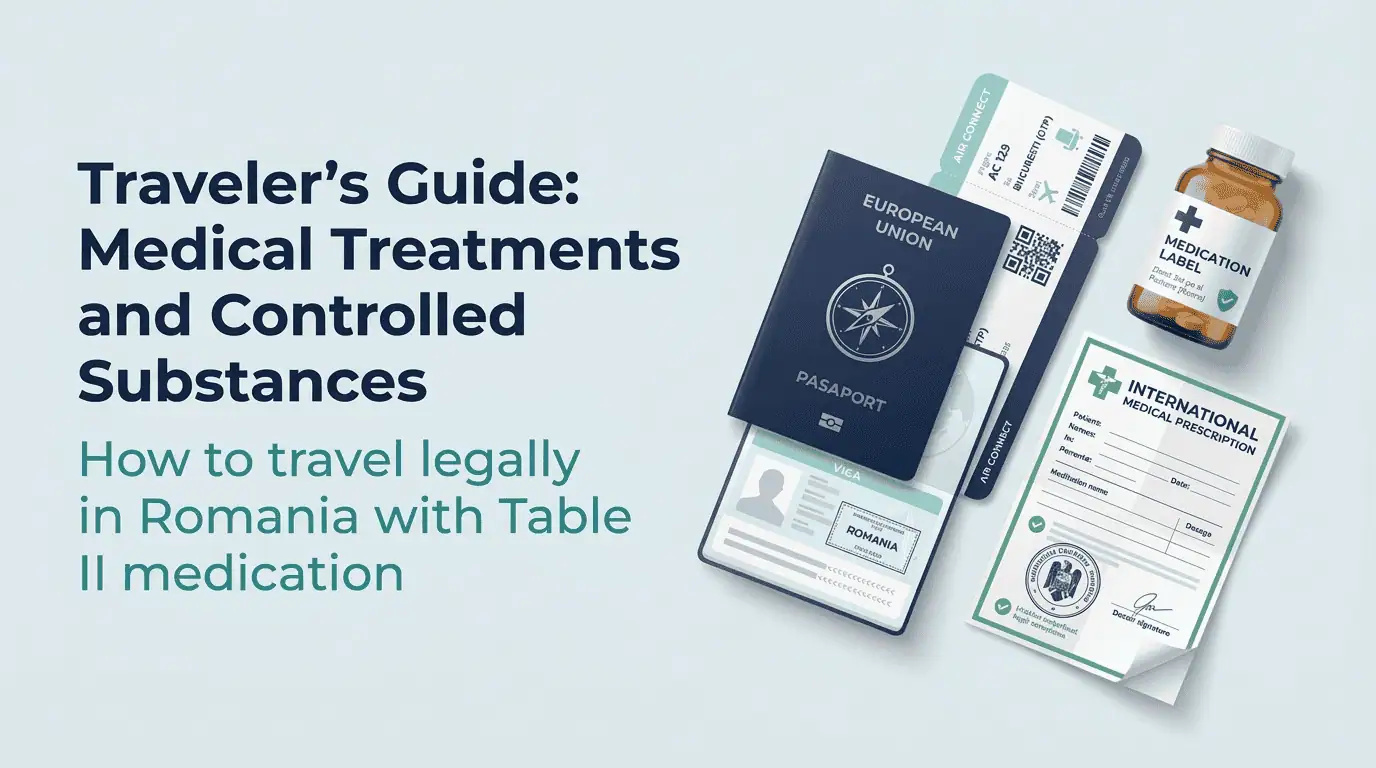
What every patient with controlled medication needs to know when travelling to Romania
The 2026 definitive ruling changes the legal landscape — but does not eliminate the risk of a similar incident. Until Victoria Law is adopted, patients transporting controlled medicines into Romania must protect themselves with complete documentation. This guide was born from direct experience — from the hours spent in the airport customs office, from the months of criminal investigation, and from the three court hearings where every document mattered. The steps below are not theoretical advice: they are the exact measures that proved decisive in winning this case. I share them so that no other patient has to learn these lessons the hard way.
Obtain your prescription in physical format
The prescription must be on paper, with the doctor's signature and the clinic's stamp. Digital versions are not sufficient at customs checks.
Request written confirmation from authorities
Send a written request to IGPF (Border Police) and DGPV (Customs) before your trip, asking them to confirm in writing that transporting your prescribed medication is legal. Keep their written reply.
Prepare a complete dossier
Prescription + certified translation if applicable + IGPF/DGPV confirmations + medical history (if possible). The quantity transported should match the need for the duration of your stay.
Always choose the red channel
Declare your medication at the red channel, regardless of what you think might happen. Failure to declare carries a greater risk than declaring with complete documentation.
If your medication is confiscated
Do not sign any statement without a lawyer. Invoke GD 1915/2006, Art. 49. Contact a specialist lawyer immediately. The 2026 definitive precedent is in your favour.
Visual Guide - Travelling with Medical Cannabis
▾
What Comes Next
The civil case and the 5 demands to authorities
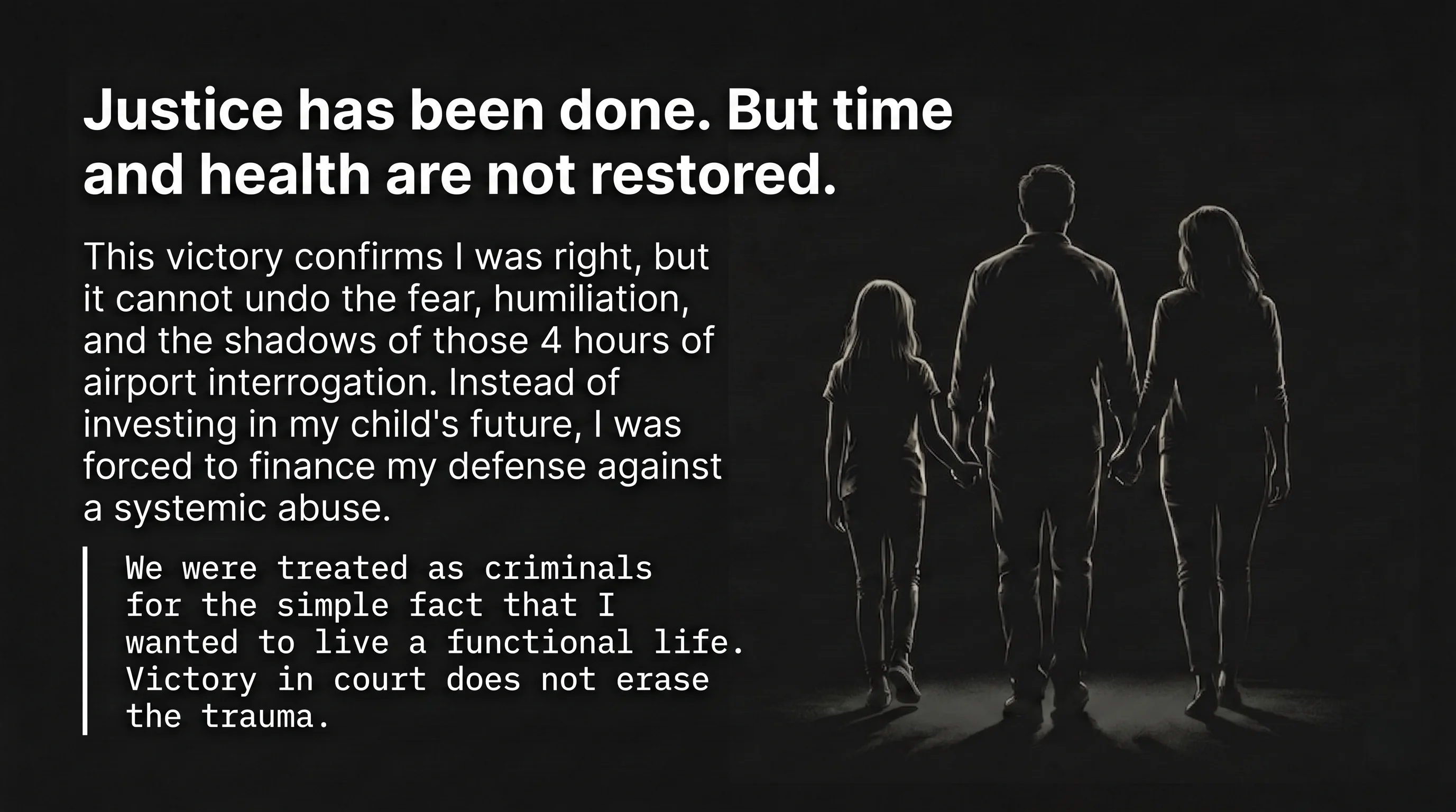
The acquittal is not the end — it is the beginning. We have initiated civil proceedings for moral and material damages against the Romanian state. Because a "win" in the criminal case does not erase the 18 months of institutional abuse we endured.
The Civil Case
We seek compensation for: the confiscation of legally prescribed medication, the violation of our fundamental rights, the emotional and psychological damage inflicted upon our family including our minor daughter, and the obstruction of legal medical treatment for chronic conditions.
The 5 Demands to Authorities
Clear Protocols at Borders
Mandatory training for customs and police officers on the distinction between controlled medications and illegal substances when prescriptions are presented.
Victoria Law
Dedicated legislation guaranteeing the right of patients with foreign prescriptions to travel with their controlled medication without criminal prosecution.
DIICOT Accountability
An official investigation into how the prosecutors who lost 3–0 in court could order the confiscation of medical treatment despite the judicial ruling.
Compensation and Official Apology
Moral and material damages for 18 months of institutional abuse, and an official apology from DIICOT.
Legislative Reform
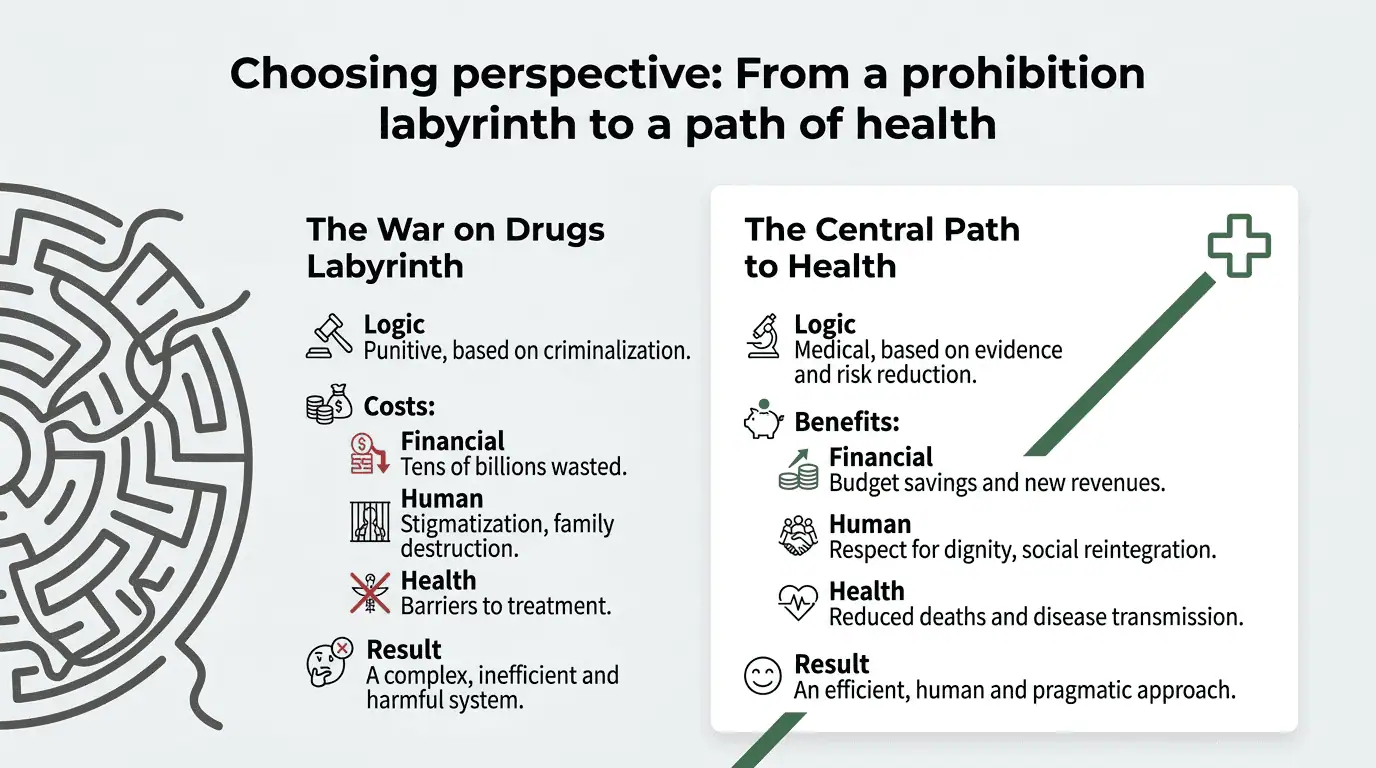
Aligning Law 143/2000 with Law 339/2005 and EU legislation to eliminate the paradox that criminalises patients with valid prescriptions.
12 The Urgency of Victoria Law
The Urgency of Victoria Law
Why the precedent is not enough — and why Romania needs legislation
The 2026 definitive ruling is an important precedent — but it does not resolve the structural problem. Patients in Romania have no legal access to medical cannabis, regardless of their health condition. It all began with Victoria Cârstea, a patient diagnosed with terminal cancer in 2015. Her daughter, Alexandra Cârstea — a lawyer — launched a national petition that gathered close to 20,000 signatures, calling on the Romanian state to legalise access to medical cannabis. That fight gave birth to PL-x 611/2019, known publicly as Victoria Law — named in her honour. The bill was co-authored by MP Emanuel Ungureanu (USR) and MP Cristina Dumitrache (PSD), alongside approximately 100 co-signing parliamentarians from multiple parties. The Senate adopted it tacitly in 2019 — the absence of a negative vote constituting implicit approval. From there, the law entered a six-year deadlock in the Health Committee of the Chamber of Deputies. On 12 February 2025, the Health Committee of the Chamber of Deputies rejected the bill by majority vote. The rejection was announced publicly by Alexandru Rogobete (PSD) — appointed chair of the Committee at the end of 2024, after having served as State Secretary at the Ministry of Health under Minister Rafila (2023–2025). In June 2025, that same Rogobete was appointed Minister of Health — carrying his anti-legalisation stance from the Committee to the head of the Ministry. The Ministry of Health had previously issued a negative opinion, expressing a preference for standardised pharmaceutical extracts over cannabis flower — preparations ten times more expensive and inaccessible to most patients. MP Emanuel Ungureanu summed up the outcome in a single phrase: "still zero for the sick." Without this law, Romanian patients face three parallel realities: the black market — the only local source, with all its criminal risks; clandestine transport from other EU states — exactly my situation, which led to a criminal case despite the medication being legal; or emigration to the Netherlands or Germany — the only option for those who can neither risk nor afford the black market. This is not a choice — it is a sentence. For every patient in Romania who fears crossing the border with legally prescribed medicinal cannabis: the Cristea precedent has created a concrete legal shield. The courts confirmed through the authority of res judicata that possessing your own prescribed medication is not "international trafficking" — it is the exercise of the fundamental right to healthcare. If you face similar abuses: always request written explanations, document every incident, do not sign anything under pressure without legal counsel, and immediately contact a lawyer specialising in medical or criminal law.
My case proves that current criminal law punishes patients following legal medical prescriptions issued within the European Union. The Cristea precedent shows that courts can correctly apply GD 1915/2006 — but it took 18 months, two separate cases, substantial legal costs, and irreversible medical consequences to reach that conclusion. Victoria Law should be the systemic answer — not the judicial exception.
Series: Patient Victory — Medical Cannabis Law
▾
I did not win for myself. I won for every Romanian patient who will ever go through what I lived through.Giancarlo Cristea — after the final ruling, January 2026
A Personal Word
This series of articles is not just a documentation exercise — it is the direct testimony of a patient who chose to fight. I wanted to leave a clear trail, so that no other patient would have to go through what I and my family went through. Thanks to lawyers Raul Nicolae Bud and Gabriel Sebastian Nagy — without their skill and courage, this precedent would not exist. Thanks to MP Emanuel Ungureanu for Victoria Law and for being the only political voice who dared to stand up for patients. And thanks to the journalists who covered this case — a free press was essential.
Note on the DIICOT structures referenced in the case. The official DIICOT press release is attributed to the Drug Trafficking Section, headed at that time by chief prosecutor Adriana Sache with Dănuț Cristea as deputy chief prosecutor — both officially confirmed by Decision no. 270/2025 on the constitution of the Inter-Ministerial and Inter-Sectoral Anti-Drug Committee, published in the Official Gazette no. 453 of 15 May 2025 (Annex I, pt. 6) [lege5.ro]. This is not a matter of individuals, but of institutional structure: the Cristea case showed that the very section that prosecutes traffickers must stop treating patients the same way.
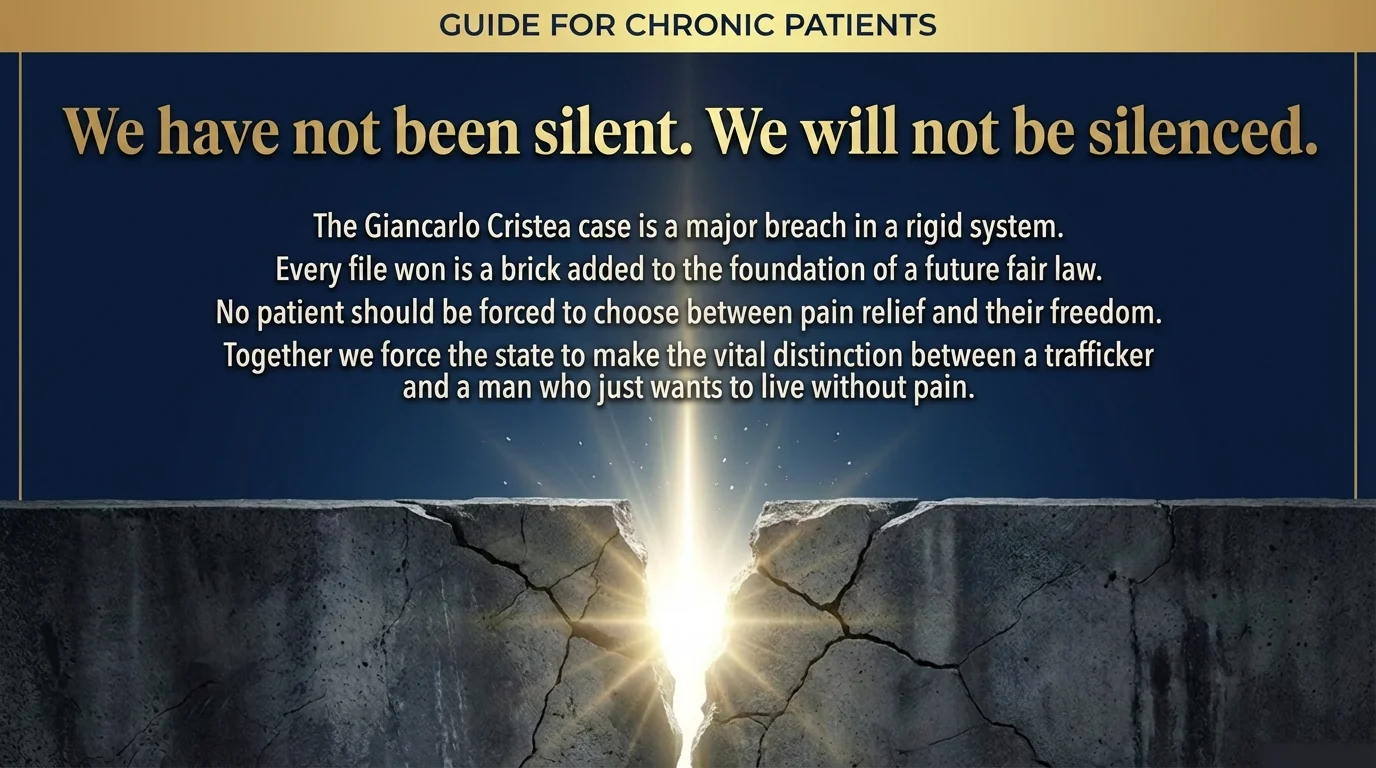
If you are a patient reading these lines: you are not alone. The precedent exists. The law is on your side. And we will keep fighting until Victoria Law becomes reality.