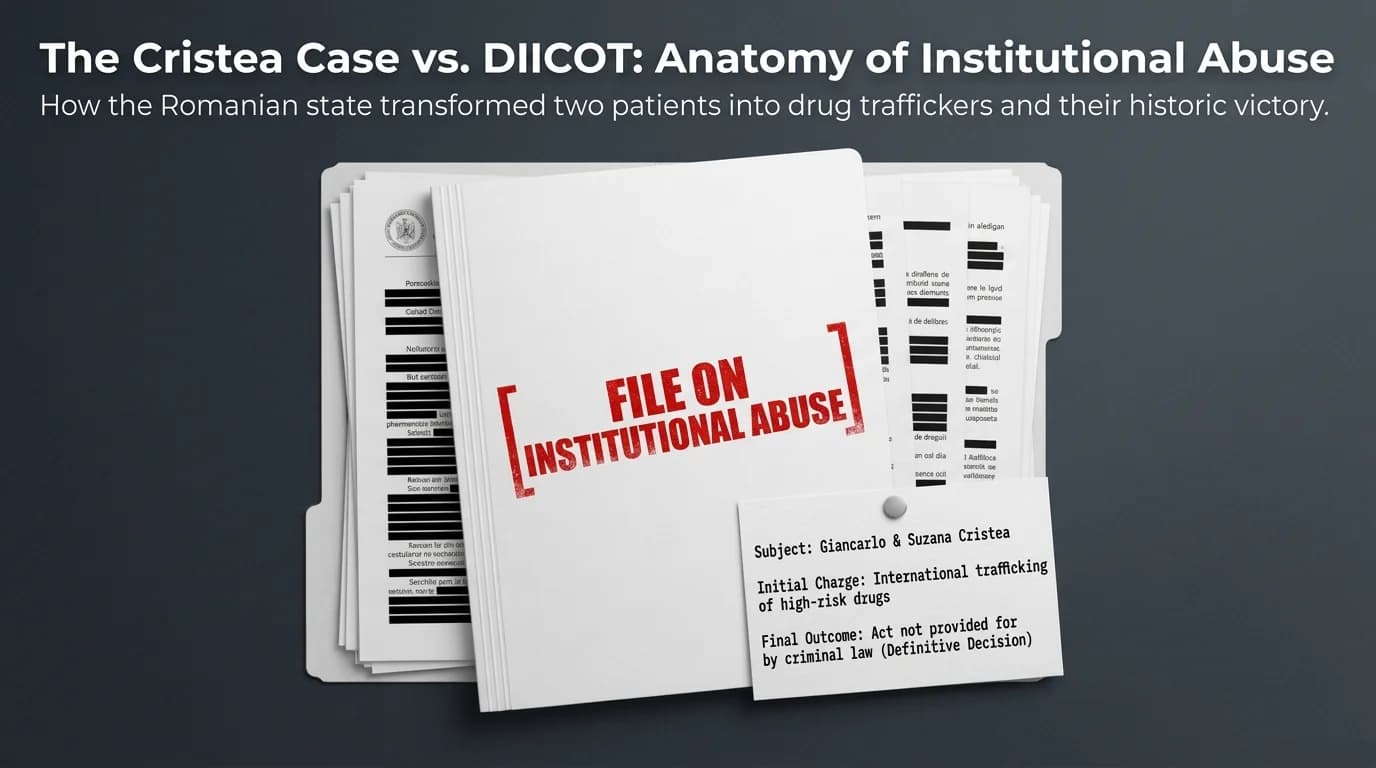
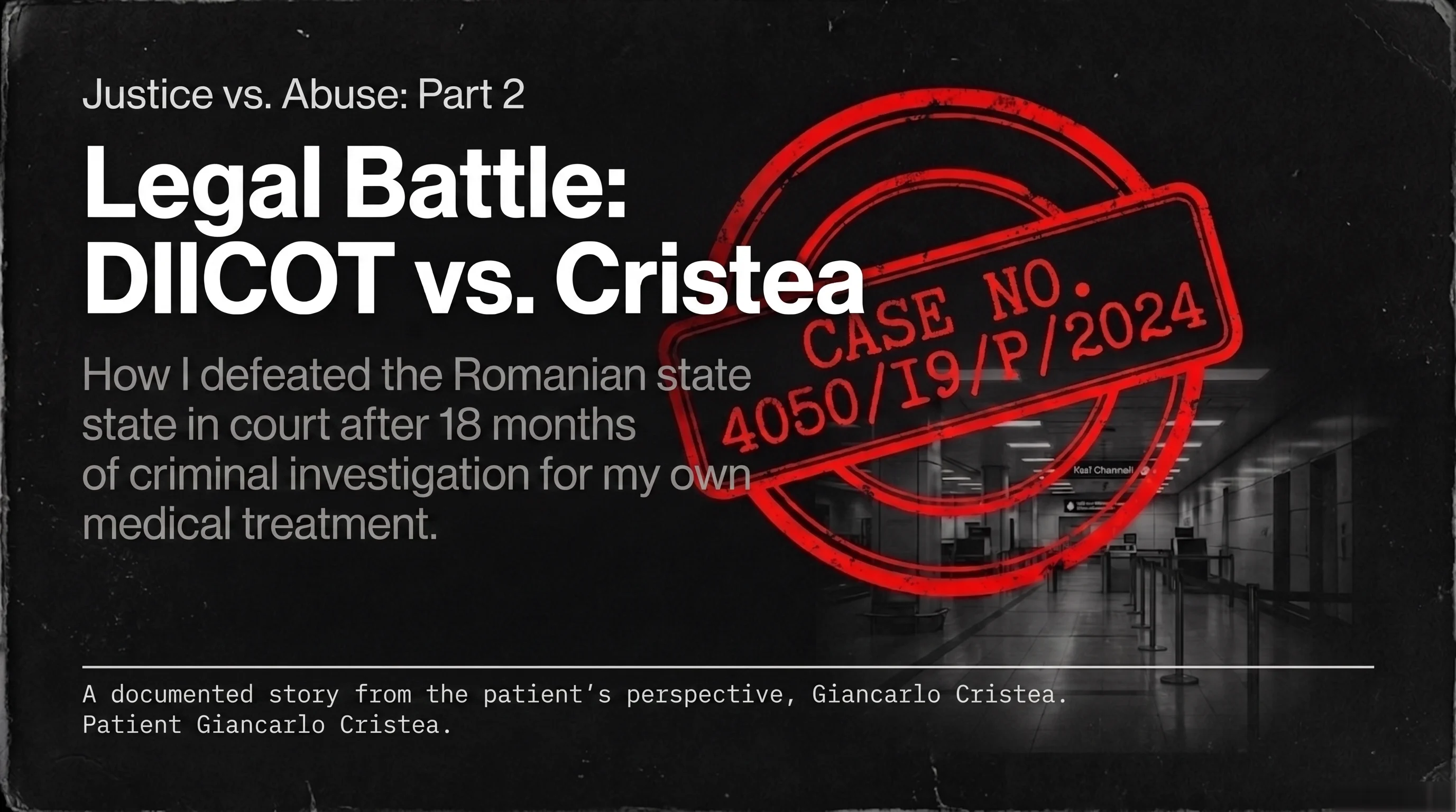
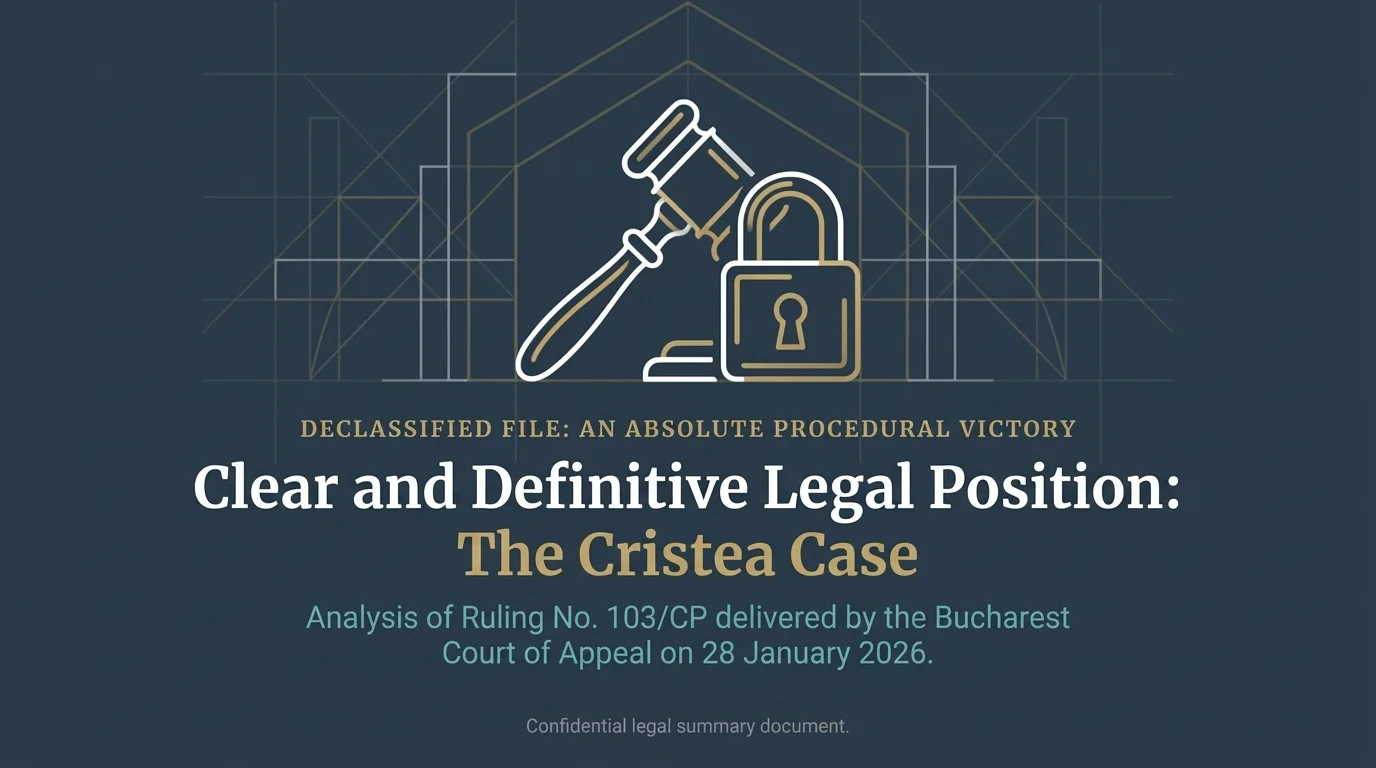
Justice vs Abuse — Traveller's Guide for Controlled Medication
The complete practical guide for patients with controlled medication travelling to Romania — and why the Victoria Law matters.
This is the third and final part of the Justice vs. Abuse series — dedicated entirely to practical action. Where the first two parts documented the story and the legal battle, this page transforms that experience into concrete tools: a step-by-step visual guide, answers to the most common questions, and the full case for adopting the Victoria Law. Everything here has been tested in reality — at customs, in the courtroom, and in front of the authorities.
Practical Guide
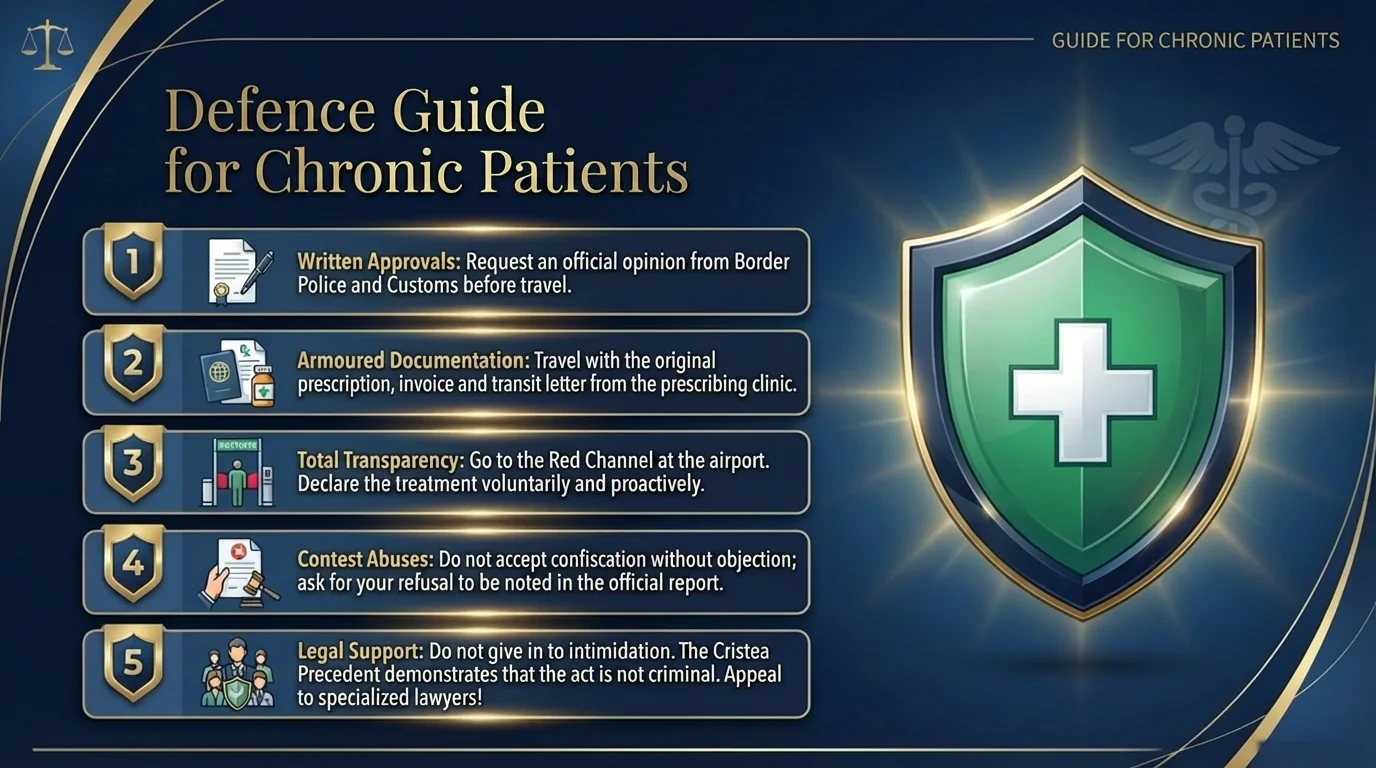
5 essential steps for any patient with controlled medication travelling to or from Romania.
What you need to know when travelling to Romania with controlled medication
The definitive 3–0 precedent from January 2026 is in your favour. But correct documentation remains essential until the Victoria Law is adopted. The 5 steps below tell you exactly what to do.
Why documentation matters even with a legal precedent
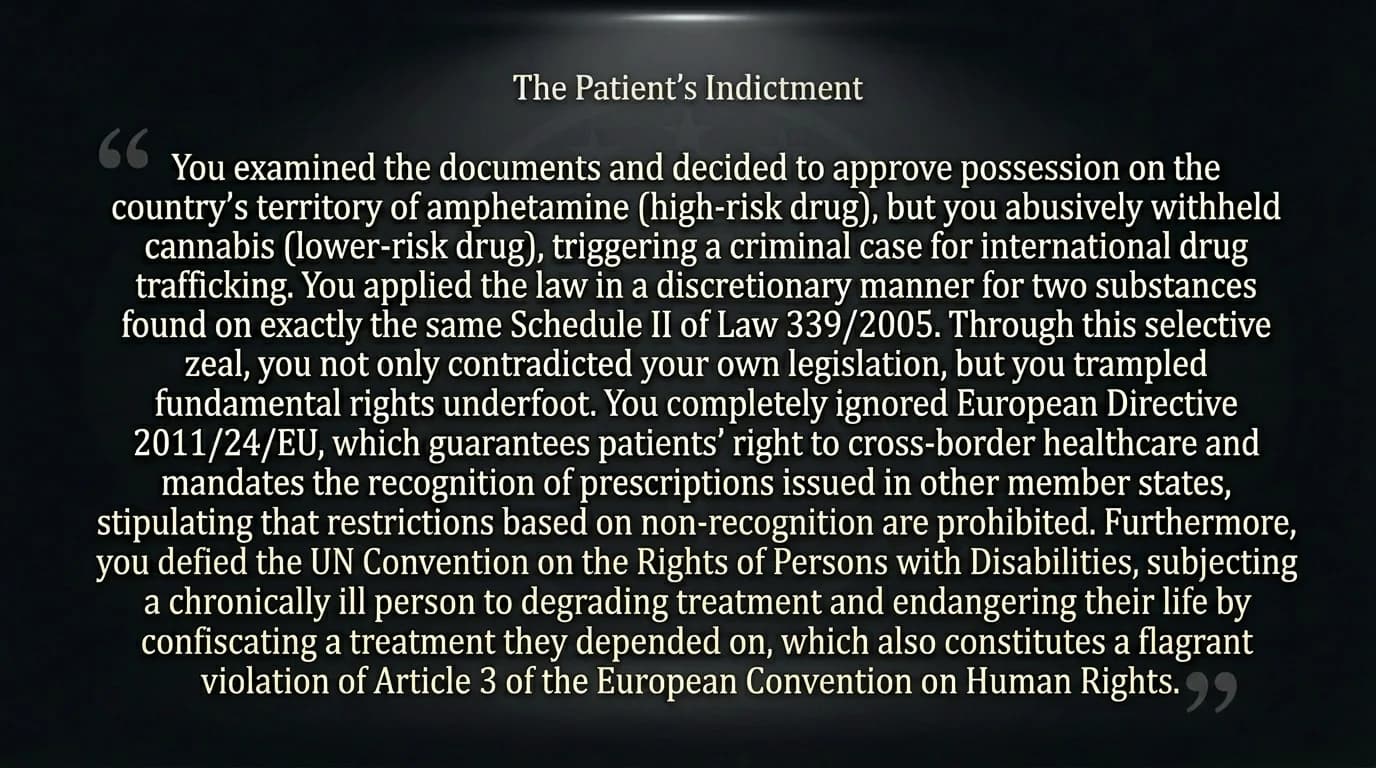
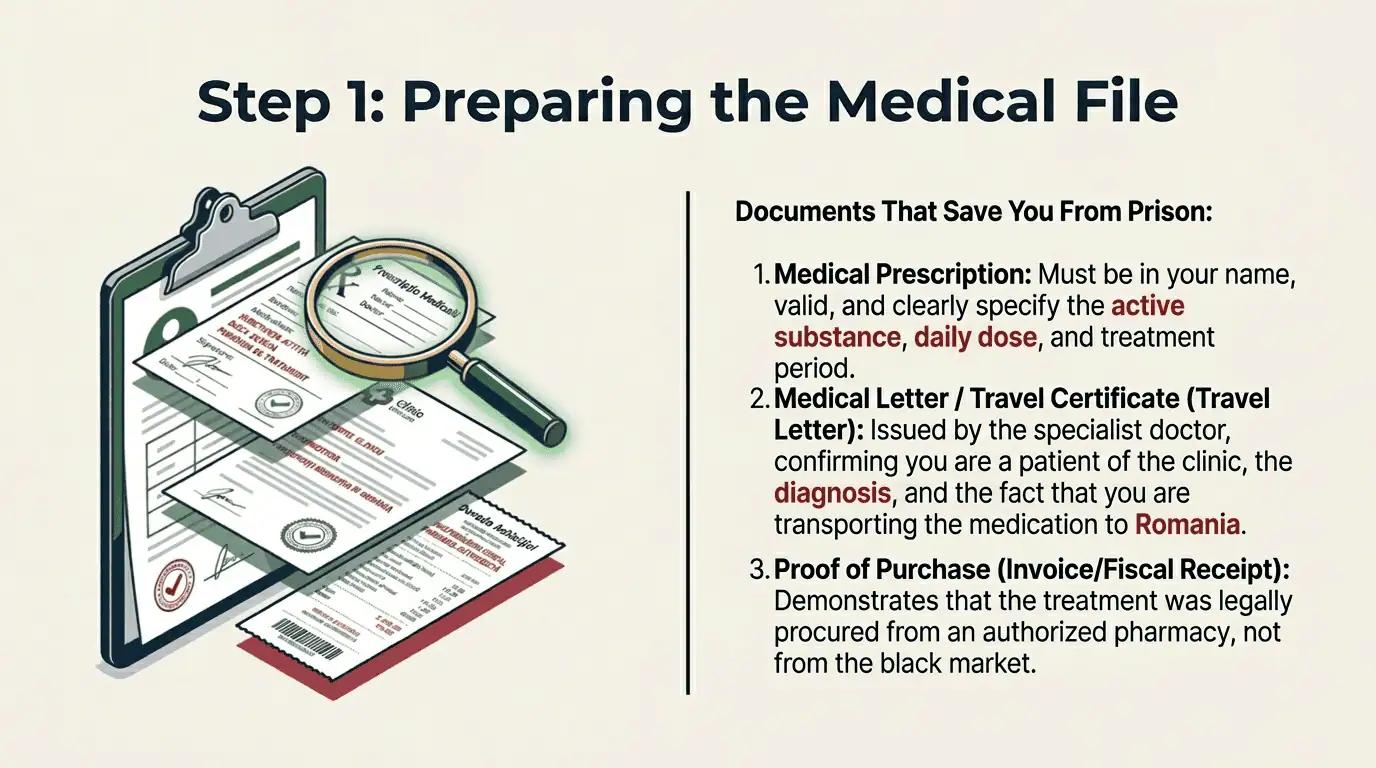
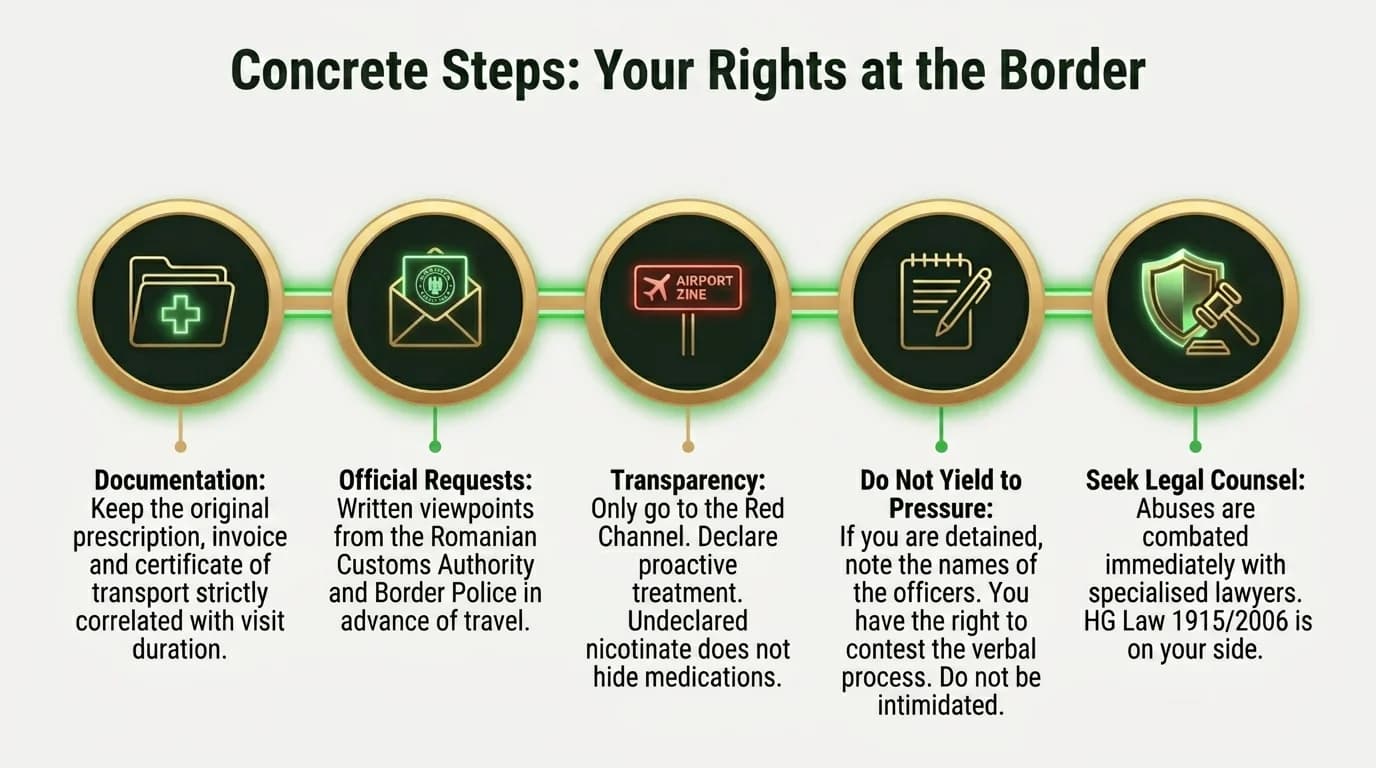
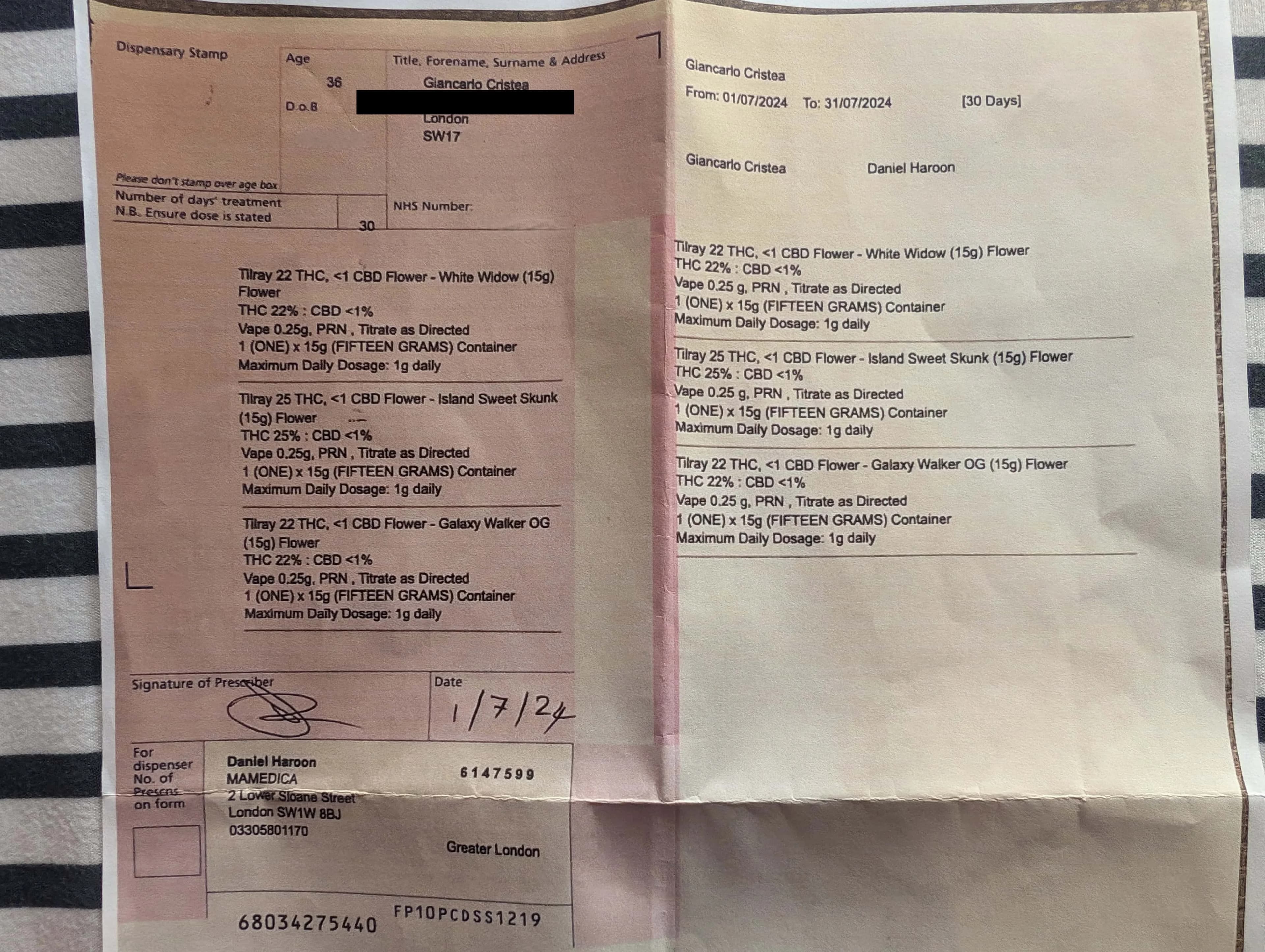
The legal precedent protects you in court — not at the border cordon. The customs officer stopping a passenger at the red channel does not consult the Bucharest Court of Appeal's case law before confiscating a medication. He applies institutional reflex. The difference you can make as a patient is showing the correct documents, in order, calmly: the original prescription, the Travel Letter issued by the prescribing pharmacy or clinic, the corresponding receipts, and the written confirmations obtained from IGPF (ref. 28850/23.09.2022) and DGPV (ref. 20264/22.09.2022). These documents transformed the Cristea case from an arbitrary confiscation into a definitive precedent. They can do the same for you.
If you plan to enter Romania by land border or through an airport other than Henri Coandă, the procedure is identical — GD 1915/2006, Art. 49 applies at all border crossing points. The difference lies in which agents enforce it: at airports, IGPF (Border Police) operate; at land borders, DGV (General Customs Directorate) are present. Both institutions confirmed in 2022 that entry with a prescribed medication is lawful with correct documentation.
Schengen: what applies, what does NOT apply
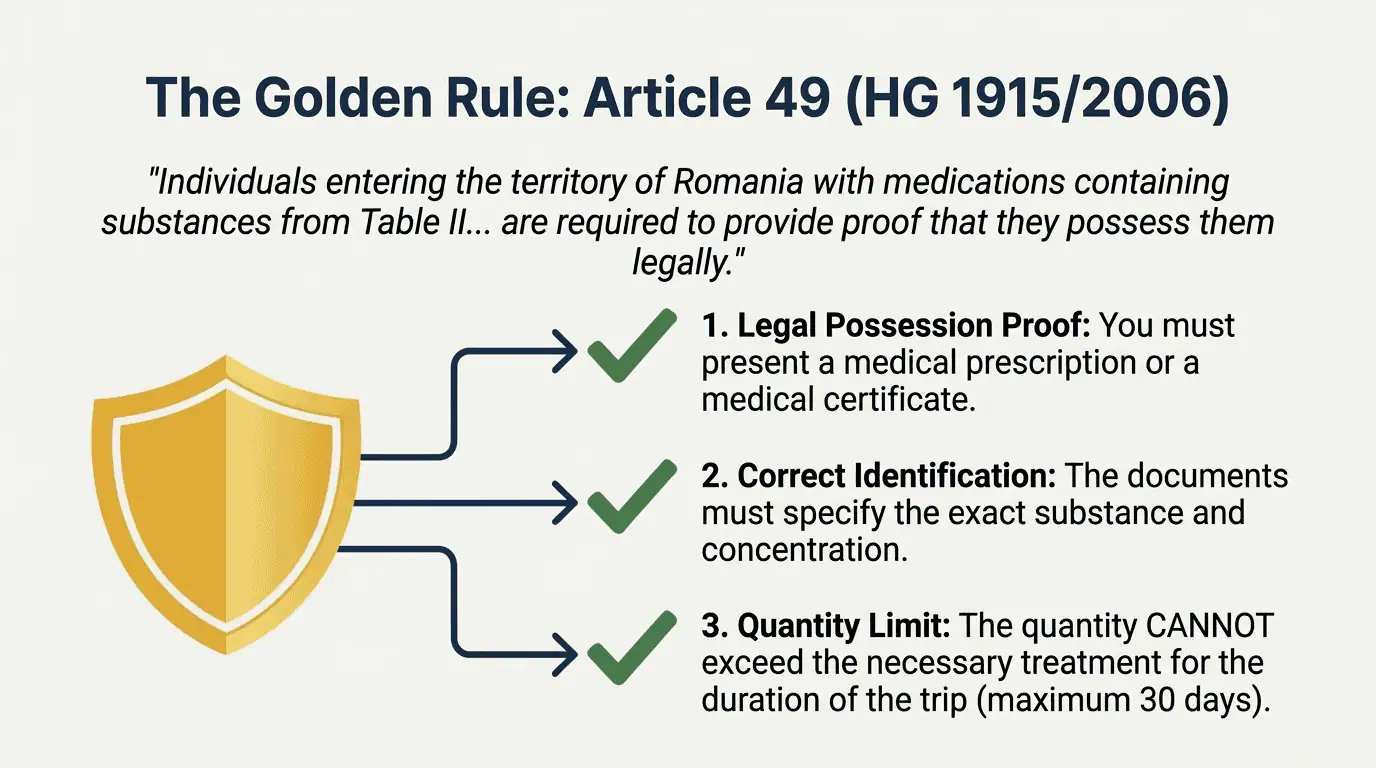
1. The foundation — CAAS Art. 75 + Schengen Certificate. Article 75 of the Convention Implementing the Schengen Agreement (CAAS), together with Executive Committee Decision SCH/Com-ex (94) 28 rev, creates the Schengen Certificate — a standardised document allowing patients to transport controlled medicines between Schengen states. Maximum 30-day supply, issued by the prescribing doctor's national authority.
2. Post-January 2025 map — Romania is Schengen. Since 1 January 2025, Romania applies the full Schengen acquis at all borders (air and sea borders since 31 March 2024; land borders from 1 January 2025). This means EU/Schengen citizens crossing into Romania can now invoke Art. 75 CAAS directly, with a Schengen Certificate.
3. The UK exception — never part of Schengen. The United Kingdom was never a Schengen member. This is not a consequence of Brexit — it stems from Protocol 19 of the 1997 Treaty of Amsterdam, in which the UK and Ireland formally opted out of the Schengen acquis when it was integrated into the EU framework. Consequently, a UK patient travelling to Romania cannot invoke Art. 75 CAAS or the Schengen Certificate. The applicable framework is exclusively: HG 1915/2006, Art. 49 (Romania) + Directive 2001/83/EC (EU code on medicinal products) + Art. 148 of the Romanian Constitution.
4. Legal regime by travel scenario:
| Scenario | Applicable framework | Key documents |
|---|---|---|
| Schengen → RO (post-Jan 2025) | CAAS Art. 75 + Schengen Certificate | Schengen Certificate + prescription |
| UK → RO (Cristea case, July 2024) | HG 1915/2006 Art. 49 + Dir. 2001/83/EC + Art. 148 Constitution | Prescription + Travel Letter + IGPF/DGPV written confirmations |
| Non-EU / Non-Schengen → RO | HG 1915/2006 Art. 49 + 1961 UN Convention | Prescription + Travel Letter + import authorisation (if required) |
5. Practical consequence. For the Cristea case (UK prescription, July 2024 entry into Romania), the Schengen framework is legally irrelevant — Romania was not yet fully in Schengen in 2024, and the UK is not Schengen at all. The protective regime is exclusively Art. 49 HG 1915/2006 operationalising Directive 2001/83/EC. This is precisely what the three courts confirmed.
Document preparation
Prescription in physical format + authorised translation
- Physical copy — not digital, not a phone photo
- Doctor's signature + clinic stamp
- Authorised translation into Romanian or English
- Digital versions are not accepted at customs
Institutional protection
Written confirmation from IGPF & DGPV before departure
- Formal written request to IGPF and DGPV
- Request confirmation that transport is legal
- Keep the written response in your file
- Dramatically reduces risk of a border incident
Complete dossier
All documents in one place — before the flight
- Original prescription + legalised translation
- Written IGPF / DGPV confirmations
- Relevant medical history + specialist certificate
- Quantity = strictly what you need for the duration of stay
At the border
Always the red channel — no exceptions
- Red channel: "Goods to declare" — always
- Present documents proactively — before being asked
- Non-declaration = incomparably higher risk
- Stay calm and polite — your documents speak for you
The precedent is not enough
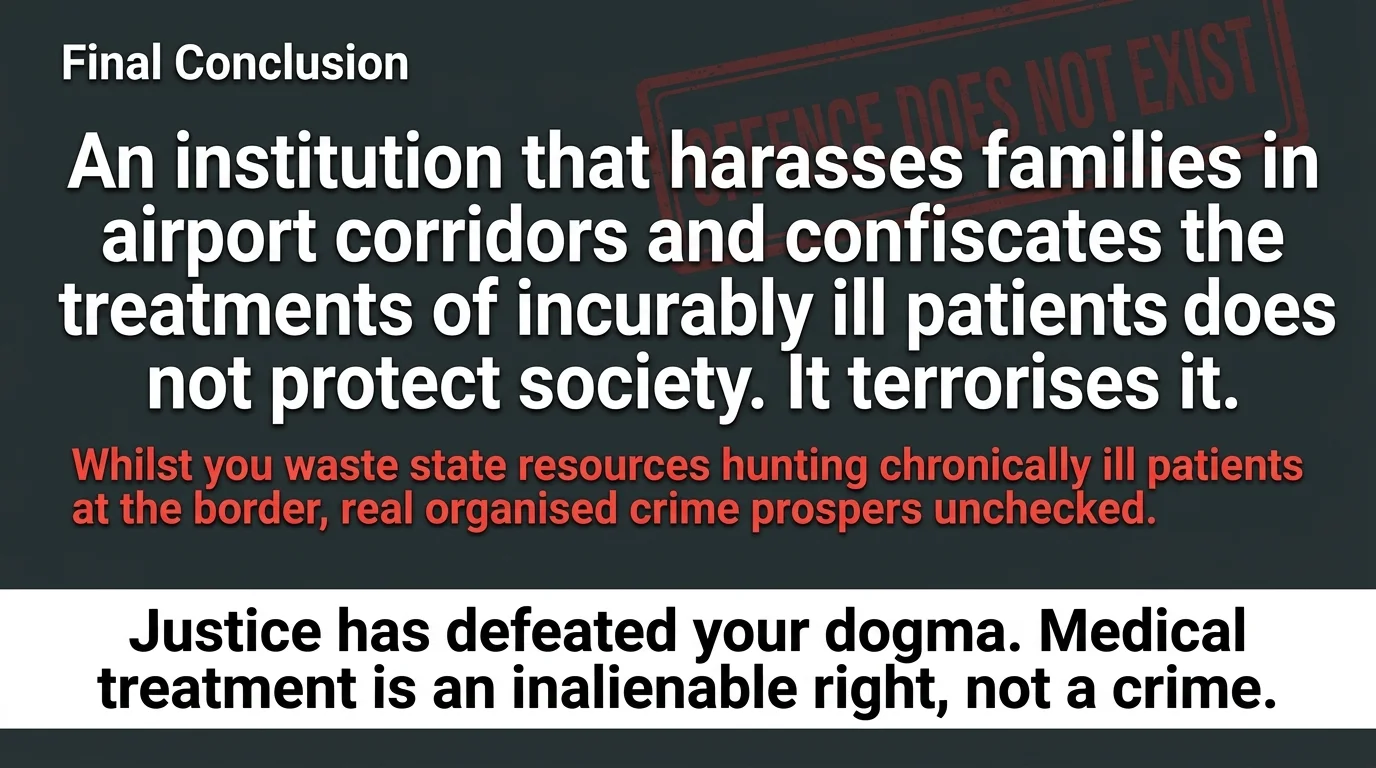
The 3–0 decision protects you if you end up in court. But it doesn't prevent the incident. The Victoria Law would proactively protect thousands of patients. Support the cause — every signature matters in Parliament.
Media, Community & Legal References
- Wikipedia: Cannabis in Romania — Historical & legislative context
- Reddit r/buruieni: Giancarlo Cristea's Story
- YouTube: Val Chiper Interview — Political & medical dimensions
- BihorJust & Ziare.com: Media coverage of 3–0 precedent
- Complete media sources: Media Sources page
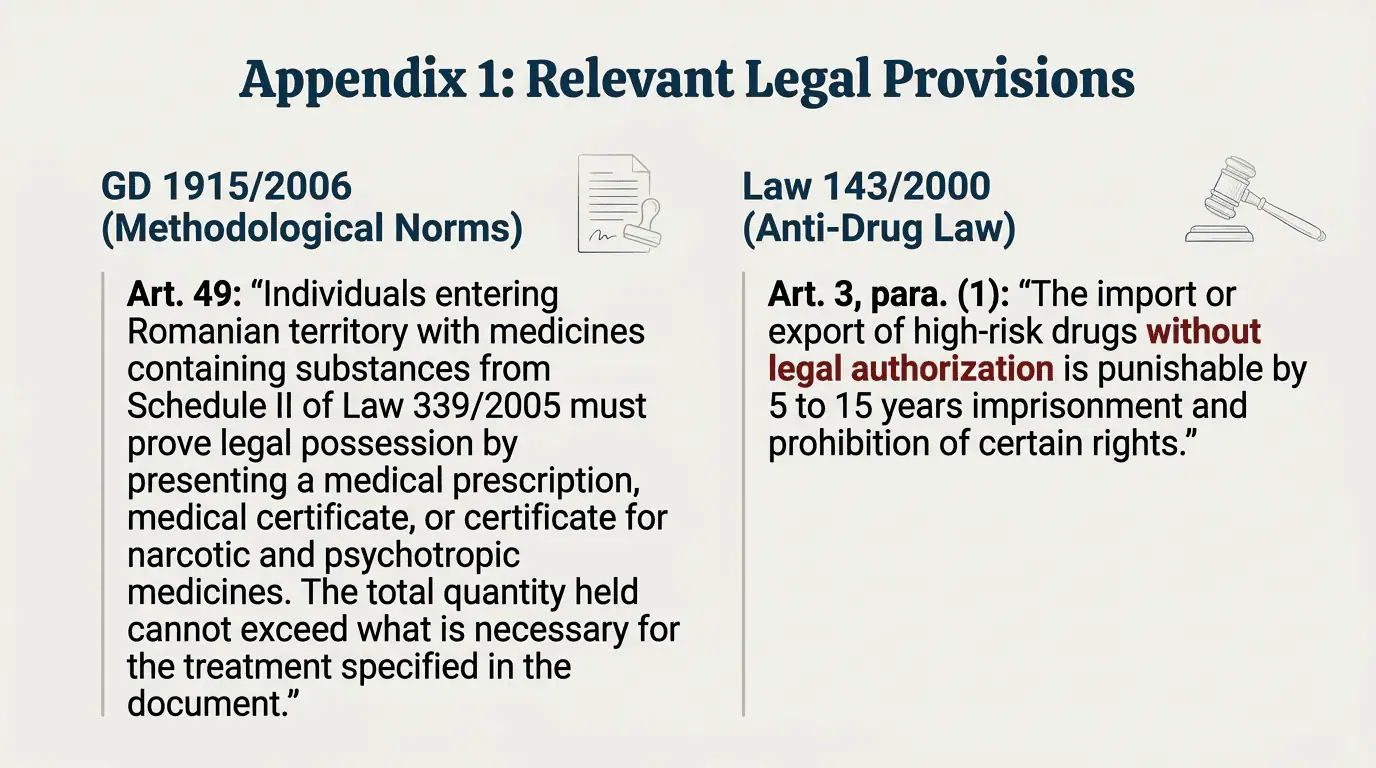
GD 1915/2006, Art. 49 — The Core Legal Principle
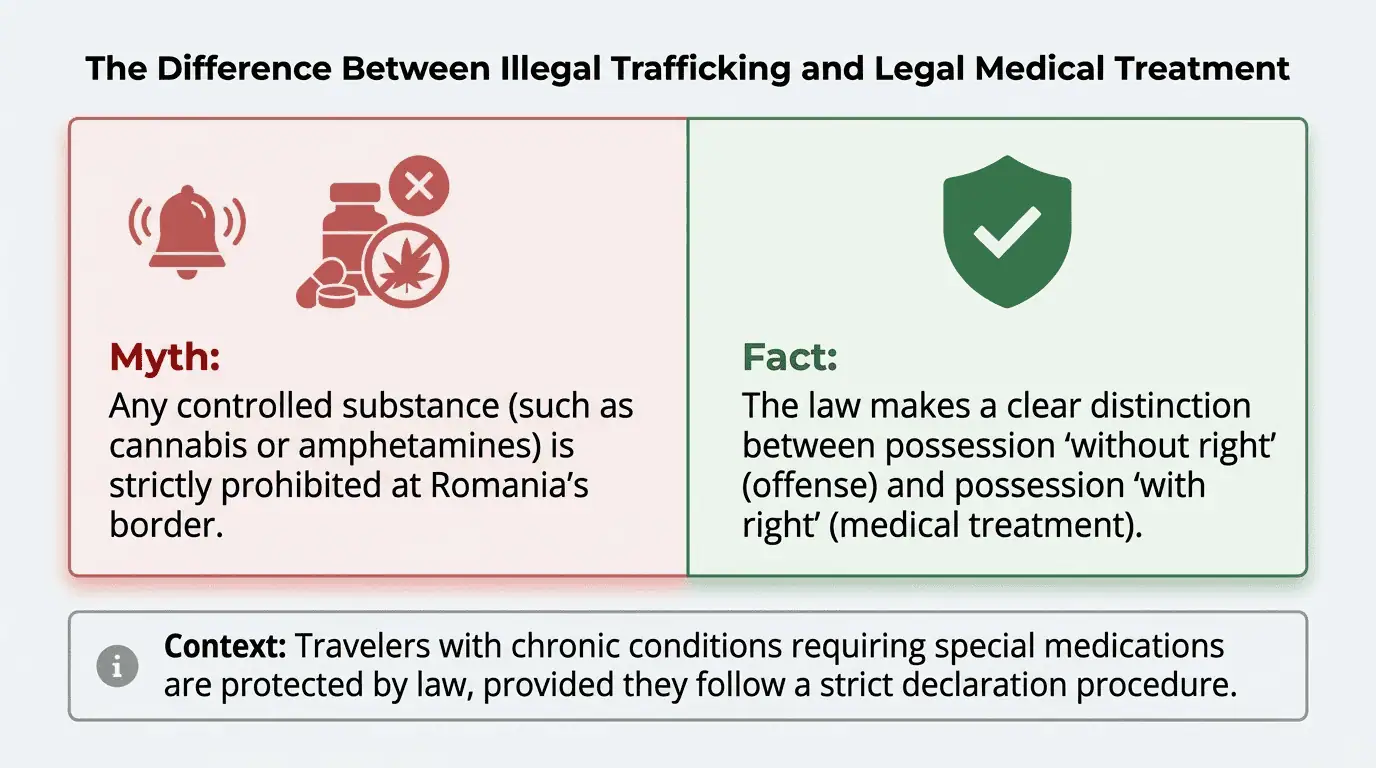
Persons travelling through Schengen space may transport controlled substances with a valid medical prescription issued by a member state, provided the quantities do not exceed what is needed for the duration of the trip and they hold the necessary supporting documents. This article is the legal basis for the 3–0 DIICOT victory.
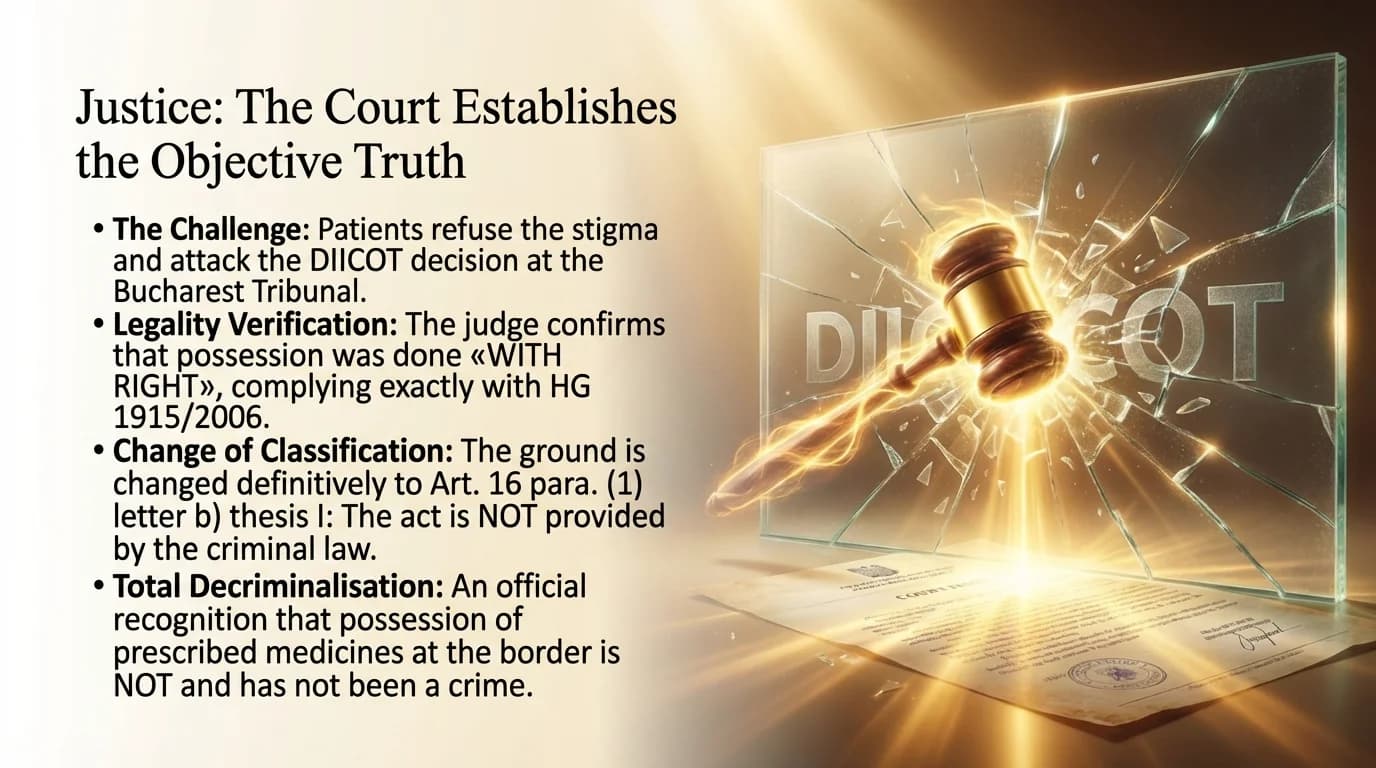
DIICOT's version against the reality confirmed by three courts
| DIICOT claim | Reality confirmed by 3 courts |
|---|---|
| Cannabis = drug, regardless of prescription | National precedent: medical cannabis is not a crime |
| UK prescriptions do not count in Romanian criminal law | Valid prescription from a Schengen state, recognised in 2025 |
| GD 1915/2006 creates no criminal exceptions | Art. 49 of GD 1915/2006 explicitly protects patients |
| Schengen space does not modify domestic legislation | 3 courts unanimously: Tribunal, Court of Appeal and final decision |
If your medication is confiscated — immediate checklist
On the spot (first minutes):
- Request the written seizure report (type LP 568.434) — without it, you have nothing to contest
- Do NOT sign any document without a lawyer
- Declare explicitly, in front of witnesses: prescribed medication, strictly medical purpose — never recreational
- Photograph everything: the medication, your documents, the exact time, the officers involved
First 24 hours:
- Contact a criminal-defence specialist — Raul Nicolae Bud or Gabriel Sebastian Nagy (the lawyers of the 3–0 precedent)
- If withdrawal or clinical decompensation appears (Crohn's, fibromyalgia, epileptic episodes) → A&E / emergency department + request medical records attesting to the direct harm (essential evidence in the case)
- File a criminal complaint for abuse of authority (Art. 297 Romanian Criminal Code)
- Contact victoriamea.ro — direct experience with similar cases
Legal arguments to invoke:
- GD 1915/2006, Art. 49 + Directive 2001/83/EC (free movement of medicines)
- Definitive 3–0 precedent (January 2026) — Bucharest Court of Appeal
- Art. 22 Constitution (right to life and physical integrity) + Art. 148 (primacy of EU law)
- For Schengen patients: CAAS Art. 75 + the Schengen Certificate
The guide above covers the essential steps — but every situation comes with specific questions. The following section gathers the most common dilemmas I have received from patients, families, and lawyers since winning the case definitively. The answers are based on direct experience from the case file and the legal framework confirmed by all three courts.
See also: Televised interview on TVR Cluj with lawyer Raul Nicolae Bud — legal analysis recorded right after the first court victory (March 2025). Watch the full interview in Part 3 →
Frequently asked questions
Direct answers to the most common patient dilemmas.
Protocol: first 24 hours after confiscation
Always request a copy of the goods seizure report (type LP 568.434). Without this document you have nothing to contest. Declare explicitly and repeatedly, in front of witnesses, that the substance is for medical purposes only, and present all supporting documents: prescription, Travel Letter, receipts, IGPF/DGPV written confirmations. Never suggest recreational use — the GD 1915/2006 protection regime applies exclusively to patients with medical documentation. Do not sign any additional documents without your lawyer on the phone.
Contact a lawyer immediately to file a criminal complaint for abuse of authority. If the sudden interruption of medication triggers withdrawal symptoms or clinical decompensation (Crohn's disease, fibromyalgia, epileptic episodes), go to the emergency department (A&E) and request medical documentation attesting to the direct harm caused — these become essential evidence in the case.
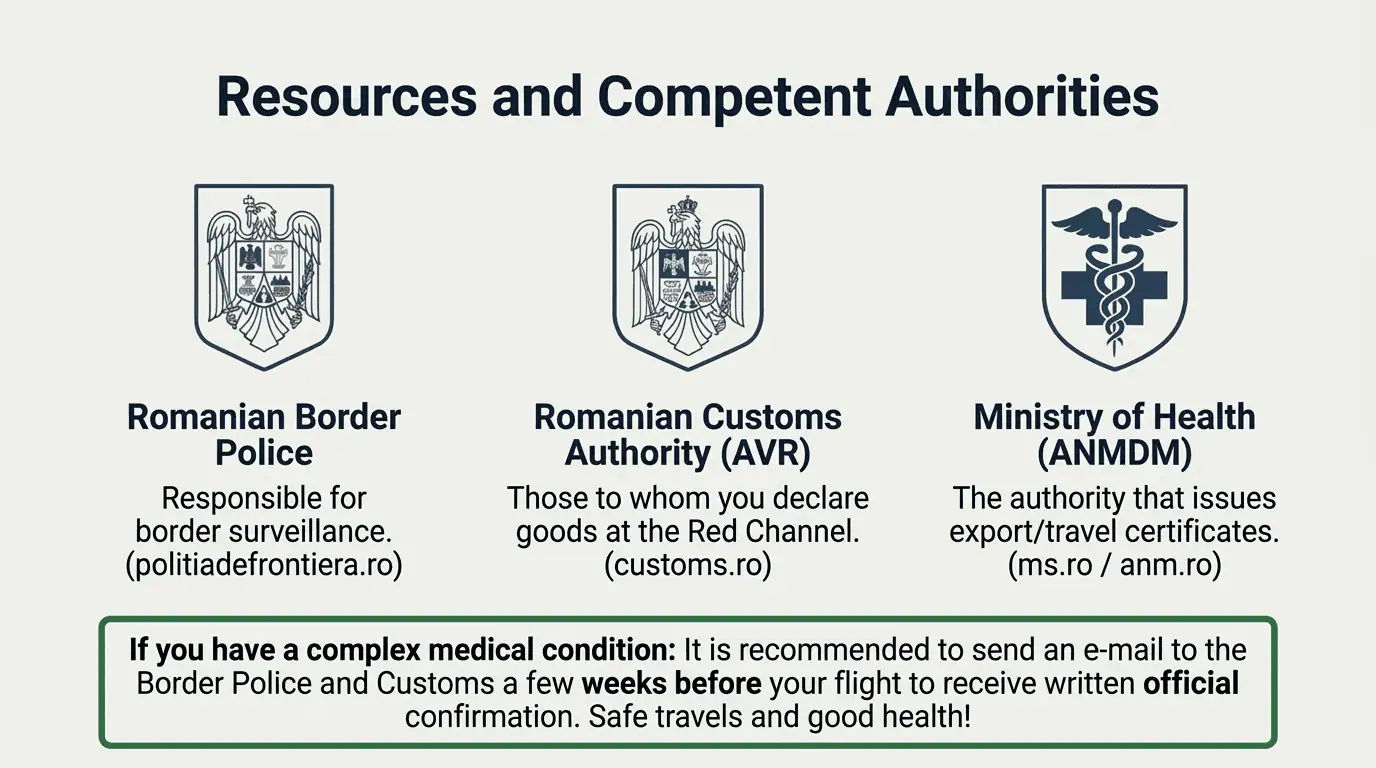
How to obtain written confirmation before travelling: Send an email to mai@mai.gov.ro with copies to IGPF and DGPV. Include: your diagnoses, the exact medication type (e.g. dried cannabis flower 19% THC, 1% CBD, vaporisation), the travel period, and total quantity. Attach a copy of the prescription and the clinic letter. The official institutional response (as the Cristea family received in September 2022 — refs. 28850/IGPF and 20264/Customs) becomes the central argument if authorities later claim they were unaware of the procedure.
| State | Medical programme | Legalisation year | Forms available | Insurance coverage | Adult use |
|---|---|---|---|---|---|
| Germany | Yes — national | 2017 (expanded 2024) | Flower, extracts, oil | Public (GKV) | Legal since 2024 (decriminalised) |
| Netherlands | Yes — OMC Bureau | 2003 | Flower, extracts (Bedrocan) | Partial | Tolerated (coffeeshop policy) |
| Italy | Yes — Army pharmacy | 2013 | Flower (FM1, FM2, imported) | SSN — regional | Prohibited |
| Czech Republic | Yes | 2013 | Flower, extracts | 90% covered since 2020 | Prohibited |
| Portugal | Yes — INFARMED | 2018 | Standardised extracts | No | Decriminalised all drugs (2001) |
| Spain | Regional clubs (grey zone) | No national law | Flower (private clubs) | No | Private social clubs |
| France | Experimental programme | 2021 (trial) | Oil, extracts | Yes (trial) | Prohibited |
| Malta | Yes | 2018 | Extracts | No | Legal (home cultivation, 2021) |
| Luxembourg | Yes | 2018 | Flower, extracts | Partial | Legal (home cultivation, 2023) |
| Romania | No | — (Victoria Law blocked) | None | None | Prohibited |
Drivers' guide — driving under controlled medication
This section addresses patients who drive while under treatment with medical cannabis, methylphenidate (ADHD), prescribed opioids, or benzodiazepines. The legal framework changed radically at the start of 2025 and continues to shift. Read carefully — a roadside stop can turn a valid medical prescription into a criminal file of 1 to 5 years' imprisonment if you do not know which rights to exercise and which procedures to request.
1. Legal map — what the law says about driving under psychoactive substances
The primary framework — the offence. Article 336 of the Romanian Criminal Code criminalises driving a vehicle under the influence of alcohol or other substances. Paragraph (1) addresses alcohol (≥ 0.80 g/L pure alcohol in blood). Paragraph (2) — relevant for controlled medication — until recently sanctioned mere presence in blood of psychoactive substances, regardless of dose, regardless of effect, regardless of medical prescription. Penalty: 1 to 5 years' imprisonment or fine.
The turning point — ICCJ Decision No. 25/2025 (DCD). On 27 January 2025, the High Court of Cassation and Justice (Panel for Settling Points of Law) issued Decision No. 25/2025 (published in the Official Gazette No. 70 of 28 January 2025) — a decision binding under Art. 477 para. (3) of the Criminal Procedure Code for all courts. For the first time, the ICCJ held that the typicity of the offence under Art. 336 para. (2) CP requires cumulative fulfilment of two conditions:
DCD ICCJ 25/2025 — the dual requirement
(a) presence in biological samples of a psychoactive substance (demonstrable through INML forensic expertise), AND (b) aptitude of that substance — at the identified concentration — to affect the capacity to drive (demonstrable through individual forensic medical expertise).
Mere presence is no longer sufficient. The prosecutor must also demonstrate that the substance could effectively affect your driving, at that concentration, at that moment, for you as an individual.
Legal definition — Law 187/2012, Art. 241. Psychoactive substances are those established by law, at the proposal of the Ministry of Health. Relevant categories: (i) risk drugs / high-risk drugs (Law 143/2000, Tables I–III) — cannabis, cocaine, heroin, methamphetamine, etc.; (ii) substances under international control by the UN Conventions of 1961 and 1971; (iii) medicines from categories II and III (narcotics and psychotropics) under Law 339/2005. Methylphenidate, morphine, oxycodone, diazepam, alprazolam — all fall here.
Administrative framework — GEO 195/2002 (Road Code). Independent of the criminal side:
- Art. 87 GEO 195/2002 — prohibition on driving under the influence of substances.
- Art. 88 GEO 195/2002 — procedure for clinical examination and biological sample collection.
- Art. 111 GEO 195/2002 — retention of licence + provisional suspension until the final decision. This is the sanction that hits immediately, before any trial: you lose your right to drive for the entire duration of the case (months or years).
2. Bill L030FS/2025 — what is about to change
In direct response to DCD ICCJ 25/2025 — which Prosecutor General Alex Florența publicly criticised — the Romanian Senate registered on 30 January 2025 draft law L030FS/2025 amending Art. 336 CP. The bill is ambivalent: tougher on recreational use, but explicitly protective of patients.
| Element | Current Art. 336 | Bill L030FS/2025 (proposed) |
|---|---|---|
| Wording of para. (2) | is under the influence of psychoactive substances | has drugs in blood (stricter wording) |
| Penalty | 1–5 years or fine | 2–7 years imprisonment (increased) |
| DCD 25/2025 requirement (presence + aptitude) | Applicable (binding on courts) | Eliminated — return to absolute presumption |
| Exception for prescribed medication | Not explicit in text (defence via DCD 25/2025) | Yes — explicit new para. (4): exemption from penalty |
| Condition for exemption | — | Valid medical prescription + therapeutic dose respected + indications respected |
Proposed text of new para. (4) — full quote:
"The act provided under paras. (2) and (3) shall not be punishable if the presence in blood of psychoactive substances was determined by prior administration of medicines used under a medical prescription issued in accordance with the law, respecting the therapeutic dose and the other indications and recommendations regarding their administration."
Practical translation: if the bill is adopted in its current form, a patient with a valid prescription, respecting dose and indications, does not commit an offence even if the substance is detectable in blood. The recreational user, however, faces 2–7 years (increased). It is a "carrot and stick" legislative package — watch its progress through Parliament.
3. Controlled medication — the four risk categories
| Substance | Legal category | DRUID category (EU risk) | Blood detection window | Typical therapeutic dose |
|---|---|---|---|---|
| Medical cannabis (THC) | Risk drug Table III (L143/2000) / Table II (L339/2005 pharma) / UK Schedule 2 CBPM (since Nov 2018) / EU-authorised medicinal | II–III (high dose) / I–II (low dose, chronic, tolerated) | 12–48 h acute use; detectable in urine 3–30 days | 2.5–30 mg THC/day, individual titration |
| Methylphenidate (Ritalin, Concerta) | Psychotropic L339/2005 / special prescription | I–II (does not affect driving at therapeutic dose) | 3–6 h active; detectable 24–48 h | 10–60 mg/day adult |
| Opioids (morphine, oxycodone, tramadol) | Narcotic L339/2005 / special prescription | II–III (depending on dose and tolerance) | 24–72 h, variable | Individualised — titration |
| Benzodiazepines (diazepam, alprazolam, clonazepam) | Psychotropic L339/2005 | II–III (significant sedation) | 2–10 days (prolonged metabolites) | 0.25–10 mg/day, depending on indication |
DRUID categories — briefly. The European DRUID project (Driving Under the Influence of Drugs, Alcohol and Medicines), funded by the European Commission 2006–2011, classified medicines into three categories of impact on driving:
- Category I — negligible or no risk (small therapeutic doses, stable chronic administration);
- Category II — minor-to-moderate risk, caution needed;
- Category III — severe risk, do not drive.
Medical cannabis at a titrated therapeutic dose (≤ 15 mg THC/day, chronic administration with developed tolerance) sits in Category I–II — comparable to many antidepressants and antihypertensives. The dangerous cocktail is a large acute dose, not stable treatment.
4. At the roadside stop — what happens and what you have the right to request
Stage 1 — screening. The traffic officer typically uses DrugWipe (saliva test) or Dräger DrugTest 5000. These are screening tests, not evidentiary instruments. A positive result is not evidence in court — it is only reasonable suspicion triggering the official procedure.
Stage 2 — clinical examination (Art. 88 GEO 195/2002). You are taken to a medical unit for clinical examination by a doctor. This documents objective signs (pupils, coordination, Romberg test, behaviour). This is the key moment for defence: explicitly request that the prescribed medication you take, the time of last administration, and the dose be recorded. If you have the prescription on you — show it. If not, call your lawyer immediately.
Stage 3 — collection of biological samples (OMS 1512/2013, amended by OMS 62/2019). The standard procedure provides for:
- Dual sampling — two vials from the same collection: sample A (analysis) + sample B (counter-expertise).
- Collection performed by qualified medical personnel, in an authorised unit, with chain-of-custody protocol.
- Sample B is kept sealed for counter-expertise at the defence's request — this is a fundamental right, not a favour.
Stage 4 — analysis at INML or authorised laboratory. Analysis is performed by gas chromatography-mass spectrometry (GC-MS) or liquid chromatography (LC-MS/MS). The result is a concentration, not a simple "positive/negative". Request the full analysis report, not only the summary result.
5. What NOT to do — Art. 336¹ and 337 CP
Art. 336¹ CP — consumption after accident/stop. If you have been involved in an accident or stopped by the police, do not consume alcohol / substances / additional medication until samples are taken. Post-event consumption is a distinct offence (6 months – 3 years), even if you were initially entirely sober. The purpose of the rule: to prevent "laundering" of the sample.
Art. 337 CP — refusal to provide samples. Refusing to undergo biological sample collection is a distinct offence with a penalty of 1–5 years — equal to Art. 336 para. (2). In practice, it is often worse than the result itself: you eliminate any defence based on aptitude / dose / prescription. Do not refuse sample collection. Cooperate with the procedure — the battle is fought on interpretation of the result, not on blocking it.
Art. 338 CP — leaving the scene of an accident. Mentioned for completeness: penalty 2–7 years, applicable separately.
6. Defence in court — the legal arsenal
The seven levers of defence
- DCD ICCJ 25/2025 (CPP Art. 477 para. (3) — binding) — the prosecutor must demonstrate aptitude too, not only presence.
- Individual forensic medical expertise (CPP Art. 172–181) — aptitude is established per person, based on tolerance, dose, time since administration.
- Counter-expertise at INML on sample B (CPP Art. 100–101) — a fundamental right of the defence.
- Medical documentation — prescription + medical file + treatment history + official administration guide.
- Presumption of innocence (CPP Art. 4, ECHR Art. 6 §2) — burden of proof rests entirely with the prosecutor.
- Right to effective legal assistance (CPP Art. 83, ECHR Art. 6 §3(c)) — counsel from the very first investigative act.
- Superseded CCR jurisprudence — CCR Decisions 138/2017 and CCR 101/2019 had rejected constitutional challenges, but DCD 25/2025 reshaped the interpretation: the presumption became relative, not absolute. ICCJ 365/RC/2020 — explicitly superseded.
A vital procedural detail. Under CPP Art. 100, the defence has the right to request supplementary forensic expertise and to propose specific questions to the expert. Recommended questions for cases with prescribed medication:
- "Does the identified concentration correspond to administration within the limits of the prescribed therapeutic dose?"
- "Given the history of chronic administration (developed tolerance), was the defendant impaired in the capacity to drive at the time of driving?"
- "Can alternative sources of positivity be excluded (passive contamination, cross-reactivity with other medications)?"
7. The EU dimension — when you drive with a prescription from another state
Directive 2006/126/EC — Annex III (minimum medical fitness standards). Patients under treatment with medicines from controlled categories may drive if the treatment is stabilised, dose respected, and there are no documented medical contraindications. The directive explicitly recognises that "mere presence of prescribed medication does not exclude fitness to drive".
Vienna Convention on Road Traffic (1968), Art. 8 §3. The driver must be in a "condition suitable" for driving — the definition is functional, not chemical. The European standard is not "zero substances" but "fit to drive".
Recognition of EU prescriptions. Under Regulation (EU) No 726/2004 and Directive 2011/24/EU on cross-border healthcare, a prescription issued in one EU member state is valid in all member states (with rare exceptions for substances on the narcotics list, where a Schengen Annex 75 certificate is required under the Schengen Convention). For medical cannabis prescribed in Germany, Netherlands, or Portugal — the Schengen certificate is mandatory for cross-border transport; for driving with the substance already administered, the prescription alone is sufficient as evidence.
8. Practical checklist — preventive documentation
What to carry if you are under controlled treatment
- The original prescription (or legalised copy) + the medication leaflet.
- Medical statement from the treating doctor specifying: indication, daily dose, administration interval, recommendation regarding driving.
- For medical cannabis prescribed in the EU: Schengen certificate (Annex 75) — valid ≤ 30 days.
- Treatment record — administration history (at least the last 4 weeks).
- Network lawyer's contact — saved on phone + written on a physical card in your wallet (in case the phone is seized).
- Psychological/medical licence opinion (under Joint Order MS/MAI 1497/1018/2008) — useful for demonstrating documented fitness.
9. If you have already been stopped and tested positive
- Do not give statements without a lawyer. Exercise the right to remain silent (CPP Art. 83). Request a court-appointed lawyer if you do not have a private one.
- Request copies of: the police report, the clinical examination record, the INML analysis bulletin, the full toxicology report.
- Counter-expertise on sample B — file a written request immediately, under CPP Art. 100. The deadline is short.
- Individual forensic medical expertise — request it explicitly, with the specific questions for aptitude and tolerance (see point 6).
- Document the administration timeline — time of last dose, quantity, witnesses (if any), context (e.g. chronic treatment vs. occasional administration).
- Challenge the provisional suspension (Art. 111 GEO 195/2002) through the parallel administrative path — this is a separate proceeding from the criminal one.
Practical conclusion. Between 27 January 2025 (DCD ICCJ 25/2025) and the eventual adoption of Bill L030FS/2025, patients drive within a favourable legal window: mere presence no longer constitutes an offence, and aptitude must be demonstrated individually. The window may be closed by the new legislative wording — but the proposed new para. (4) offers, in exchange, explicit protection for prescribed medication. Whatever the outcome of the parliamentary battle, preventive documentation (prescription + medical statement + Schengen certificate where applicable) remains the only armour that works consistently, regardless of interpretation.
A definitive legal precedent is an important victory — but it is not enough. A precedent protects you after you have already been accused, investigated, and dragged through courts for months or years. A clear law protects you before the incident occurs. This is why the Victoria Law is not just a legislative project — it is a human and medical necessity for thousands of patients in Romania who today have no legal access to cannabinoid treatments.
Let me be clear about what this partial protection means in practice. The Cristea case lasted 18 months: 18 months with an open criminal case, with implicit travel restrictions, with professional reputation under a shadow, with substantial legal costs, and with the psychological terror of an accusation for international drug trafficking — which in Romania can carry sentences of 5 to 15 years. Even though we won 3–0, the road to that outcome passes through interrogations, lawyers, hearings, appeals, and months of uncertainty. The precedent does not eliminate this suffering. It simply provides stronger arguments to shorten the path to acquittal. This is why preventive documentation — before any incident — remains the most powerful protection available in the absence of clear legislation.
The Urgency of the Victoria Law
Why the precedent is not enough — and why Romania urgently needs legislation.
The definitive 2026 decision is an important precedent — but it does not solve the structural problem. Patients in Romania have no legal access to medical cannabis, regardless of their health condition. The Victoria Law would change that definitively, for thousands of patients. For the full parliamentary history — the co-authors (MP Emanuel Ungureanu, MP Cristina Dumitrache), the tacit Senate adoption (2019), the six-year deadlock, and the February 2025 negative opinion of the Ministry of Health — see Part III · The Urgency of Victoria Law.
The created precedent means that if you are prosecuted, you have solid arguments to win. But that doesn’t mean you won’t be prosecuted. Without a clear law, every patient remains vulnerable to an incident like the one of 23 July 2024 (the confiscation at Henri Coandă Airport).
In concrete terms, the Victoria Law (PL-x 611/2019) would create a National Cannabis Agency and a National Growers Registry, enabling domestic production to medical standards and eliminating dependence on expensive, inaccessible imports. It would allow GPs and specialists to prescribe medical cannabis on prescription. The forms covered include dried flower for vaporisation — the only form that worked for Cristea, with effect within 30 seconds — and full- extracts, as opposed to the current Ministry of Health position which accepts only ultra-expensive synthetic pharmaceutical molecules. Approximately 600,000 patients with chronic conditions (cancer, multiple sclerosis, treatment-resistant epilepsy, Crohn's, fibromyalgia) could benefit. Asociația Victoria Mea is collecting signatures for the parliamentary petition — every signature sends Parliament the message that there is real public pressure behind this law.
Other legislative initiatives — what changed and what did NOT change for patients
Between 2023 and 2024, the Romanian Parliament adopted two amendments to Law 143/2000 (the law on drug trafficking and illicit drug consumption): LAW no. 45/2023 and LAW no. 172/2024. Both tightened the criminal regime for trafficking and refined the definitions on the tables of controlled substances — but neither created a legal framework for prescribing medical cannabis. Cannabis remains in Table I (fully prohibited), and Romanian patients continue to have no legal access to treatment. The paradox of the Cristea case did not change: the law was amended, but not in the patient's direction. In parallel, USR submitted L384/2023 (a REPER bill on decriminalising possession of under 3g for personal use) — another initiative, but one targeting recreational consumption, not medical access. Victoria Law remains the only legislative initiative that would solve the concrete problem of patients with valid prescriptions from another EU state.
Why the Victoria Law is different from a simple legal precedent
A judicial precedent protects retroactively — it helps you if you end up in court. A clear law protects preventively — it stops the incident from happening in the first place. It is the difference between getting vaccinated and treating the disease after contracting it.
2018
The UK legalises medical cannabis
The United Kingdom becomes the first major European state to legalise medical cannabis by specialist prescription (November 2018).
2022
Bill submitted to Parliament
The Victoria Law is submitted to the Romanian Parliament. Libertatea.ro covers the story. Start of the legislative blockade.
2023
Parliament press conference + national media
The DIICOT case raises visibility for the Victoria Law. G4Media, Gândul, Radio Guerrilla. Asociația Victoria Mea intensifies public pressure.
2025
Health committee rejects the law
The parliamentary health committee rejects the Victoria Law after 6 years of legislative efforts. Cannabis Health News UK and ICBC cover it internationally.
2026
Definitive precedent 3–0 · the fight continues
The definitive DIICOT vs Patient decision creates a national precedent. Pressure for the Victoria Law grows. Asociația Victoria Mea continues the legislative effort.
Ahead
Victoria Law — adoption
When Romania adopts the Victoria Law, thousands of chronic patients will be able to access the treatment they need: legally, openly, without criminal proceedings.
I didn't win for myself. I won for every Romanian patient who will ever go through what I went through.
— Giancarlo Cristea, after the definitive decision, January 2026
The Case in the Media
From G4Media in 2022 to national headlines in 2025
My story first reached the national press in August 2022 through a video report published by G4Media.ro in collaboration with ENTR. The article presented my Crohn's disease diagnosis (confirmed in 2012, after symptom onset in 2007–2008) and fibromyalgia (since 2017), and how legally prescribed medical cannabis in the UK changed my life — from 38 kilograms and 50–100 trips to the bathroom daily, to a functional life.
In October 2025, after the historic Bucharest Tribunal decision, the case exploded in the Romanian press: România Liberă, HotNews, Știrile ProTV, Gazeta de Sud, Găzarul — all reported on DIICOT being forced to return the confiscated treatment. It is the first decision in the history of Romanian justice confirming that legally prescribed medical cannabis is not a crime.
This decision marks the end of a prolonged period of psychological terror and a judicial nightmare. The court confirmed the truth: we are patients with chronic conditions and persons with disabilities who respect the law, not drug traffickers.
— Giancarlo Cristea, public statement after the Bucharest Tribunal decision, October 2025
Outlets that covered the case
- G4Media.ro — the story of a young man diagnosed in Romania with an incurable disease — August 2022
- HotNews.ro — DIICOT ordered to return the cannabis of a couple holding a medical prescription — October 2025
- Cannabis Health News UK — a new chapter for medical cannabis advocacy in Romania — May 2025
- CannabizEU — the struggle for medical cannabis in Romania — 2025
- Euronews România — the tribunal orders DIICOT to return cannabis obtained on prescription — October 2025
All media sources and legal references
Complete Visual Travel Guide
All slides from the Romania Medical Travel Guide — a comprehensive visual reference for patients travelling with controlled medication.
New articles, directly to your inbox
Neuro-affirming content on ADHD, autism, AuDHD and PDA
— no spam, no aggressive frequency.